
Photo by Tony Favarula; featuring artwork by Olivia Durham
Duration of Status
Elimination of Duration of Status (D/S)
| On September 14, 2026, a federal judge in Massachusetts issued a nationwide preliminary injunction indefinitely postponing the effective date of the new US Department of Homeland Security (DHS) rule intended to establish a fixed time period of admission and an extension of stay procedure that would impact students on F-1 and J-1 visas. SAIC is monitoring this case and any further developments, and we will continue to provide updates as appropriate. |
On July 17, 2026, the Department of Homeland Security (DHS) released the final rule eliminating Duration of Status (D/S). The rule takes effect on September 15, 2026, and changes how periods of authorized stay are determined for F-1 and J-1 nonimmigrant categories, along with several other changes.
Official resources:
International Student Affairs is actively reviewing the final rule and will regularly update this page as we review the regulations.
What to Look For
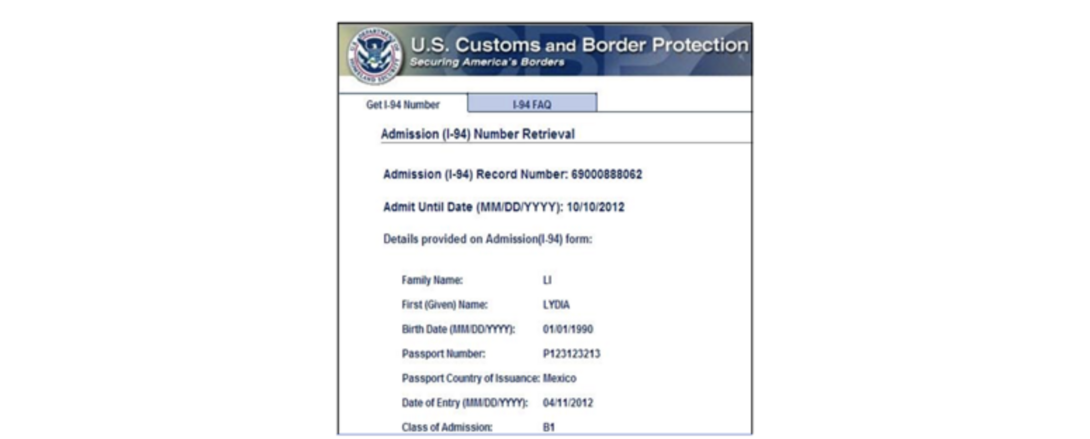
Starting September 15, 2026, your I-94 record will look different. Instead of showing "D/S," it will display a fixed "Admit Until Date" (AUD). Your I-94 will now play a central role in determining how long you are authorized to remain in the United States.
Important Changes for F-1 Degree-Seeking Students
Newly Admitted Students
Graduate Students: Admitted graduate students must remain in their program of study throughout their academic career. They cannot change from one program to another at SAIC, and they cannot transfer from one school to another unless they are starting a higher degree level.
Undergraduate Students: Admitted undergraduate students must wait one academic year before changing their program of study or transferring to another SEVIS-approved school.
Currently Enrolled Students Who Entered the U.S. Before September 15, 2026
Transition Period
If you entered the U.S. before September 15, 2026, and do not travel internationally after that date, you will enter a transition period with the following provisions:
- Your admission period will automatically transition to the end date on your I-20 (not to exceed four years).
- You will have a six-month window from September 15 to apply for OPT without submitting a Form I-539.
- Your grace period will remain 60 days.
International Travel After September 15, 2026
If you travel outside of the U.S. and/or enter the U.S. after September 15, 2026 (for example, traveling over winter break and returning for spring 2027) you will be subject to the new rules, which include the following changes:
- You will receive a fixed Admit Until Date (AUD) on your I-94.
- You must submit a Form I-539 and pay a fee to extend your Admit Until Date.
- You must submit a Form I-539 and pay an additional fee along with your OPT application. The six month transition period will no longer apply.
- Your grace period will be shortened from 60 days to 30 days.
Frequently Asked Questions
See below for frequently asked questions, organized by topic. This page will be updated as new guidance becomes available. Check back here regularly for the latest information.
Rule Overview and Immediate Actions
-
Beginning September 15, 2026, DHS will end “Duration of Status” (D/S) for F-1 and J-1 students. Instead of being admitted for the length of your academic program, you will now only be admitted until a fixed date, known as an Admit Until Date (AUD) listed on your electronic I-94 arrival record when you enter the United States. This period of admission cannot exceed a maximum of 4 years. If your program is longer than 4 years, you will be required to either file an Extension of Stay (Form I-539) to cover the remainder of your program or depart and re-enter the US and obtain a new I-94 record with a new AUD date.
-
All F-1 and J-1 students must now:
- Check your I-94 expiration date every time you re-enter the United States for your AUD date. Your I-94 record AUD date controls your authorized period of stay in the US.
- As of September 15, 2026, file an extension with USCIS (Form I-539) if you need more time in the US than your I-94 allows or depart and re-enter the US and get a new I-94 record. You may need an extension if you will stay in the US past your I-94 end date in order to:
- Complete your academic program
- Change education levels (e.g., bachelor's to master's)
- Transfer to another school
- Apply for OPT or STEM OPT
- Complete academic training (for J-1 exchange visitors only)
-
No. You can still complete your program here in the US. However, the US government has tightened the rules for program extensions. Delays caused by academic probation, suspension, or repeated inability to complete coursework are no longer acceptable reasons for a program extension.
If your I-94 AUD expires before you finish your program, you must either file an extension with USCIS before your I-94 expires or depart and re-enter the US with an updated I-20 in order to complete your program.
-
Yes. Stay informed. For now:
- Monitor this page for updates
- Review your I-94 upon every entry into the US
- F-1 or J-1 Students: If you already know you will require an extension beyond the program end date currently listed on your I-20 or DS-2019, apply as soon as possible.
- Meet with International Student Affairs before making any academic, employment, or travel decisions that may affect your visa status.
-
You can still study abroad as planned. Please keep in mind that if you re-enter the United States on or after September 15, 2026, you will be admitted with a fixed I-94 end date instead of Duration of Status (D/S). This I-94 end date will determine how long you are authorized to remain in the US.
When you re-enter:
- You must check your I-94 record immediately after arrival.
- Your I-94 end date may be tied to the program end date on your Form I-20, OPT EAD, STEM OPT EAD, or DS-2019, but will not exceed the maximum 4-year period allowed by DHS.
- If you will need more time in the US than your I-94 allows, you will need to either file a USCIS extension of stay (Form I-539) before that date or depart and re-enter the US. Please note that you may first need to request an updated I-20 from International Student Affairs prior to filing an extension with USCIS.
Requirements for entry into the US remain unchanged, but the I-94 you are issued upon re-entry will now determine the length of your authorized stay. You must check your I-94 immediately after arrival and reach out to ISA with questions.
-
While both involve extending your time in the United States, they are separate processes managed by different entities and serve distinct legal purposes:
- Program Extension (Internal ISA Process with SAIC):
- This is an update to your program end date on your Form I-20 or DS-2019 issued directly by ISA.
- A program extension is required when you need additional time to complete your degree requirements beyond the end date listed on your current I-20 or DS-2019.
- There is no government filing fee associated with the program extension on your I-20 or DS-2019.
- Extension of Stay (EOS) (Form I-539 Application to USCIS)
- This is a formal immigration application submitted to U.S. Citizenship and Immigration Services (USCIS) to extend your authorized legal period of stay in the US (your I-94 “Admit Until Date”).
- An EOS is required under the new rule if your I-94 “Admit Until Date” (AUD) is approaching and you need to remain in the US past that fixed date, such as for degree completion, OPT/STEM OPT, or changing education levels.
- An EOS requires paying USCIS government processing fees, or traveling and successfully reentering the US with a new I-20/DS-2019 showing the new Program End Date.
- If you need an EOS with USCIS to extend your I-94, you must first receive an updated I-20/DS-2019 (program extension) from International Student Affairs before submitting your Form I-539 application to the government or traveling internationally.
- Program Extension (Internal ISA Process with SAIC):
Status Transition, Re-Entry to the US, and Travel Timing
-
Yes, but not right away. The government has provided transition rules.
If you stay in the US (No International Travel): You can remain in the US under the current "Duration of Status" (D/S) rule for now. You will not need to apply for an extension as long as you:
- Complete your program by the end date on your current I-20 or DS-2019 (or by September 15, 2030, whichever is sooner).
- Apply for your initial post-completion OPT before the transition period ends (on March 18, 2027). Note that you would only need to apply for a formal extension of stay if you are eligible for and apply for a 2-year STEM OPT extension later on. Your original grace period to prepare for departure from the US (60 days for F-1) will still apply during this transition.
However, it is very important to note that if you are currently in the US, but then depart and re-enter on or after September 15, 2026, you will immediately switch to the new rules. You will be given a specific expiration date on your I-94 record, and your post-graduation grace period will drop from 60 to 30 days if you are an F-1 student. The grace period for J-1 students and scholars remains 30 days both before and after this rule change.
-
The decision to travel internationally or adjust your travel dates is a personal choice that depends on your individual circumstances, including your academic timeline and upcoming plans. International Student Affairs cannot decide this for you, but here are the key factors to consider:
- Entering BEFORE September 15, 2026
- You will be admitted under Duration of Status (D/S).
- As long as you and your dependents, if any, remain inside the US without subsequent international travel, you maintain D/S through the government’s transition period.
- If you are an F-1 student, you keep your full 60-day post-completion grace period.
- If you are applying for OPT/STEM OPT, you retain the standard 60-day OPT filing window and will NOT need to file an additional Extension of Stay (Form I-539) alongside your initial OPT application as long as you apply prior to March 18, 2027.
- Entering or Re-entering ON OR AFTER September 15, 2026
- You will be admitted with a fixed I-94 “Admit Until Date” (up to a 4-year maximum, your program end date, or your passport expiration date, whichever is shortest).
- If you are an F-1 student, your post-completion grace period drops from 60 days to 30 days upon re-entry.
- If you are applying for OPT/STEM OPT, your OPT filing window shrinks to 30 days post-completion, and you will eventually need to file an Extension of Stay (Form I-539) alongside your OPT/STEM OPT application (Form I-765).
- If maintaining D/S flexibility, preserving a 60-day grace period, or simplifying an upcoming OPT filing is your priority, returning before September 15 may be beneficial. However, if maintaining your current international travel plans are more important, you can return on or after September 15, 2026.
- Entering BEFORE September 15, 2026
-
If you re-enter the United States on or after September 15, 2026, you will be admitted with a fixed I-94 end date instead of Duration of Status (D/S). This I-94 end date will determine how long you are authorized to remain in the US.
When you re-enter:
- You must check your I-94 record immediately after arrival.
- Your I-94 end date may be tied to the program end date on your Form I-20, OPT EAD, STEM OPT EAD, or DS-2019, but will not exceed the maximum 4-year period allowed by DHS.
- If you will need more time in the US than your I-94 allows, you will need to either file a USCIS extension of stay (Form I-539) before that date or depart and re-enter the US. Please note that you may first need to request an updated I-20 or DS-2019 from OGS prior to filing an extension with USCIS.
Requirements for entry into the US remain unchanged, but the I-94 you are issued upon re-entry will now determine the length of your authorized stay. You must check your I-94 immediately after arrival and reach out to International Student Affairs with questions.
-
Your I-94 "Admit Until Date" (AUD) will generally be the program end date on your I-20 or DS-2019 (plus a 30-day grace period), your passport expiration date, your EAD end date (if you are on Post-Completion or STEM OPT), or 4 years from entry, whichever is shortest.
Passport Expirations, Visas, and I-94 Corrections
-
No. A visa stamp is an entry document used to seek admission at a US port of entry. Your I-94 record determines your legal period of stay inside the United States.
-
US Customs and Border Protection (CBP) cannot issue an I-94 past your passport’s expiration date. How your I-94 “Admit-Until Date” (AUD) is set depends on your specific dates:
- If your passport expires before your program end date, CBP will tie your I-94 AUD directly to your passport expiration date rather than your I-20/DS-2019 program end date.
- If both your passport and program end dates are more than 4 years away, CBP will cap your I-94 AUD at the 4-year maximum limit plus a 30-day grace period from your date of entry.
If your I-94 AUD is shortened due to an expiring passport, you will need to renew your passport and then take action before the listed I-94 AUD, either by filing an Extension of Stay (Form I-539) with USCIS or departing and re-entering the US with your renewed passport to obtain an updated I-94 AUD.
-
Please make an appointment to speak with an International Student Advisor via Navigate or visit our office during drop-in hours.
Programs Exceeding 4 Years
-
Even though SAIC issues a BFA I-20 for five years, the US government will limit initial admissions to the US to a maximum of four years for the I-94 arrival record. Even if your program end date is more than four years away on your I-20 or DS-2019, you will either need to file an Extension of Stay (Form I-539) with USCIS prior to your I-94 “Admit Until Date” (AUD) or depart and re-enter the US before the AUD listed on your I-94 to receive a new I-94 AUD.
Work Authorizations (OPT/STEM OPT/Academic Training) and Post-Graduation Grace Periods
-
Because your authorized stay will be tied to a fixed I-94 date, filing for OPT (Form I-765) alone will not protect your legal stay if your I-94 expires while your application is pending. Under the new rule, you must file a Form I-539 Extension of Stay alongside your OPT application to bridge the gap and maintain valid F-1 status. The US government has created a temporary six-month transition period that will allow students to avoid the additional I-539 during the initial months after the rule's effective date.
As of March 18, 2027, all students filing for post-completion or STEM OPT must file an I-765 (OPT application) with an I-539 (extension of stay) when applying for OPT. The new rule also states individuals may travel internationally and then seek re-admission to the US as a means of extending their I-94 end dates in order to participate in post-completion OPT and STEM OPT. Please meet with International Student Affairs to discuss any travel plans while applying for OPT.
- If you travel after September 15, 2026:
- You will be admitted with a fixed end date, not D/S
- You must file both an Extension of Stay (EOS-Form I-539) and OPT (Form I-765) together
- You must file OPT within 30 days of program completion
- Your OPT start date must be within 30 days of program completion
- If you do NOT travel:
- You keep D/S
- You may file OPT within 30 days of program completion
- No EOS is required as long as you apply for OPT before March 18, 2027
- Students who travel after September 15, 2026 will be readmitted with a fixed period of admission and must file both EOS and OPT. Their OPT filing window and start-date window shrink to 30 days. Students who remain in the US and retain D/S will need to submit an OPT application within 30 days of their program end date, but do not need EOS as long as they apply for OPT prior to March 18, 2027.
- This creates two distinct groups of December 2026 and May 2027 graduates with different OPT filing timelines and procedures. If you plan to apply for OPT during the fall 2026 semester, or the spring 2027 semester, please reach out to International Student Affairs as soon as possible for advice on the process based on your individual circumstances.
- If you travel after September 15, 2026:
-
If you are currently in the US under D/S, your approved OPT/STEM OPT period remains valid. However, if you travel internationally on or after September 15, 2026, re-entry to the US will convert you to a fixed-date I-94 matching your EAD end date plus a 30-day grace period. You will no longer be eligible for the 60 day grace period after your OPT ends.
-
For F-1 students, if you remain continuously in the US under D/S rules (no international travel on or after September 15, 2026), your original 60-day grace period still applies. However, if you or your dependents, if any, depart and re-enter the US on or after September 15, 2026, your F-1 grace period is reduced to 30 days.
For J-1 visa holders, the grace period remains 30 days regardless.
Academic Changes (Majors, Transfers, and Degree Levels)
This rule includes new restrictions on changes to academic programs.
-
- Undergraduate students must complete one full academic year at their current school before they are permitted to transfer to another institution or change their educational objective (such as changing majors or educational levels), unless the US government authorizes an exception. We are awaiting further guidance from SEVP on this process.
- Graduate-level students are prohibited from changing their educational objective or transferring to another school during their program, unless the US government (SEVP) grants a rare exception for extenuating circumstances. We are awaiting further guidance from SEVP.
- After completing a program, students cannot begin a new program at the same or lower educational level (for example: completing a master’s degree and then beginning a second master’s degree).
-
Yes, the new rule introduces strict limits on changing degrees or degree levels. Undergraduate students must complete one full academic year at their current institution before changing majors or transferring. Graduate students (master’s students) are restricted from changing educational objectives or transferring unless the US government grants a rare exception for extenuating circumstances. Additionally, students cannot begin a new program at the same or lower degree level after program completion (e.g., earning a second master’s degree).
We are waiting on additional governmental guidance regarding the specific processes of major changes, transfers, and degree-level changes and will provide updates when we have them.
Please reach out to International Student Affairs with any questions. We host drop-in hours and advisors are available for appointments via Navigate. We are also available via email at intaff@saic.edu.
Last updated 9/11/2026