
SAIC MFA student Xinlyu Wang (Shu) pictured with elements from her installation Dwelling in the Mirage. The composite image layers Shu’s portrait with documentation of the work and a mountain landscape from Bogotá, where she exhibited at the Voltaje Art & Technology Salon. Background image by Felipe Restrepo Acosta, CC BY-SA 4.0, via Wikimedia Commons. Artwork images courtesy of the artist. Graphic by Sophia Salganicoff.
Graduate Student Shu Exhibits Her Work at Voltaje Bogotá
“When I saw the bird hit the window, it just stayed with me,” said School of the Art Institute of Chicago (SAIC) student Xinlyu Wang, who goes by Shu. “I couldn’t stop thinking about that moment.”
A second-year MFA student in the Art and Technology / Sound Practices (AT/SP) department, Shu transformed this moment witnessed on a Chicago street into an international exhibition opportunity. This encounter became the starting point for Shu’s wall-mounted installation Dwelling on the Mirage. The work draws a connection between glass architecture, technological illusion, and migration patterns across human and non-human lives, and Shu exhibited it this past fall at the Voltaje Art & Technology Salon in Bogotá, Colombia.
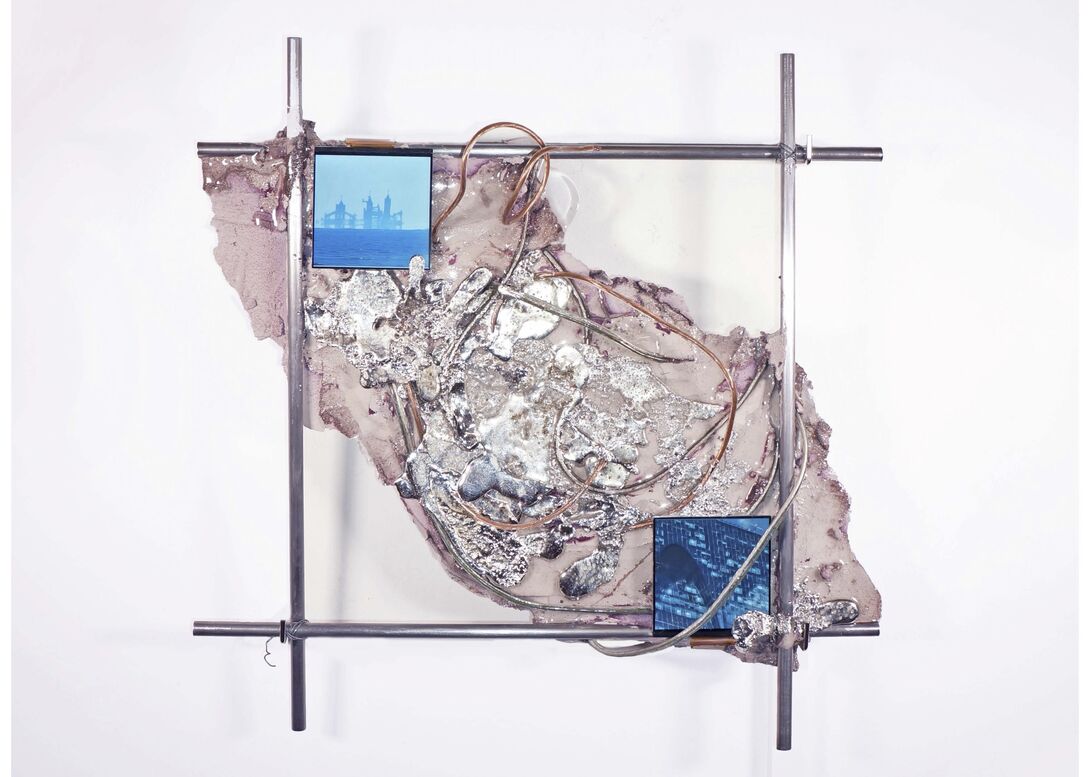
Shu, Dwelling in the Mirage (2025). Image courtesy of the artist.
Held annually in Bogotá, Colombia, Voltaje brings together artists and technologists working across sound, digital media, and experimental installation. Now in its 12th edition, the salon pairs exhibitions with talks and performances, offering an international platform for emerging and established practitioners.
Shu submitted Dwelling on the Mirage to Voltaje through an open call shared within her department and exhibited alongside AT/SP Associate Professor Kristin McWharter and Assistant Professor Bonnie Han Jones. After being told that she got the opportunity in person by McWharter before class, things came together quickly.
Balancing coursework, campus employment, and installation planning made for an intense lead-up. With support from faculty, Shu also applied for an SAIC graduate travel grant, which helped fund the trip. That support made it possible for Shu to travel to Bogotá with McWharter and Han Jones, transport and install her work, and take part in the exhibition. “We arrived and went straight to the festival to set up,” Shu said.
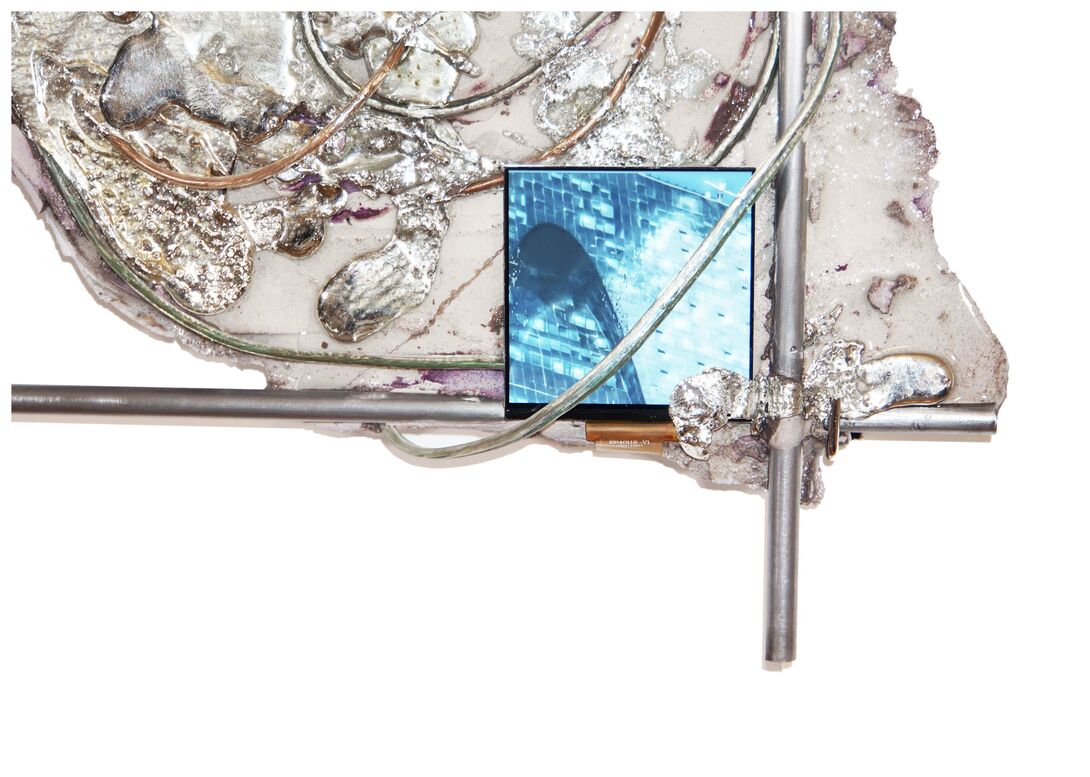
Xinlyu Wang (Shu), Dwelling in the Mirage, Bogotá, Colombia. Image courtesy of the artist
Dwelling on the Mirage connects Shu's experiences of migration with architectural materials, screens, and suspended components. The work is made of steel, resin, concrete, and embedded screens that play looping videos of urban reflections. “I’m trying to build a connection between my experience and the bird’s experience,” Shu said, “especially how we are both living in an urban environment, and how that environment shapes our behavior.”
Presenting Dwelling on the Mirage outside the United States required Shu to adapt how she discussed the work. “In the US, people immediately understand the immigration context,” she explained. “In Bogotá, I had to give more background about myself, my motivation, and what’s behind the work.” The experience sharpened her awareness of audience and communication.
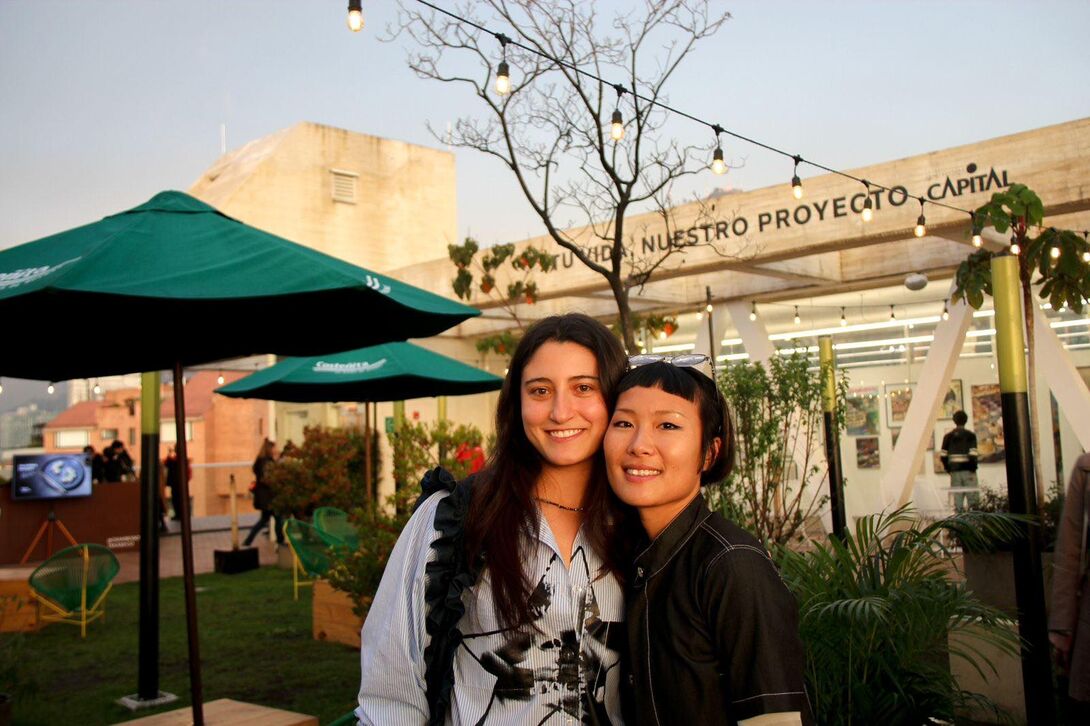
Image courtesy of the artist.
The logistical roadbumps of traveling internationally with her artwork also reinforced practical lessons. “If you’re working with electronics, always have a backup,” Shu said, recalling a broken screen she had to repair onsite with the help of local artists also exhibiting at Voltaje.
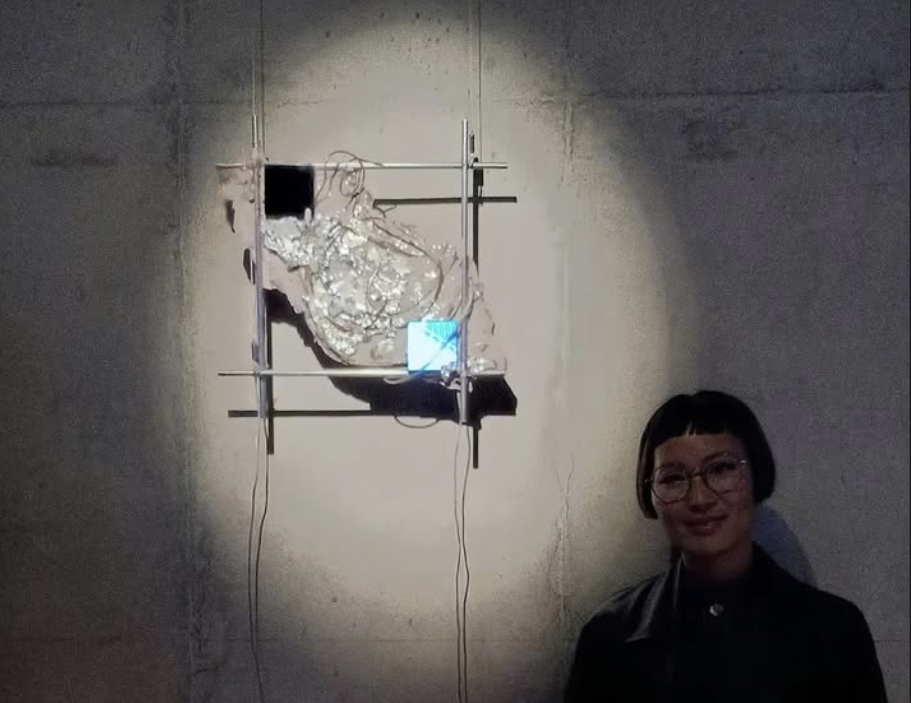
Shu, Dwelling in the Mirage (2025). Image courtesy of the artist.
Since returning to Chicago, Shu has continued developing her practice. Dwelling on the Mirage was also her first wall-mounted work, marking a shift in how she thinks about presentation. “Before, I didn’t think much about how a piece would live in a gallery,” she said. “Now I do.”
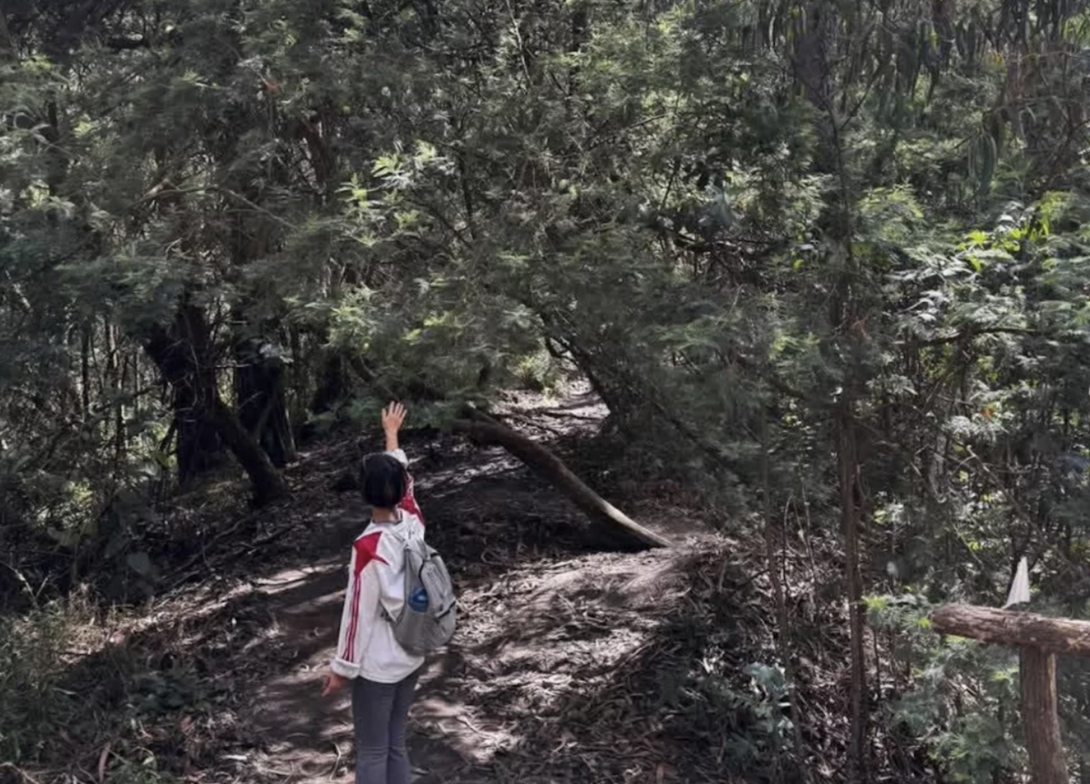
Image courtesy of the artist.
Looking ahead, Shu hopes to continue showing the work while building toward her MFA exhibition at SAIC Galleries this May. She is also beginning a new research-based project focused on different narratives around catastrophic flooding in China in 1998, drawing from internet archives and oral histories.
For Shu, the trip to Bogotá was not only about exhibiting a single work, but about seeing how her practice moves through the world. With support from SAIC and her department, the opportunity provided space to test ideas internationally, meet new collaborators, and carry those experiences back into her work here at SAIC. Whether it’s in Chicago or Bogota, “I’m grateful to share space with other artists, and I would love to show this piece if I have another chance in the future.”
The School of the Art Institute of Chicago received a $1.5 million grant from the Korea Foundation to establish an endowed professorship in Korean Contemporary Art, Culture, and Media.
