
Image courtesy of Undercurrents
Venice as a Classroom
Nearly every college gives students the opportunity to study abroad, but at the School of the Art Institute of Chicago (SAIC), these experiences look a little different. This winter, 18 SAIC students traveled to Venice, Italy, to mount an exhibition that they designed and curated.
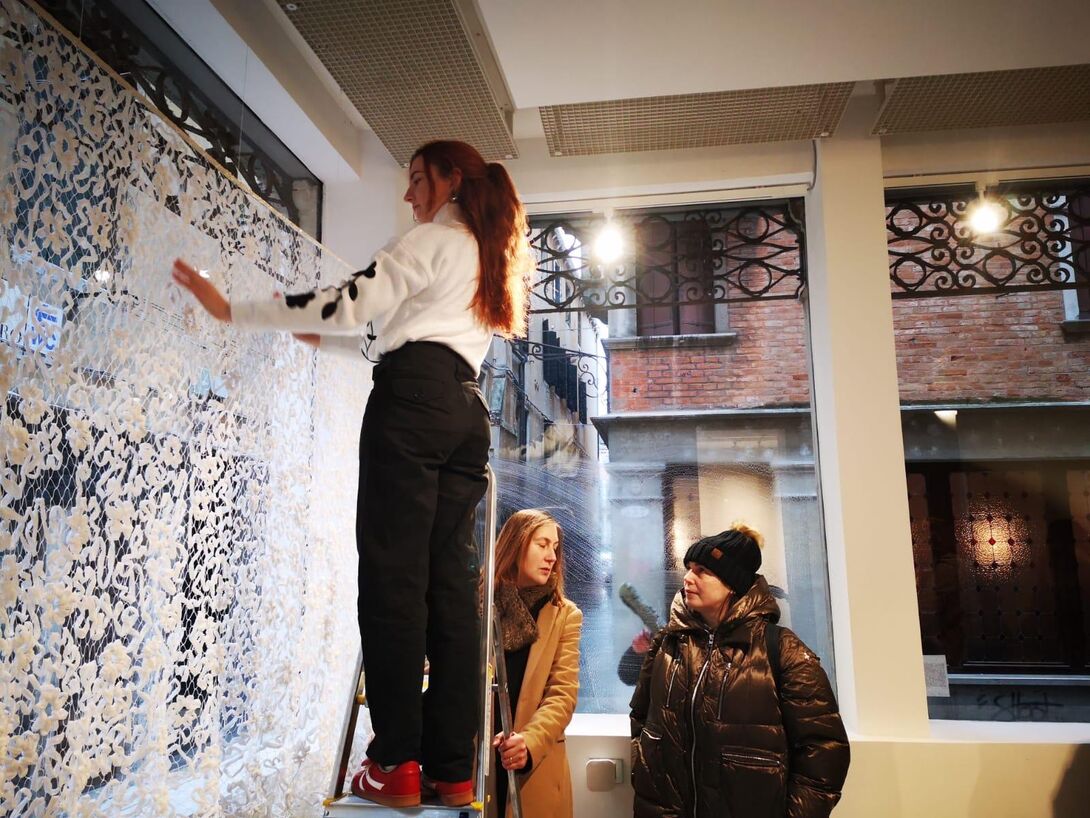
Image Courtesy of the Artist
The exhibition, Undercurrents, was the product of a course taught by faculty members Mechtild Widrich and Lou Mallozzi. The course brought together Art History students, who acted as curators, with students pursuing painting, sculpture, installation, video, sound, and design. During the fall, students gathered to develop a curatorial framework, design the exhibition, and create the artworks that would be on display.
“We didn't put parameters on artists and what they were making,” shared student Jen LaMastra. “There was a lot of freedom, which meant we were sculpting the exhibit to form around what the artists were interested in as it related to Venice. We all got to know each other through the work.”
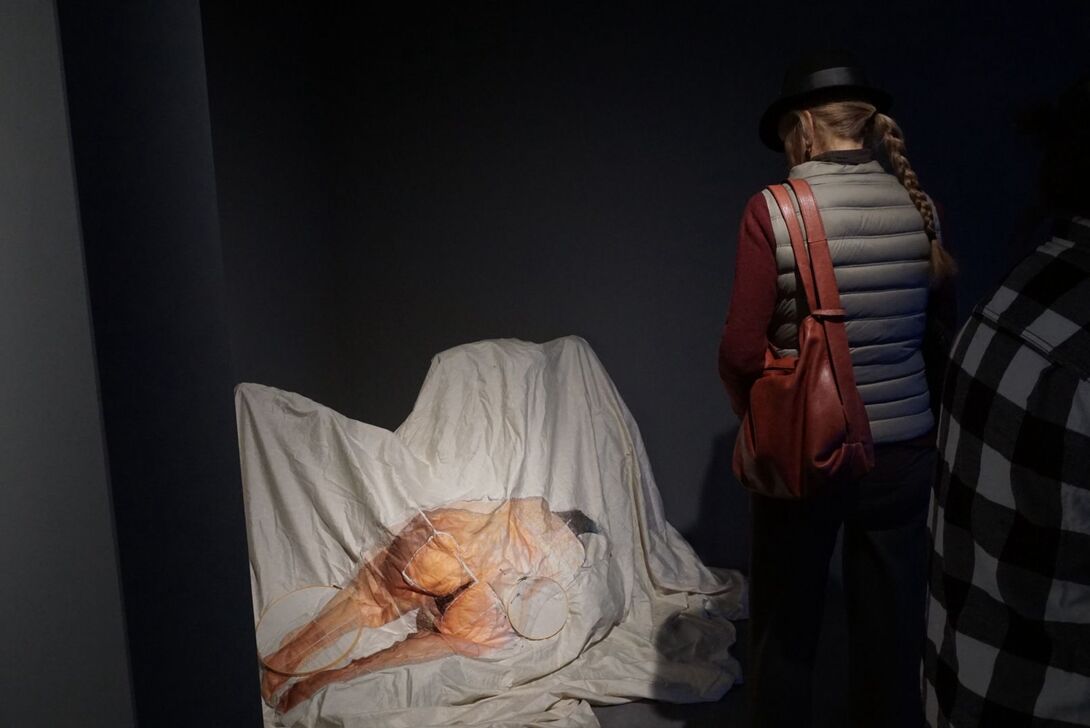
Image courtesy of the Artist
FAKER looks at the subtle performances women pick up in daily life. Again and again, a faceless figure on all fours—a pose seen in ads, movies, and online—shows how certain gestures become routine, even unconscious. LaMastra’s slow, repetitive stitching turns the body into a place where pressure, want, and fear leave their marks. The piece asks us to think about how often femininity acts as a mask: something shaped to keep the peace, feel wanted, or simply stay safe—and what it could mean to step outside that role.
The class studied Venice and its history, ultimately deciding that the exhibition would explore how Chicago and Venice—two cities shaped by water and layered histories—navigate change, preservation, and resilience. This resulted from an open dialogue with all participants, working together toward a shared goal. “There was always space to ask what was working, what wasn’t, and how each piece fit into the larger exhibition. It also meant we were all exploring different sides of Venice at the same time, approaching the city from completely different angles,” said student Anya Lomachenko.
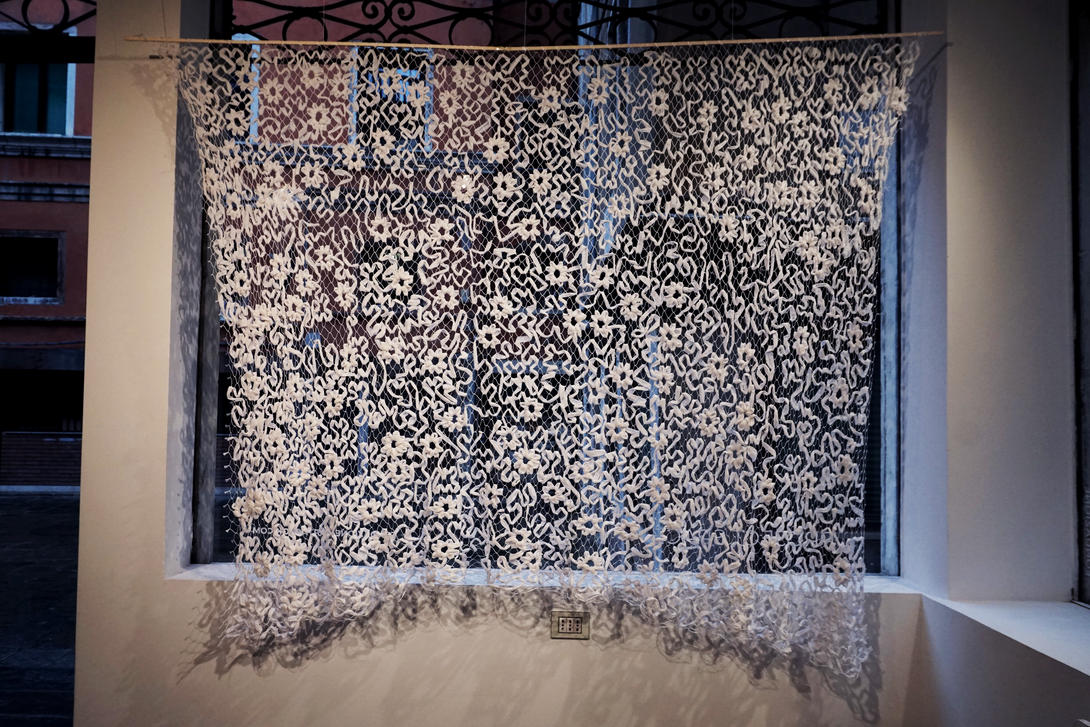
Image Courtesy of the Artist
“Many of the works go beyond geography,” shared student Tzu Ying (Cara) Cheng. “Rather than being site-specific in a literal sense, they grow out of the artists’ inner worlds, cultural backgrounds, and personal experiences.”
In January, the full class traveled to Italy. The exhibition was staged at the Czok Foundation, a nonprofit dedicated to the creation of artistic and cultural projects in Italy. It was most of the students' first time in Venice. “We learned about Venice from readings, Zoom meetings, and technical drawings, but to have your body smooshed on the vaporetto with the canal filled with gondolas and other boats is something you can't know until you experience it,” said LaMastra.
They quickly got to work, installing their pieces in the foundation’s gallery space, but they also had the opportunity to experience local art and the work of artisans, such as a visit to a mosaic workshop in the Canarregio district in Venice. Their exhibition was designed to be in deep conversation with Venice, so it was particularly meaningful for the students to be in the city during the winter, when it’s mostly inhabited by locals. “Since we were there during a time when tourists weren’t the main audience, it felt like we were speaking more directly to the local community,” said Lomachenko.
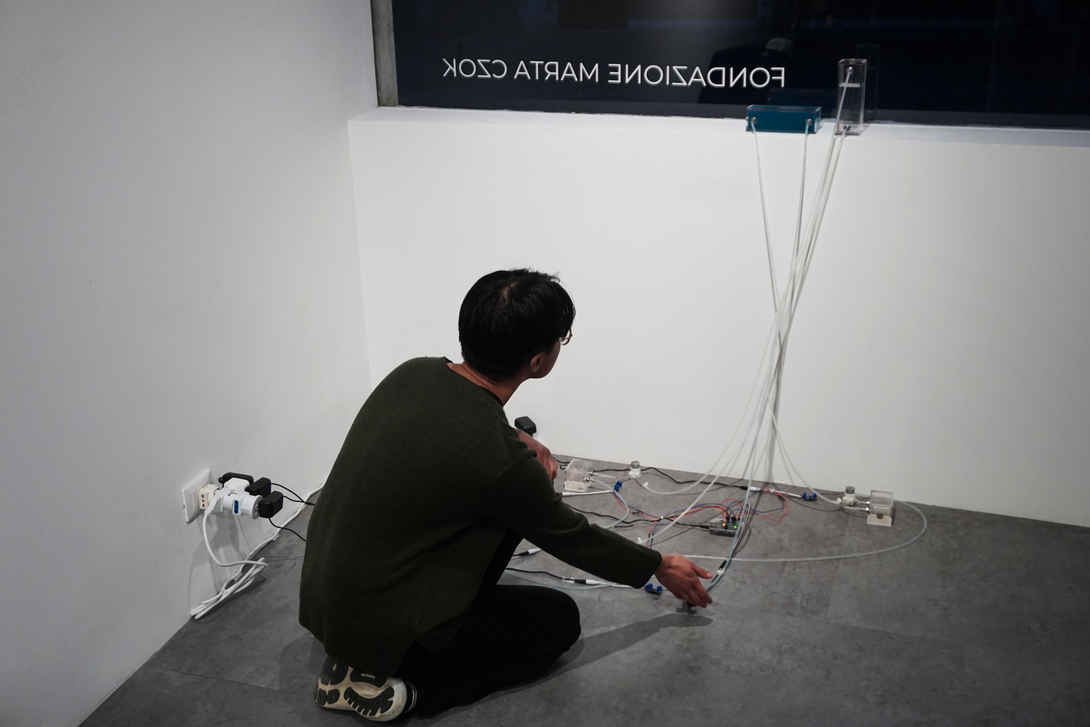
Image Courtesy of the Artist
For many students, simply seeing their work in the space was transformative. “Once we entered the city, the works no longer felt static or confined to the exhibition space,” said Cheng.
The trip not only gave students the hands-on experience of curating and mounting an exhibition—in a foreign country, no less—it also made them think deeply about the importance of collaboration. The trip was “...a kind of magic space I hope to keep and recreate in all my community making,” said LaMastra. “I realized how important community is to me. Making and celebrating each other together is actually not just part of my need as a human, but also part of my art practice.”
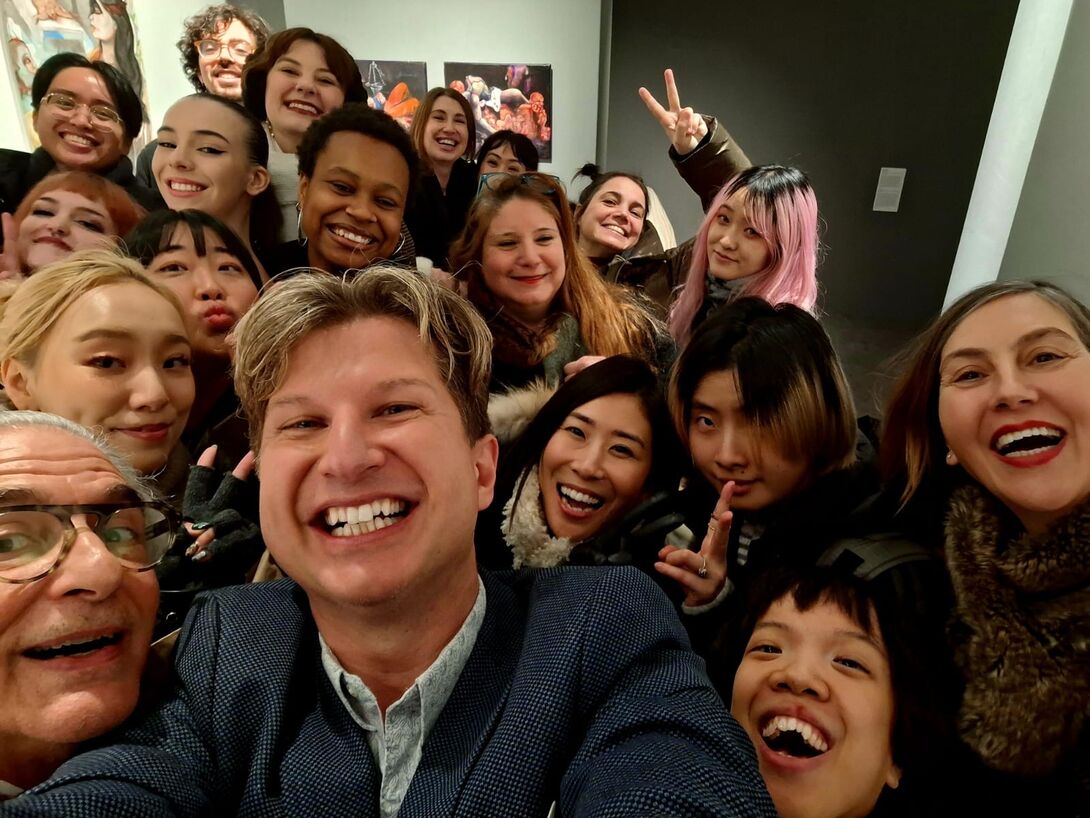
Image Courtesy of Undercurrents
The students learned from one another and their faculty members, able to create something together they never could have imagined on their own. “We all came from different disciplines and areas of expertise, which allowed us to be able to challenge and inform one another in meaningful ways,” said Lomachenko. By the time they left Italy, it was clear: at SAIC, studying abroad isn't just about seeing the world—it’s about helping to create it.
Inside the Exhibition

Image Courtesy of Undercurrents

Image Courtesy of Undercurrents

Image Courtesy of Undercurrents

Image Courtesy of the Artist

Image courtesy of Undercurrents

Image Courtesy of Undercurrents

Image Courtesy of the Artist

Image Courtesy of the Artist

Image Courtesy of Undercurrents

Image Courtesy of the Artist

Image Courtesy of the Artist

Image Courtesy of the Artist

Graphic Courtesy of Undercurrents
Two SAIC faculty members selected for Arts Achievement Awards
