
Photo by Aimee Suarez.
Lisa Croner’s Patented Art Process
What do charcoal, pond water, and biophysics have in common? For School of the Art Institute of Chicago (SAIC) Low-Res MFA alum Lisa Croner (MFA 2026), they are the ingredients of a newly patented artistic process—and the latest step in a lifelong pursuit that naturally intertwines science and art.
“Biology taught me the scientific method—a beautiful thing—to estimate what might be real around and within us,” Croner said. “And art expands the boundaries of what can be explored. It offers complete freedom, including outside the constraints of pure rationality. Both science and art are creative; both respond to inspiration. I combine them freely in the same quest.”
Croner came to SAIC after an unusually wide-ranging career. She holds a double BA in art and biology from University of California Santa Cruz, followed by a PhD in biophysics from Rockefeller University, during which she studied the brain bases of vision. For years, scientific research took the foreground while art-making “contributed quietly in the background.” Now, pursuing art full-time, she finds the two fields are inseparable.
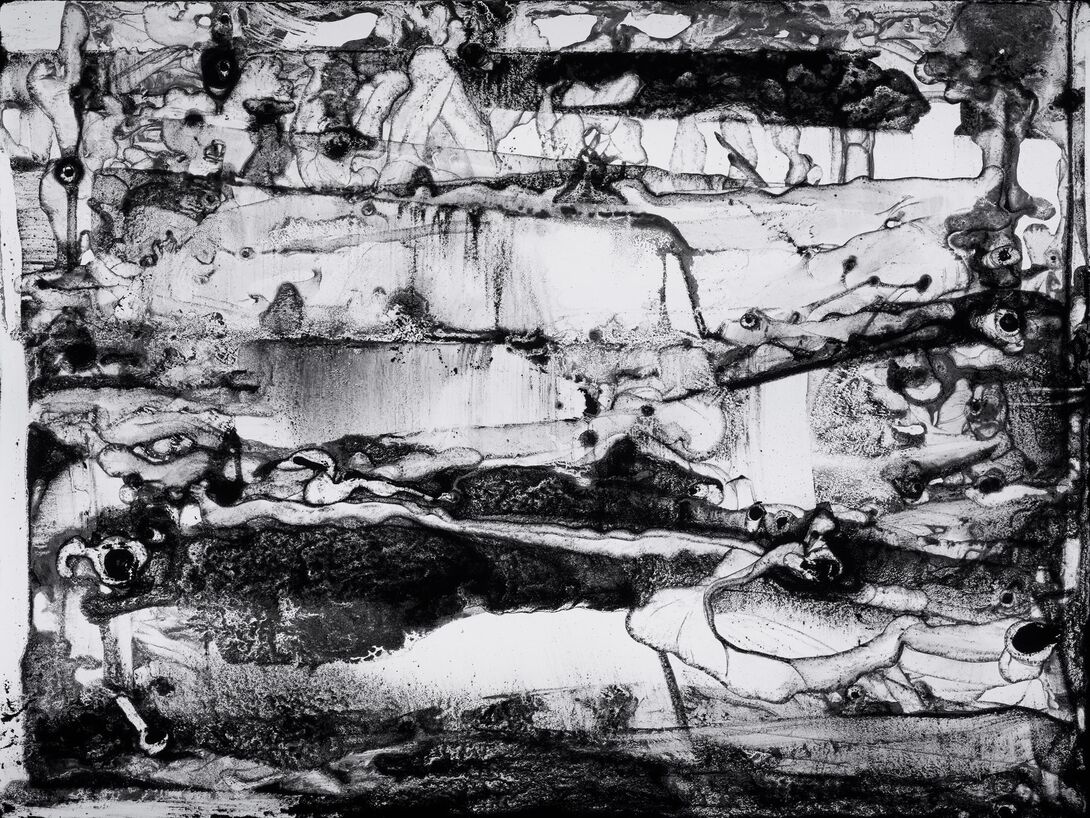
That quest led to an unexpected discovery. Croner was experimenting with a carbon suspension on glass, trying to capture something she sometimes sees—visual forms in the dark. The experiment failed, and she set the piece aside. When she returned to it later, the material had settled into something she hadn’t planned: complex, semi-surreal imagery that looked almost intentionally drawn.
“It was clear that something unusual was going on—both in whatever had happened, and in what it set off in my mind,” she said.
She began developing the process deliberately. Charcoal and graphite powders, then mud, perlite, and other materials, suspended in water, pond water, soap, and inks, on smooth substrates like glass or plastic. The imagery that results is dense and organic—forms that echo the structures of geology and biology, abstract yet full of apparent life.
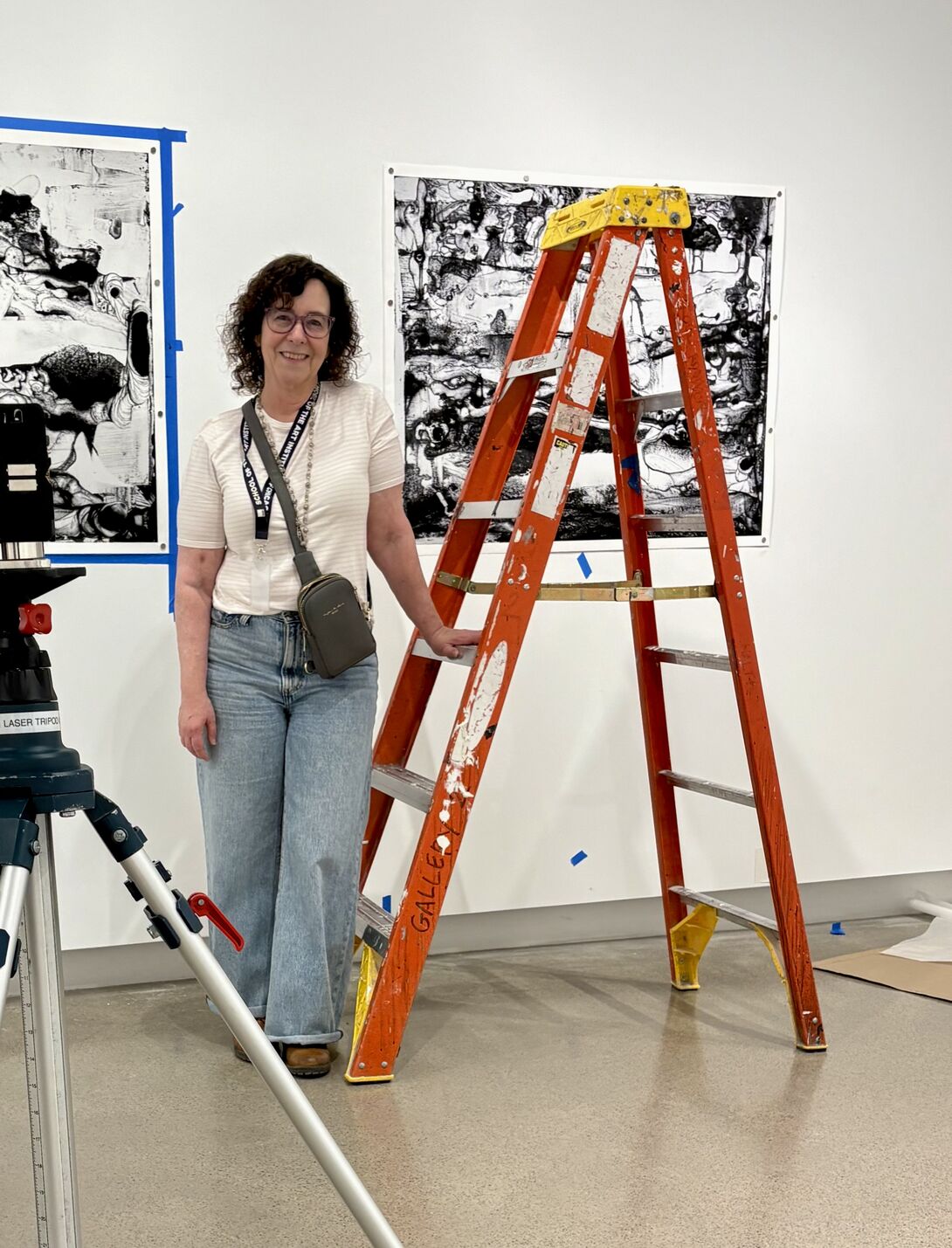
Photo: Katie Korotzer.
Croner filed a Provisional Patent Application through the U.S. Patent and Trademark Office, followed by a Non-Provisional Application with full technical detail. The patent has since been allowed—meaning it has cleared substantive review, with all claims approved—and is now in the final administrative stages before official issue.
Retaining the patent, she says, is partly practical and partly philosophical. As an emerging artist, it establishes credit for the method. But it also gives her influence over how the ideas behind the process move through the art world—ideas about perception, humility, and what arises when one cooperates with nature rather than controlling it.
For Croner, navigating the patent process was more intuitive than she expected. “The language used in patents started to make sense to me,” she said. “I honestly never expected to understand patent language.” She also found meaning in the rarity of patents in fine art. “The arts can be a site of invention,” she said.
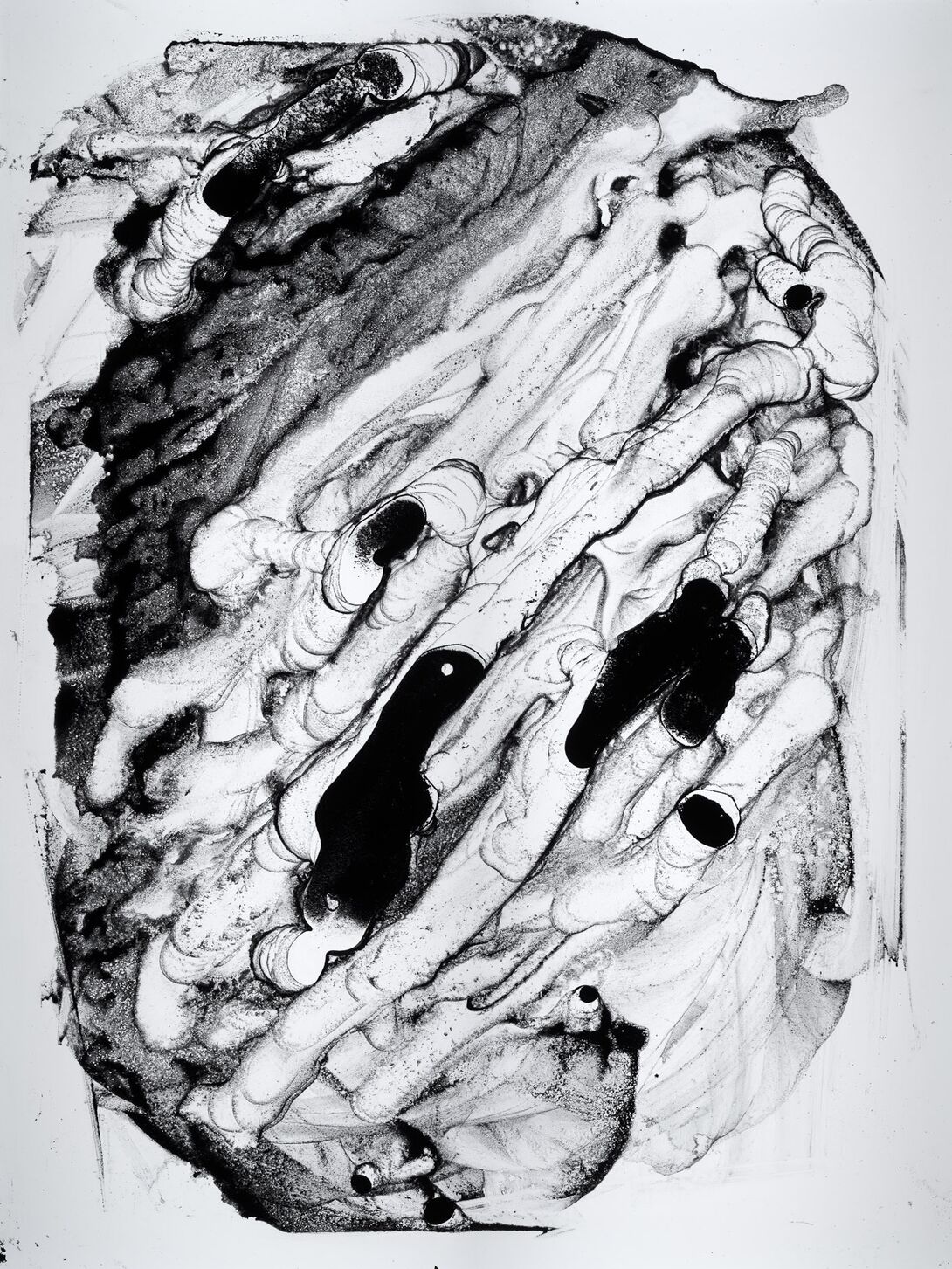
The patented process is the foundation of Croner’s MFA thesis work. The pieces are rooted in a conceptual question that has guided both her science and art: what kind of animals are we, and how do our biological limits shape our place in the world?
“Powders moving in fluid are definitely unruly; giving voice to this material, cooperating with it, brings us to the edge of understanding what’s happening with a natural process,” Croner said. “That’s an interesting place to linger these days.”
Emmy-winning writer Matt Price shares animation insights and career advice at CAPX’s virtual talk.
