
Making is How I Think: A Conversation with Artist and Alum Yang Mai
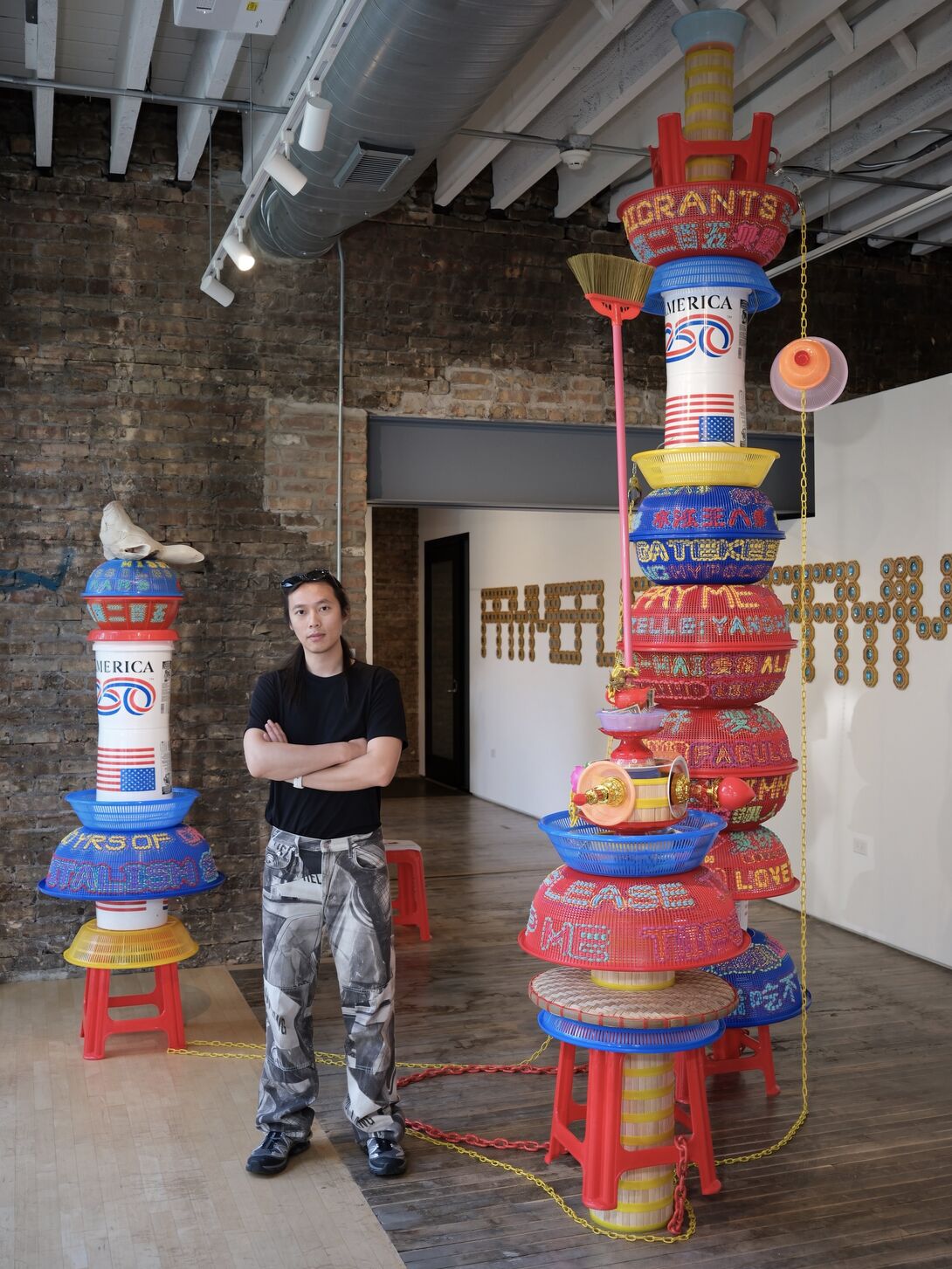
In the summer and fall of 2026, artist Yang Mai (MFA 2016) held two overlapping solo exhibitions in Chicago. Featuring large structural objects and bright colors, the exhibitions PAY ME and Hold Me in Your Arms both show the ways the artist has expanded out past fashion design into contemporary art—while still featuring fashion staples like embroidery and repurposed garments.
Mai studied Fashion Design at the School of the Art Institute of Chicago (SAIC), where the art school environment also encouraged the interdisciplinary work he’s creating today. As part of the PAY ME show at FACILITY, Mai sat down with Anke Loh, professor and graduate coordinator of SAIC’s Fashion, Body and Garment program, to talk about inspirations, grad school, and the ways society influences artistic practice. Read an abridged version of their conversation below.
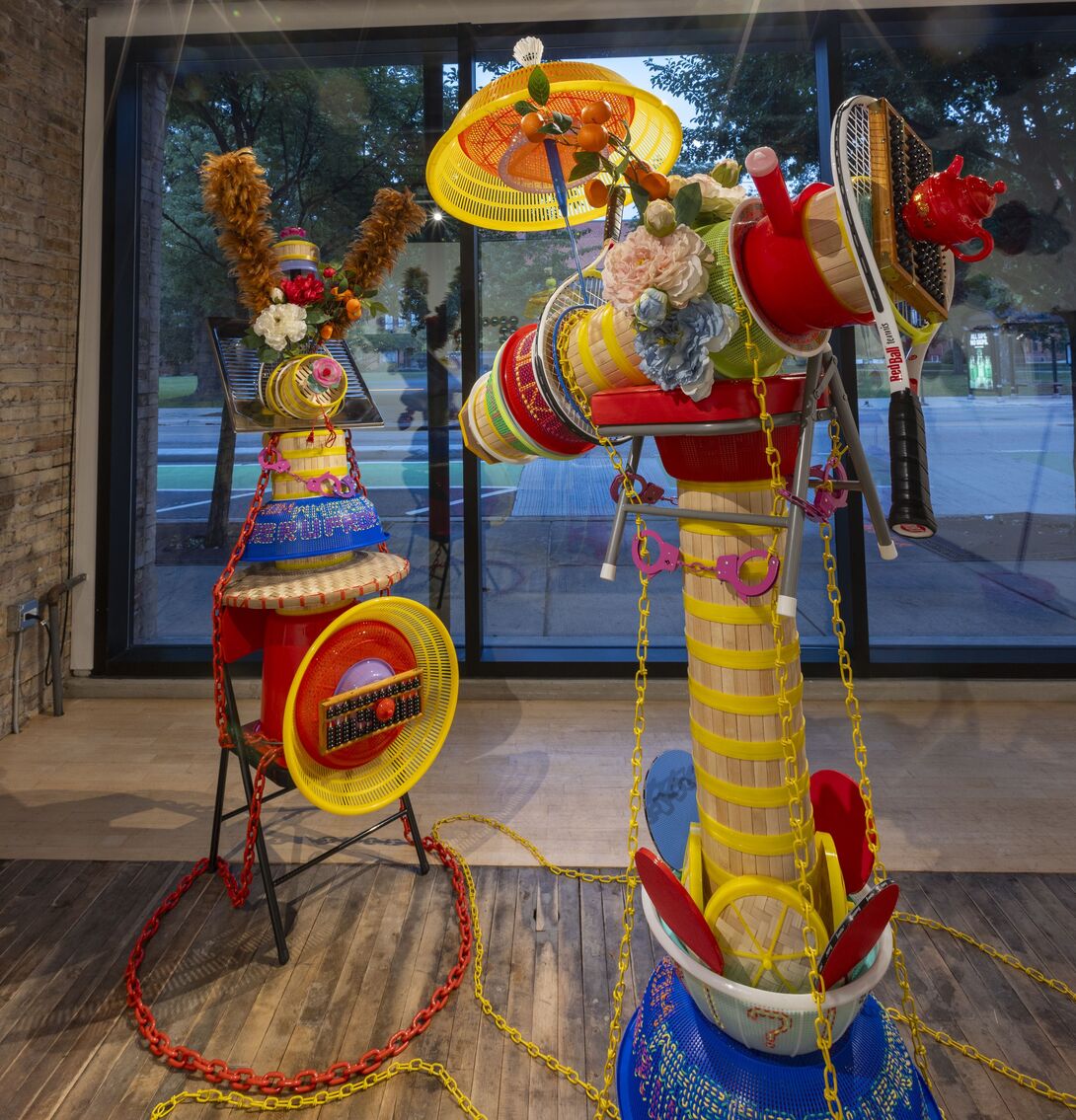
Your latest exhibition, PAY ME, has a very direct and provocative title. What inspired this exhibition, and what does “PAY ME” mean to you personally?
PAY ME came from my experience of returning to the US and seeing how much it costs to create, speak, and belong here. It makes visible America’s habit of asking for money at every turn, but in a country that charges for everything, the art industry still expects artists to work for free.
The current administration’s hostility toward immigrants and attacks on democracy have intensified that pressure. You’re constantly asked to pay, while your freedom to work, speak, and stay becomes less secure. You even have to pay for permission to work before you can get paid. So, capitalism is becoming more aggressive, and politics is becoming increasingly authoritarian. PAY ME responds to that by mocking it and making the same demand.
What initially drew you to SAIC’s Fashion, Body and Garment program?
I studied fashion design in China, so I came to SAIC with a strong technical background. But I was curious about what I could say through clothing, materials, and the body. The fashion program gave me room to experiment. I didn’t have a fixed idea of what my work would become, but I wanted to see what I could do beyond what I already knew.
Your practice has developed beyond traditional fashion design. How did that transition happen? Was it something you had planned, or did it happen naturally through your work?
It happened naturally through the work. I started working with uniforms because I was interested in how they define people and make them part of a group. I wore Chinese school uniforms growing up and felt that pressure to fit in. But I’d wear them oversized or cut them up to make me look cool. I took that idea of the uniform into my work, deconstructing it into free-form structures.
Could you walk us through your creative process? When starting a new project, do you usually begin with a concept, a material, or a visual idea?
It can start with an idea or a material. Sometimes I have something I want to say. Other times, I find an object and want to do something with it. I collect materials that resonate with me and work directly with them. I don’t usually make sketches. I destroy things, change their shapes, and put together objects that don’t seem to belong together. When it feels right, I work out the internal structure and the techniques I need to build it.
Making is how I think. I don’t need to know exactly what the piece will look like before I start. Sometimes the materials lead me somewhere I didn’t expect.
After graduating from SAIC, how did you begin building your career as an independent artist? What were some of the biggest challenges you faced along the way?
After graduating, I moved to New York, applied for lots of opportunities, had solo and group exhibitions, and met people. I’ve built a practice supported by artwork sales, commissions, exhibition fees, and work outside art. The challenge is making that system sustainable while keeping the freedom to make the work I want to make, and staying woke.
It’s been 10 years since you graduated from SAIC. Looking back, has your definition of success as an artist changed? What advice would you give to current students who are still exploring their own creative paths?
I’m more aware now of what it takes to keep doing this. I think success is having the freedom and resources to make the work you want to make, and being able to keep doing it. Recognition matters, money matters, but none of it matters if you don’t have the freedom to speak out. My advice is to have fun and do things that make you happy.
We're celebrating First-Generation Celebration Day with some stories from our first-gen community members.
