
Turning Education into Art with Emmy-Winning Illustrator My Linh Mac
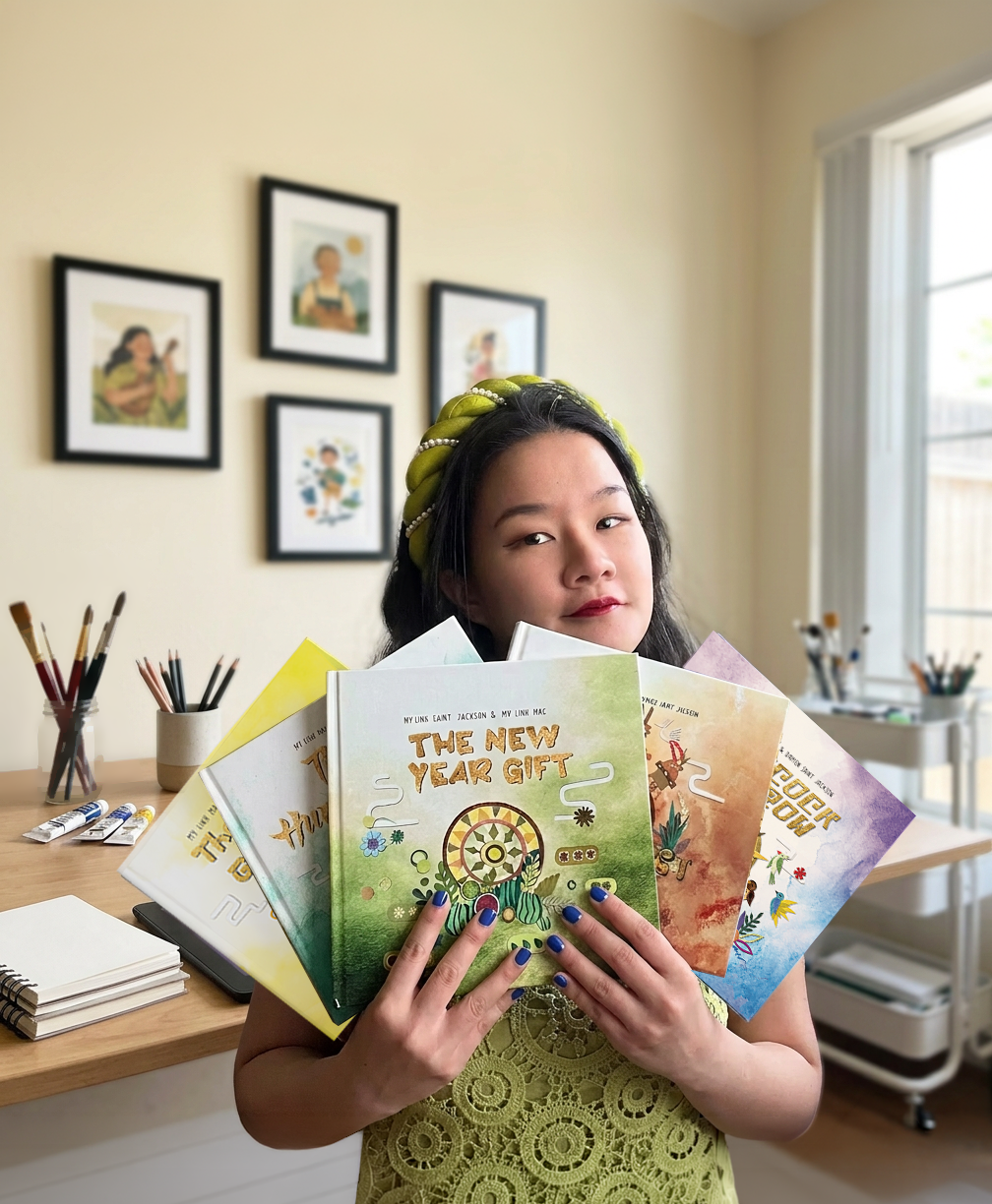
If you have a young reader in your life, check their bookshelf: You might find one of My Linh Mac’s (MA 2019) titles. The School of the Art Institute of Chicago-educated artist and graphic designer is currently working on the children’s book series Co Tich Viet, translating Vietnamese folklore into picture books crafted from hand-cut paper. Her experience in the educational sphere led to a recent Emmy win for her work as an illustrator with the kid’s show Wiz Kid, produced by Colorado State University's Spur Campus in Denver.
Beyond these projects, Mac has served as an Art Grant Panelist for the National Endowment for the Arts (NEA) and an award jury member for the Farmani Group and the Academy of Interactive & Visual Arts (AIVA). Plus, her fine art has been featured in shows around the world. She talked with us about her background in art education, her time at SAIC, and how she navigates multiple lanes of art and business at once.
How did art and design school prepare you for your career?
In two years at SAIC, I built the foundations of an educator, an artist, and a researcher. Serving as a teaching assistant in the Continuing Education program became an accelerated education in adaptability. I was guiding everyone from high schoolers in 3D object and furniture design to adults in advanced painting and graphic design. The hustle paid off: I came out with both technical versatility as a designer and real confidence as an educator.
The campus environment pushed me to invest more deeply in my craft. While balancing full-time graduate studies, thesis research, and teaching assistant duties, I carved time out of my schedule to build a real-world practice. Halfway through my program, in 2018, that commitment sparked my signature Ranbu fine art series, which grew into more than 80 pieces exhibited globally.
Finally, the one I'm proudest of: my thesis on how F-1/international students navigate creative careers and legal immigration pathways. It was a heavy lift. I built the research myself, running in-person surveys and workshops with attorneys who pushed me past surface-level data and allowed me to dive deep into status security, a quiet but widespread struggle across our community. That work directly secured my own post-student status (O-1 then EB1), led me to my attorney and agent, and became a guide so future F-1 students don't have to feel as isolated as I once did.
How does your background in art education affect your work as an illustrator?
Teaching diverse students forced me to master clear visual hierarchy and active listening— explaining complex concepts simply, taking feedback without ego, and building illustration that communicates a core message immediately. That's why my compositions tend to lead with one clear visual anchor before layering in detail, a habit I picked up trying to hold a room full of restless teenagers' attention.
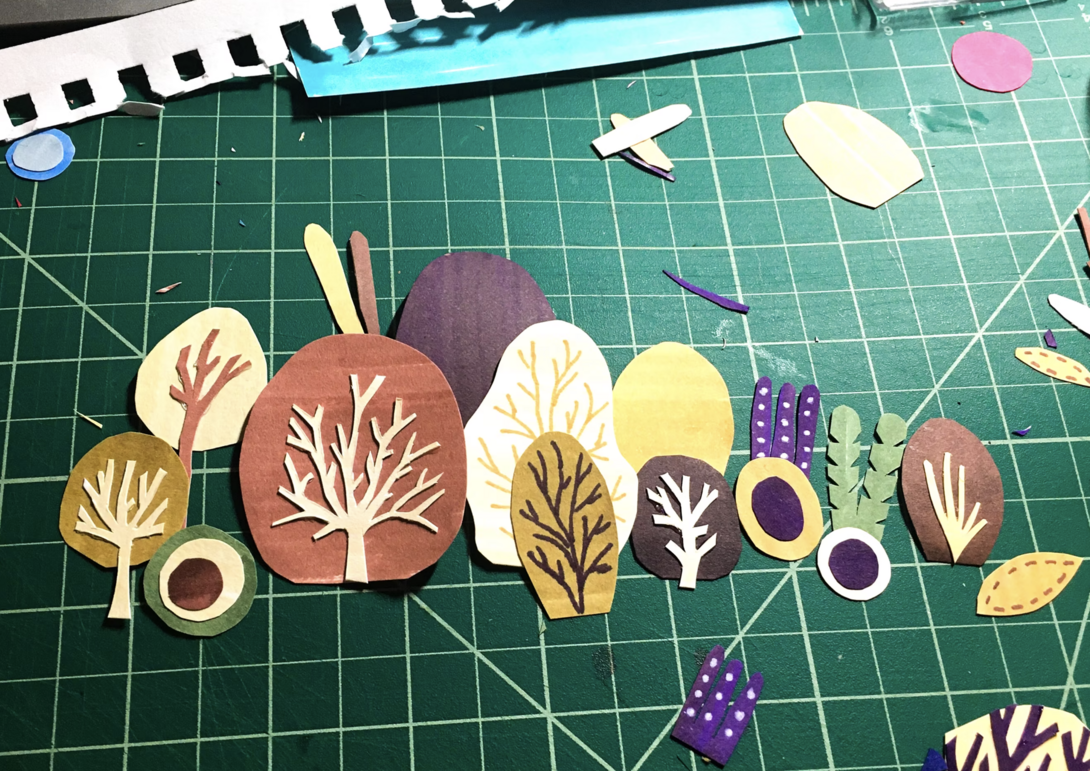
That educator mindset drives my personal work too. For example, my current multi-grant-winning project, Cổ Tích Việt, started as a K-12 sustainability curriculum I designed in my first year of graduate school. I later evolved that course idea into an illustrated children's book series that combines educational content, celebrates my Vietnamese heritage, and promotes eco-friendly art through hand-cut recycled paper. Five years and five books later, the books are now published and available across platforms like Amazon Kindle and Barnes & Noble.
What ways did you engage with interdisciplinary studies at SAIC? Why is interdisciplinary work important?
I see my practice as an intentional commitment to pursuing multiple paths simultaneously, not because I couldn't choose, but because choosing would have meant leaving useful tools on the table.
At SAIC, I treated that fluid environment as an advantage. I still work that way now—moving between design, art, and education even outside a classroom, switching lanes whenever one wears me down instead of grinding a single one to nothing. It's proof you don't have to pick just one.
Emmy-winning writer Matt Price shares animation insights and career advice at CAPX’s virtual talk.
