
Celebrating First-Generation Celebration Day 2026
November 8 is First-Generation Celebration Day! The School of the Art Institute of Chicago (SAIC) celebrates all community members who identify as being the first members of their family to attend college on this day, and every day.
First-generation college students bring a uniquely diverse set of experiences into their practices, which enriches the life of SAIC’s classrooms and studios. Below, meet some of our own first-generation community members and learn how their college experiences have shaped who they are today.
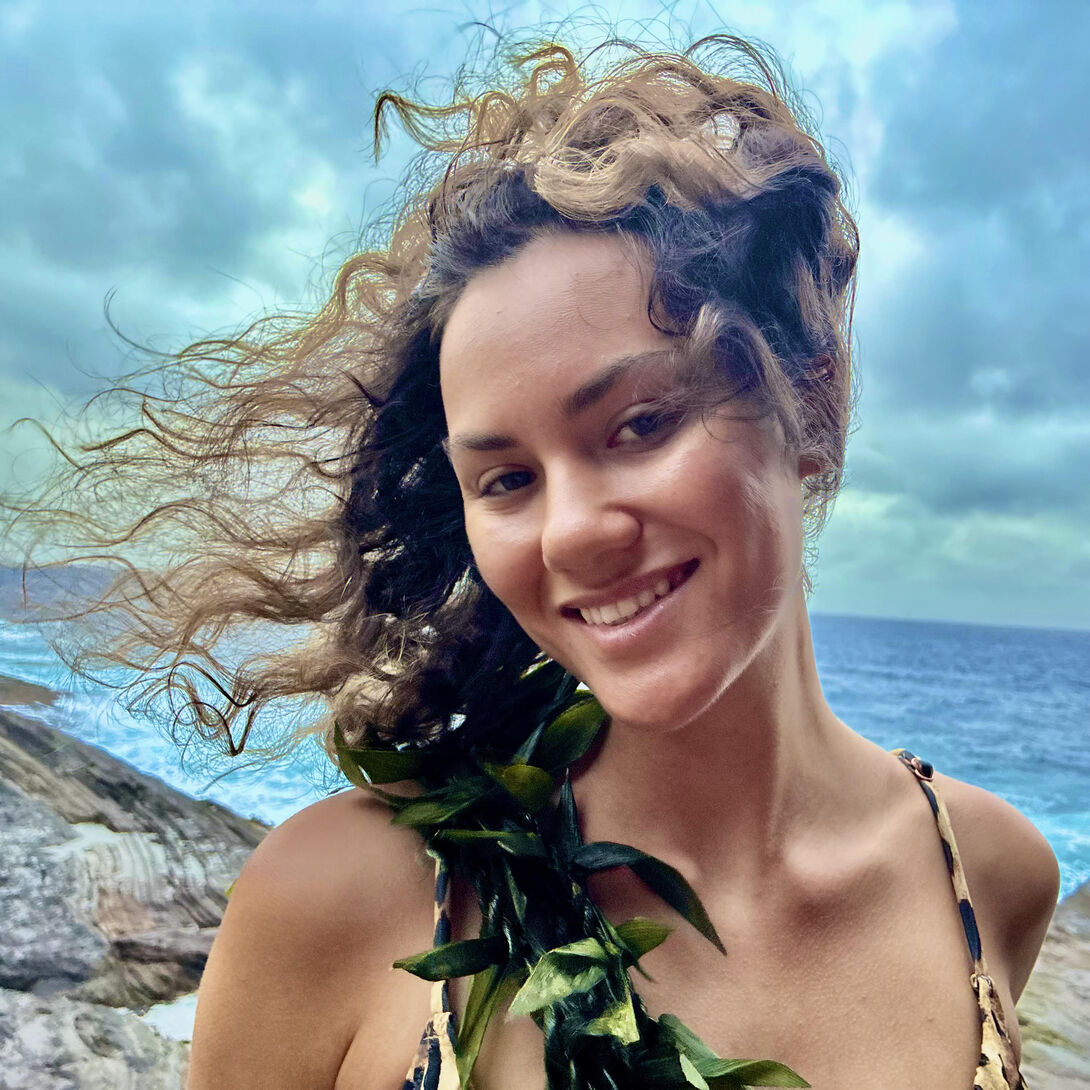
Phoenix Maimiti Valentine
Phoenix Maimiti Valentine is an ‘Ōiwi Native Hawaiian artist, First-Gen Fellow, a junior pursuing her BFA, and the SAIC Lyric Opera ambassador this 2026–27 season. Traditional Hawaiian values like Pilina (connection with culture), Aloha ‘Āina (love for the environment), and Mana (empowerment) prevail in her work. She experiments with color and themes of nature to express tranquility, beauty, and the resilience of the world around us. She is a multi-disciplinary artist in film, animation, graphic design, photography, and storytelling.
Why is attending college important to you?
I love learning. I grew up in Hawai’i, in the mountains near waterfalls with rainbows, listening to peacocks and the surf down the road, swimming, hiking, running, biking, planting, and learning mo‘olelo—myths—with elders in my community as a homeschooler. I wanted to experience a new environment of ‘ike—knowledge—in a big city with inspired peers. SAIC prepares me for graduate school and my future.
What made you want to attend college?
SAIC has its own museum, which integrates ‘ike into our journey. Campus is eight blocks of a metropolis. Interdisciplinary exploration, scholarships, and an invite to join First-Gen Fellows with support throughout my years encourages me.
How have you felt supported by SAIC?
The Disability & Learning Resource Center was there for me when I needed it most. The DLRC contacted my professors and set protocols for continued success to learn and complete my studies. Peer feedback, clubs, organizations, work study, First-Gen Fellows, my professors, and my advisors help build an awareness of the artist community I belong to at SAIC.
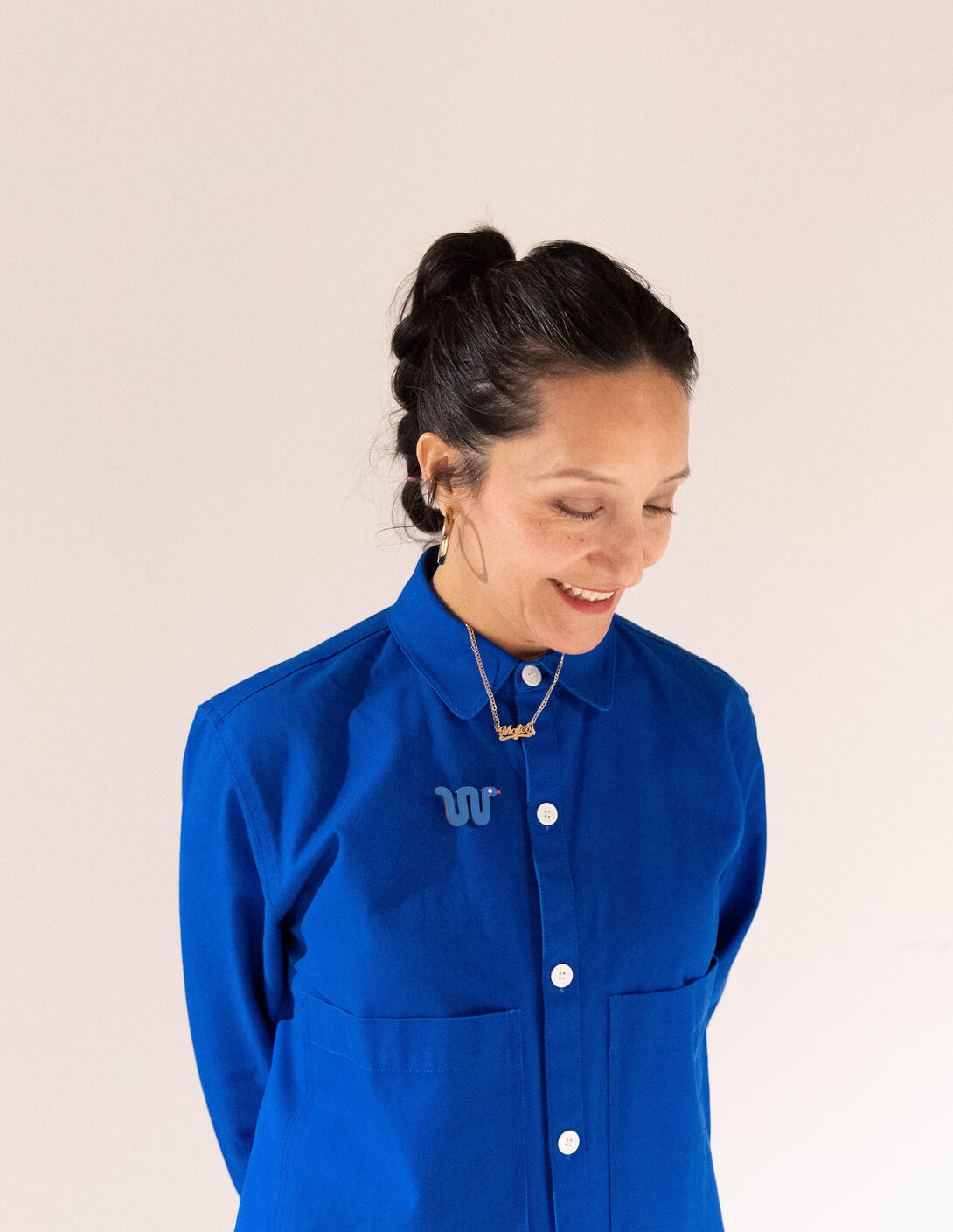
Maria Gaspar, Professor
Maria Gaspar is a Chicago-born, first-generation, interdisciplinary artist negotiating the politics of location through installation, sculpture, sound, and performance. Gaspar’s body of work addresses issues of spatial justice in order to amplify, mobilize, or divert structures of power through individual and collective gestures. For the past decade, Gaspar has been recognized nationally for her multi-year projects that attempt to dismantle borders, transcend penal matter, and turn places of precarity into places of possibility. She has received the Guggenheim Award for Creative Arts, the Latinx Artist Fellowship, and the United States Artists Fellowship, among many others, and she has lectured and exhibited extensively at venues including MoMA PS1, New York; the Contemporary Arts Museum, Houston; and the Pérez Art Museum, Miami.
Why was graduating from college important to you?
Pursuing my passion through higher education was a gift and a privilege, but it was also a risk for me and my family because of the financial burden. As a tenacious young art student, I craved a new environment where I could be challenged and be among other young, radical artists. Studying in New York City wasn't easy because I had to balance work and school throughout my entire undergraduate time. However, I made many meaningful connections and longtime friendships inside and outside of academia that persist today. I especially owe it to my mother, who worked two jobs and supported my dreams along the way. When I graduated, I gifted her my diploma because it was hers as much as it was mine.
How did college help your career and creative practice?
I'm deeply grateful to be an artist among artists and other creative people, and to be part of a community that pushes boundaries in every way—something that feels especially relevant right now. During my BFA and MFA, I expanded and evolved my practice while experimenting with materials. I found my mentors, debated ideas, affirmed my values, brought research together with material experimentation, and laid the foundation for my visual language. This was precious time: it set the tone and clarified what matters most to me. This, along with life experience and my art community outside of academia, came together in a meaningful way.
What advice would you give to current first-generation college students?
You belong here.
Your voice, your work, and your story matter, and we want to see/hear/feel it.
Find your kin.
If you think there is no space for you, carve a space and bring others in.
Stay open, stay playful, stay joyful.
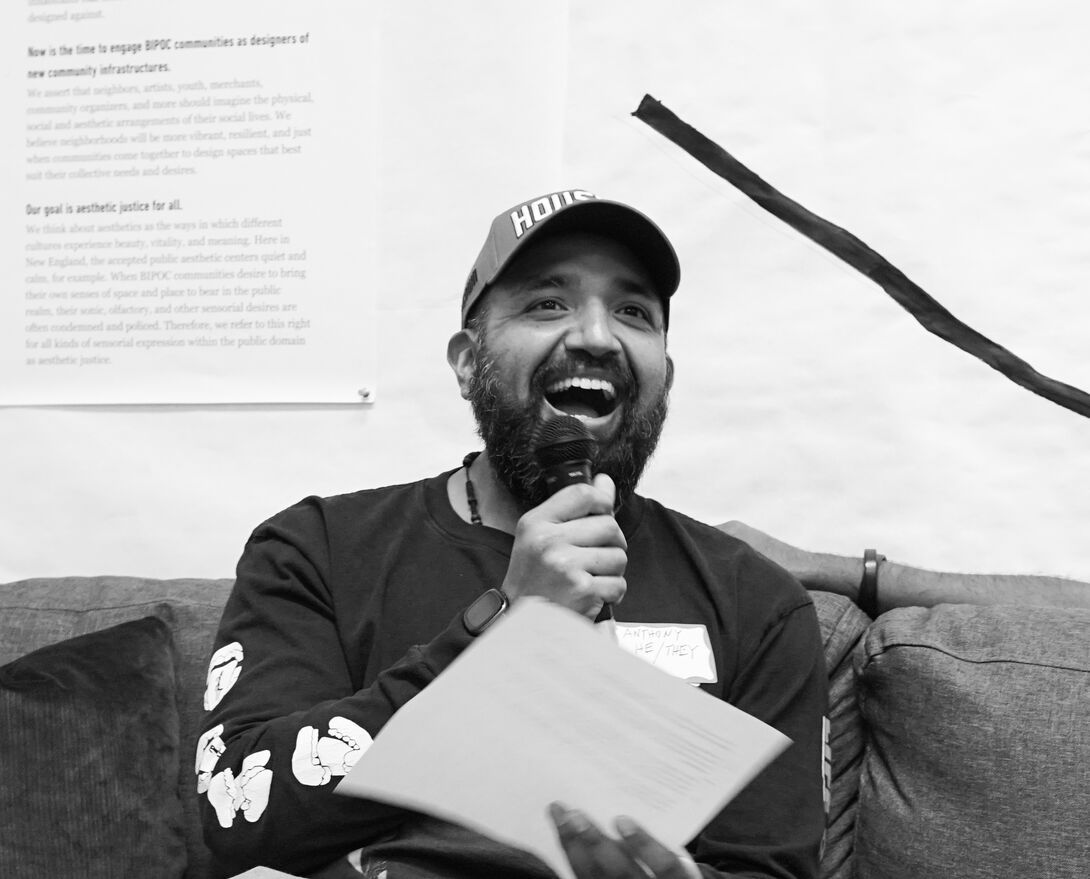
Anthony Romero (MFA 2011)
Anthony Romero is a Boston-based artist, writer, and organizer committed to documenting and supporting Black, Brown, and Indigenous communities. He is a founding member of two artistic research collectives, Sonic Insurgency Research Group and Place as Practice Research Collective. His work was most recently included in the exhibition Sonic Terrains in Latinx Art at the Vincent Price Art Museum. Romero's recent book, Lastgaspism: Art and Survival in the Age of Pandemic (co-edited with Daniel Tucker and Dan S. Wang) was published by Soberscove press in 2022. His most recent writing, “La Vivienda es La Cura: Latinx Art, Politics, and Housing Justice in East Boston,” is included in The Routledge Companion to Art and Activism in the 21st Century.
Why was graduating from a four-year college important to you?
Growing up in a small rural town, I saw college as an opportunity to get to transcend my circumstances. My family is working class and faced many socioeconomic barriers that prevented them from going to college. My parents had graduated high school, an accomplishment that surpassed their parents who only had access to a grade school education, although my paternal grandmother got her GED in her 70s—a testament to the importance of education and her will power. Over the years, as I learned more about my family's experience with the education system and the barriers that they faced, my perspective changed. I began to feel a profound sense of responsibility, a desire to take full advantage of the opportunities before me. No doubt, this likely led me to apply for graduate school at SAIC.
How did college help your career?
College has helped my career in unexpected ways. As an art student, I did not have much of a plan beside learning more about the history of art and becoming a better artist. As I got older and began to understand what a career in the arts might look like, I started to shape my schooling around the skills that I thought would be most advantageous for me. At SAIC, I took courses in curating and arts administrating in addition to studio art. I wanted to learn as much as possible about how galleries, museums, and arts organizations worked so that I could navigate them effectively as an artist, but also so that I could potentially work in the arts.
What advice would you give to current first-generation college students?
Whatever happens next in your life, in your career, know that you have already succeeded. The fact that you have embarked on a journey that nobody else in your family has undertaken is a huge accomplishment. Because you are the first, you may feel pressure to succeed in a certain way. When you feel overwhelmed, slow yourself down, and remind yourself that you've already succeeded. If you've already succeeded, then everything else is just icing on the cake.
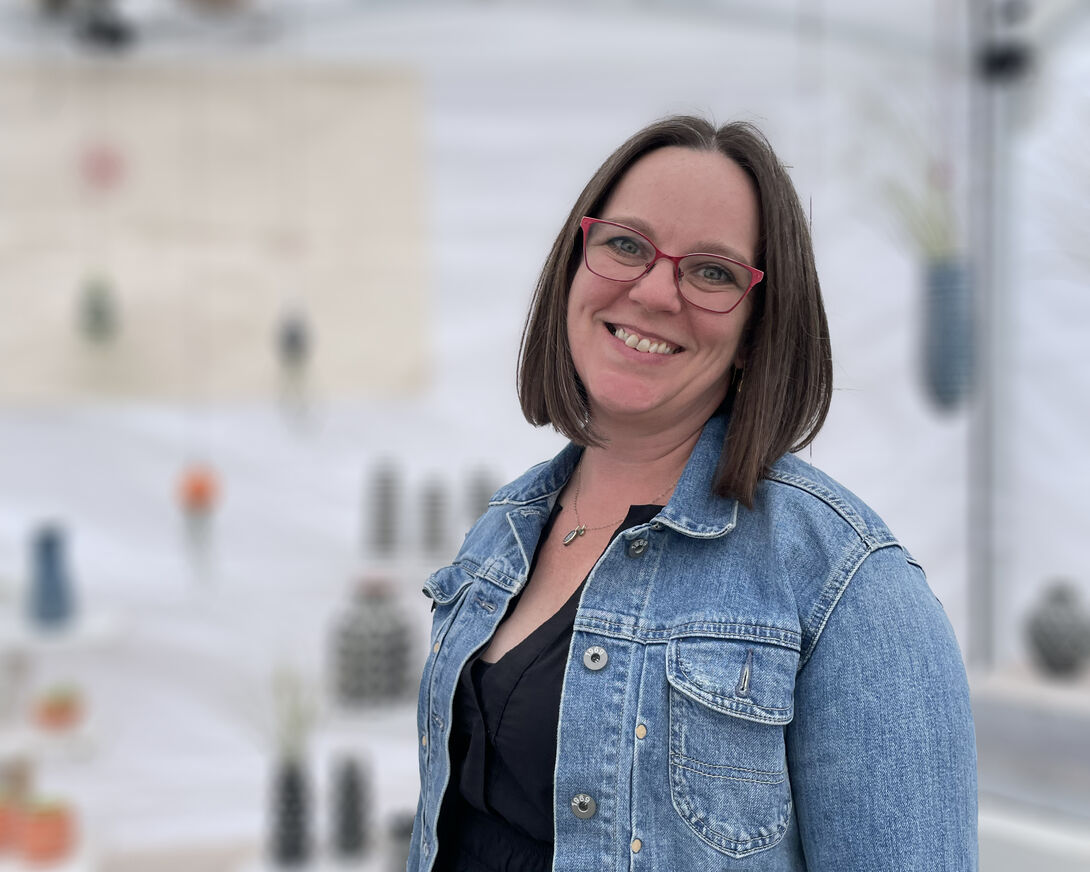
Sarah Hicks (BFA 1999), Executive Director of Facilities Services
Sarah Hicks is an artist and creative professional with a career dedicated to the arts. Currently, she serves as the executive director of Facilities Services in the department of IRFM at SAIC. In her free time, she operates a small creative business and an independent artist collective, teaches ceramics workshops, loves gardening, tends bees, and admittedly has way too many chickens.
Why was graduating from college important to you?
Education was always a core value in my home, but my parents lacked the opportunity to pursue a four-year degree. Both creatives, they built their success through technical training and self-directed learning, but they worked hard to make sure my brother and I could take that next step. Their guidance was simple: follow what makes you happy, and get your degree. Graduating was deeply important to me because it brought those two ideals together. It wasn't just a personal achievement—it was a way to honor my parents' sacrifices, complete a long-standing family goal, and set an example of what college could be for the next generation.
How did college help your career and creative practice?
College was transformative for me—it built my community, instilled a lifelong passion for learning, and set the foundation for my entire career. Coming from a small Midwestern town, moving to Chicago was an eye-opening experience. I was suddenly surrounded by a rich cultural landscape of vibrant neighborhoods, museums, food, and people. While my studies at SAIC focused on photography and textiles, my student jobs in the Media Center and Photography department proved to be pivotal. They revealed what I truly enjoyed doing and launched what has become a 27-year career at SAIC. My time at SAIC taught me how to think conceptually, approach challenges strategically, and manage complex priorities. It also helped me clarify my personal path: while I loved art, I realized a traditional full-time solo studio career wasn't my goal. Instead, I thrived in a structured professional environment paired with a creative side hustle. That balance has shaped my life ever since. Over the years, I’ve continued to invest in new passions—gravitating toward ceramics, running a small business, opening an independent studio to support fellow artists, and exhibiting in gallery shows every now and then. Ultimately, my college experience gave me the adaptability, confidence, and vision to build a fulfilling life.
What advice would you give to current first-generation college students?
Take full advantage of everything this community has to offer—so much of your growth will happen both inside and outside the classroom walls. Invest in the campus community, and it will pay dividends. Apply for a show at SITE Galleries, join a student group, work on campus, land an internship, and reach out to your advisors and staff. Never hesitate to ask questions. If you're nervous, give it a try anyway; stepping out of your comfort zone is part of the process. Remember, you’re surrounded by incredible knowledge and support, from your fellow students to staff and to faculty. And through every intense critique prep, late-night essay writing, and art history exam—remember to prioritize yourself. Don't forget to eat and sleep! The Maclean 14th floor lounge has some comfy nap couches. Wink, wink.
See what our faculty and staff are up to.

William J. O'Brien's The Battle is one of the pieces on view in his exhibition, The Rest of Us.
William J. O'Brien's The Battle is one of the pieces on view in his exhibition, The Rest of Us.