
Two Alums Bring Color and Creativity to the Obama Presidential Center

by J. Howard Rosier (MFA 2018)
From their annual list of books and films to their choice of artists for their official portraits, former President Barack Obama and former First Lady Michelle Obama are intentional in the aesthetics that enter their orbit. Taste arbiters, to be sure, but theirs is a taste driven by activity, where change begins by connecting people, empowering them, and inspiring them to think bigger.
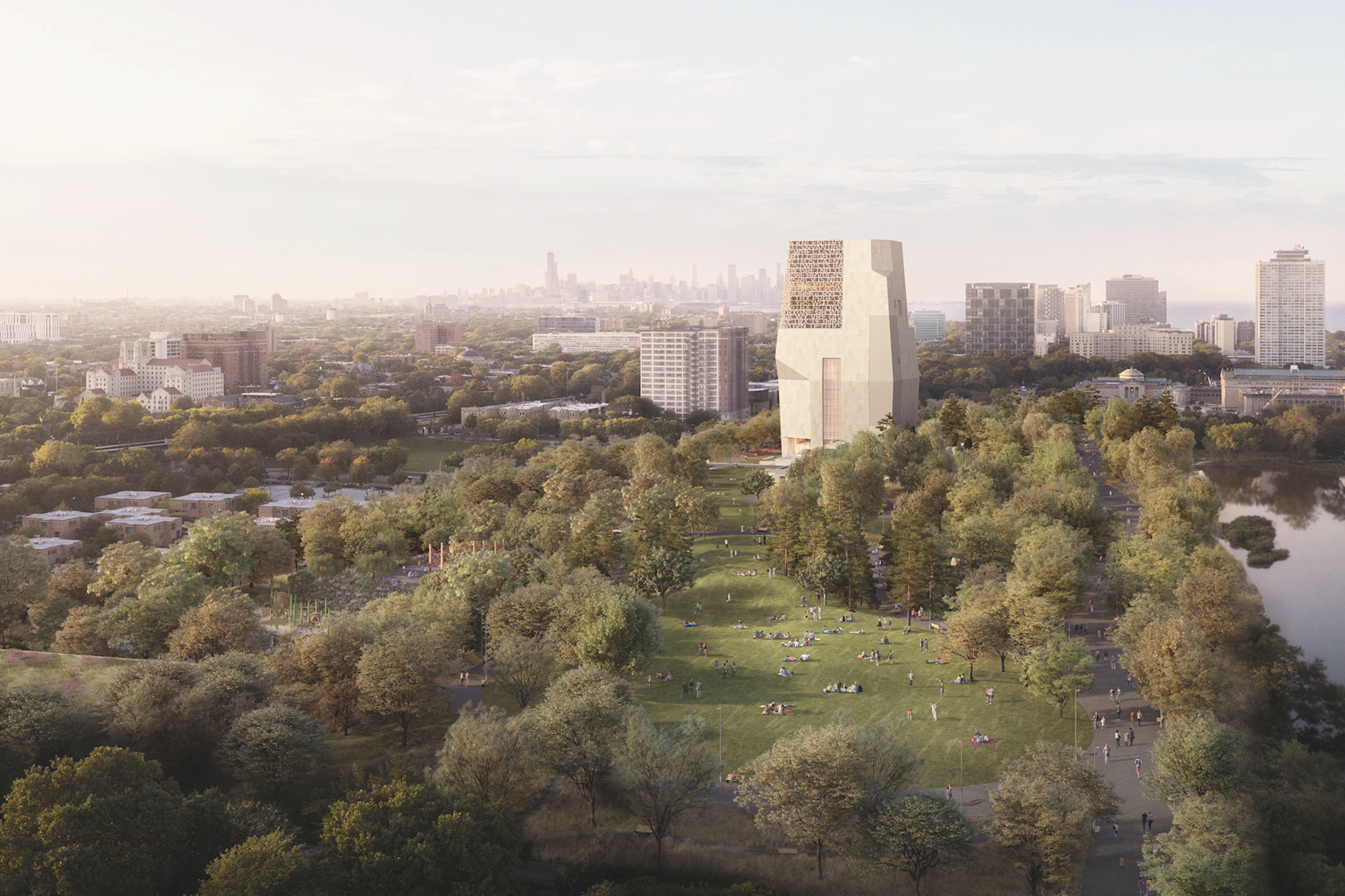
It’s no surprise, then, that the Obama Presidential Center—a Tod Williams and Billie Tsien designed space encompassing a presidential museum, several nature preserves, a restaurant/café, and a public library branch—would include a highly intentional art collection as well. Unsurprising again that its Jackson Park campus would feature works commissioned from School of the Art Institute of Chicago alums: Aliza Nisenbaum (BFA 2001, MFA 2005) and Lindsay Adams (MFA 2025).

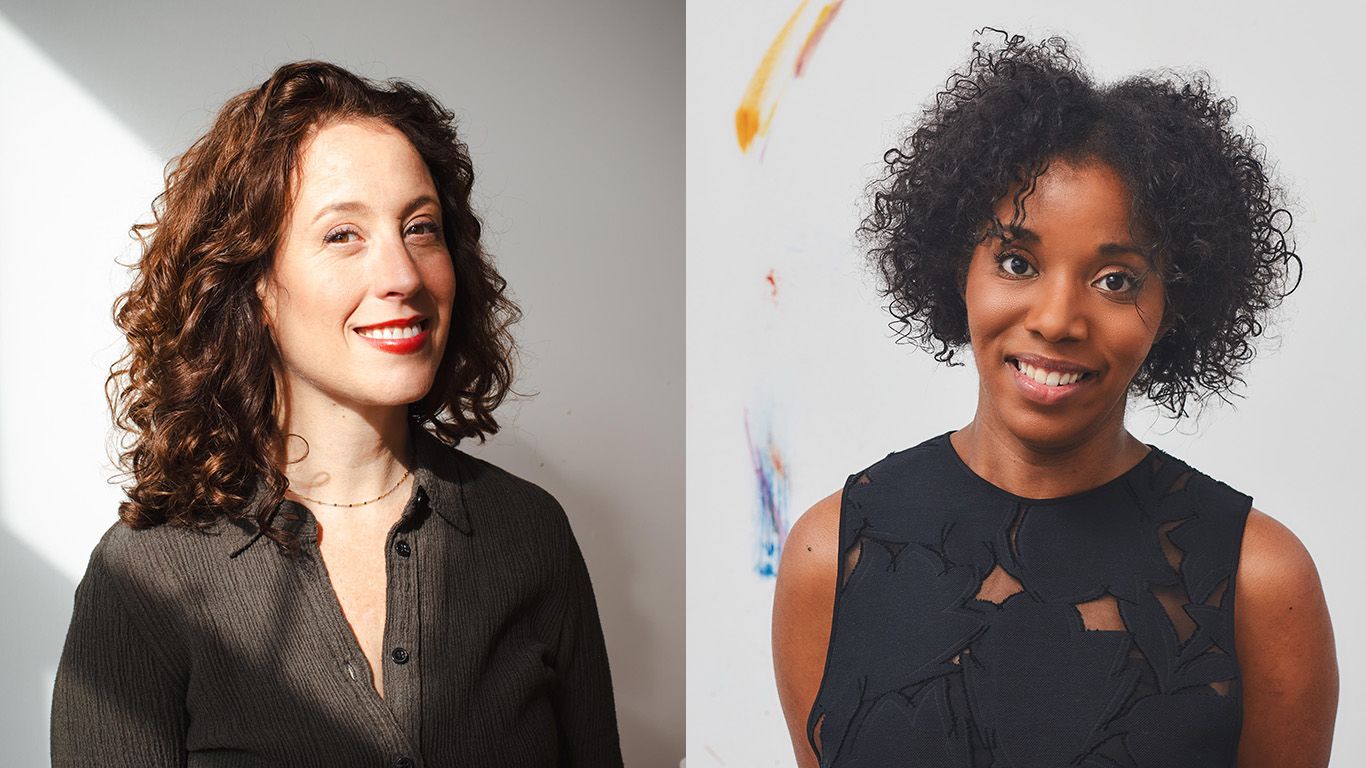
Aliza Nisenbaum (left; photo: Naima Green) and Lindsay Adams (right)
Aliza Nisenbaum (left; photo: Naima Green) and Lindsay Adams (right)
“I was in Mexico with my family a little after New Year's 2024, and I got the call from Virginia Shore, curator of exhibitions at the Obama Presidential Center,” said Nisenbaum. Her work, Reading Circles/ Weaving Dreams/ Seeding Futures, honors the library as a central community space, “a place of dreaming, storytelling, [and] planting the seeds of knowledge and shared histories,” according to the center’s website. Located in the main reading room, her mural features scenes of people gathering, reading, and making art, with surrealistic windows opening out to sprawling fields and Georgia O’Keeffe's (SAIC 1905-06, HON 1967) Sky Above Clouds—the humble act of reading and creating as a metaphorical land of possibility.

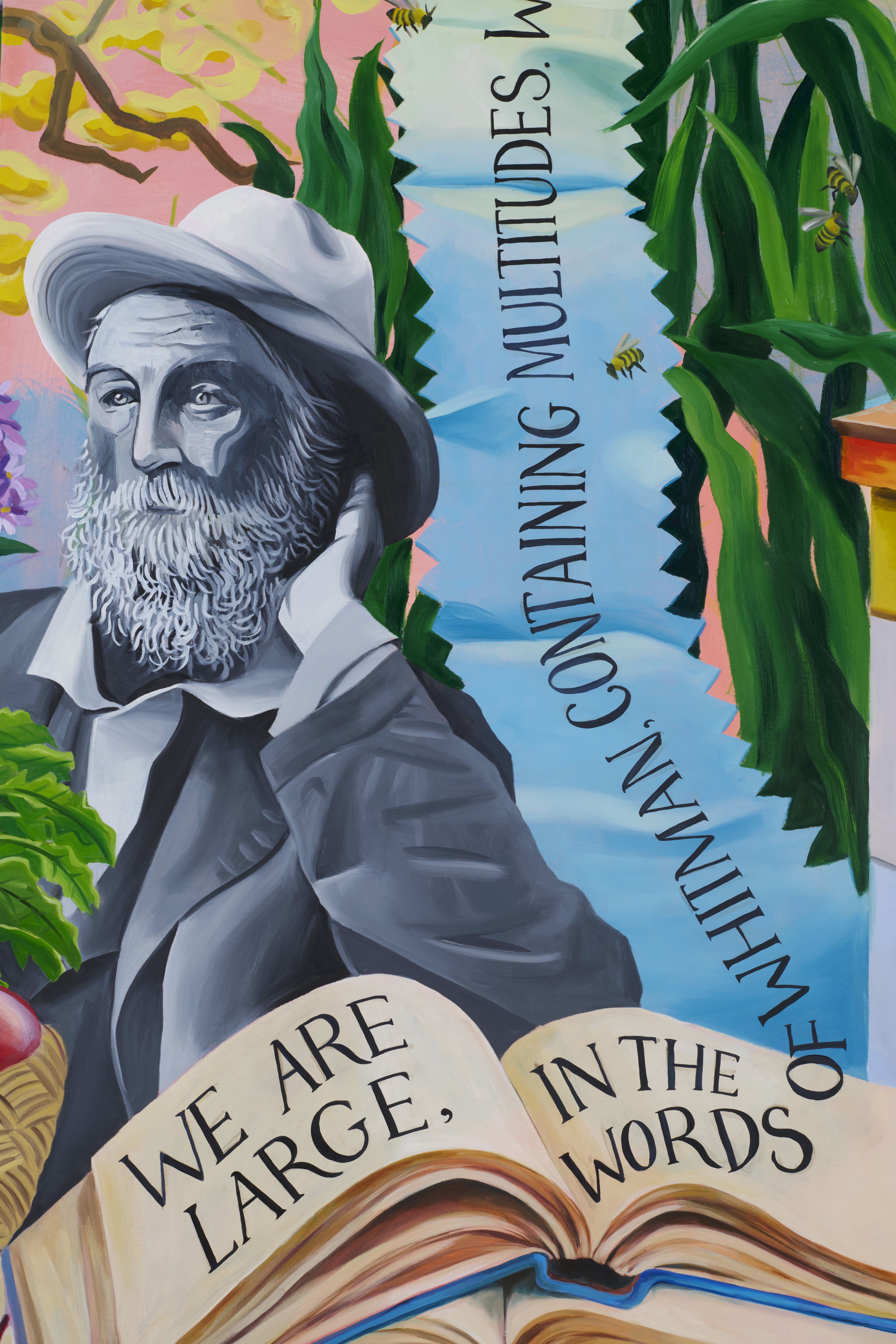

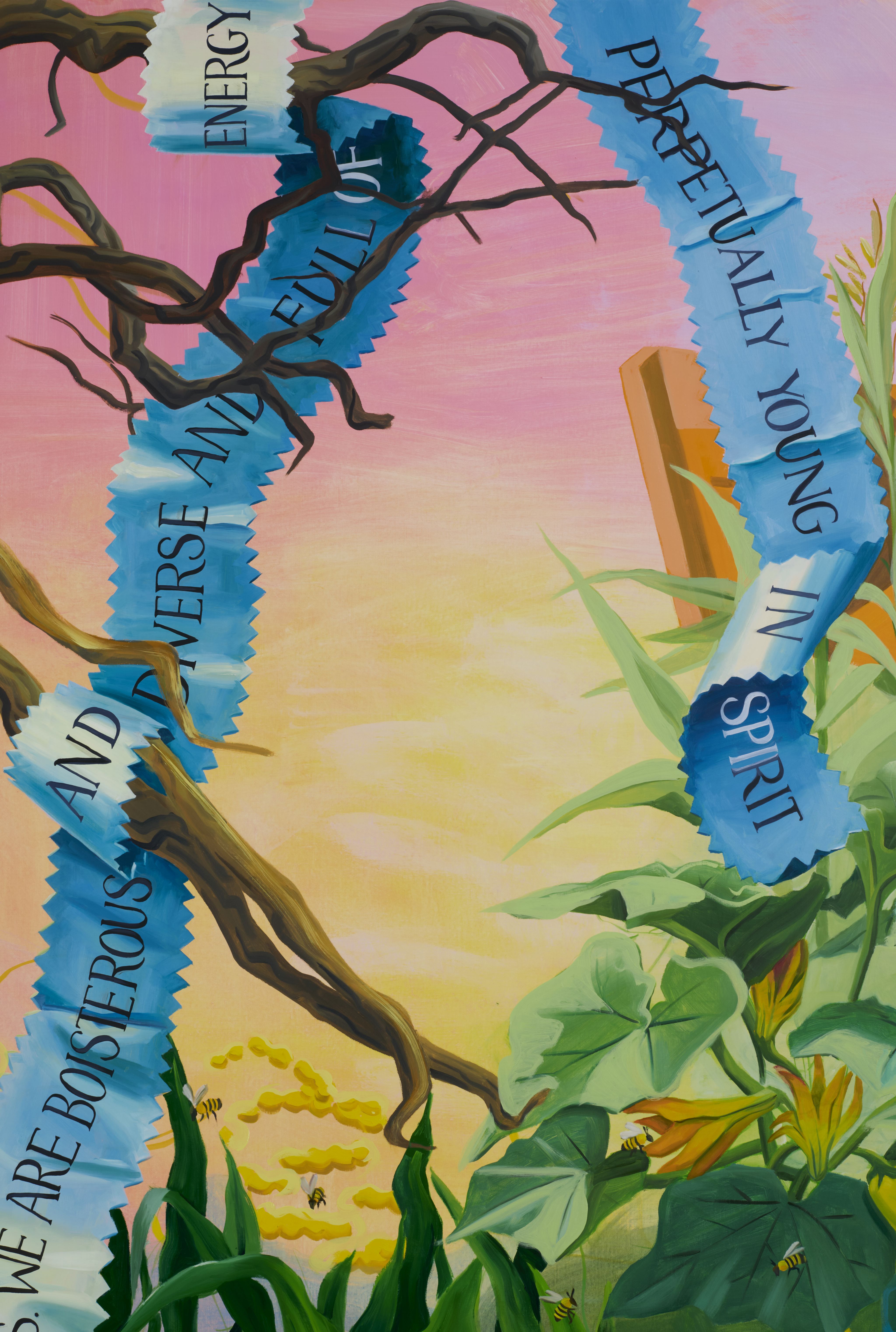

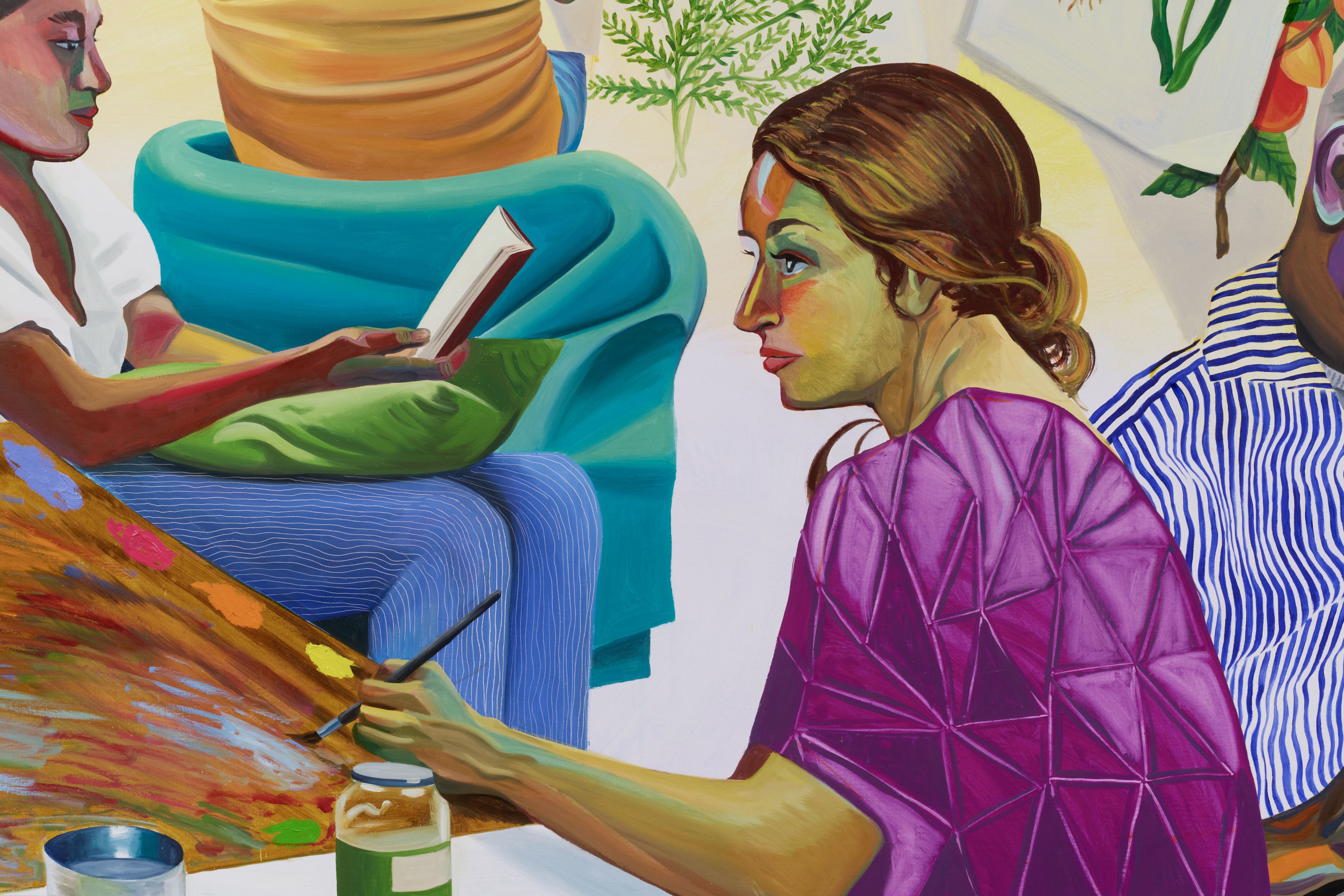
Scenes from Nisenbaum's Obama Presidential Center mural. Photo: Izzy Leung
Scenes from Nisenbaum's Obama Presidential Center mural. Photo: Izzy Leung
During a visit to the Chicago Public Library branch in Hyde Park with Maggie Clemons of the Chicago Public Library, Nisenbaum was charmed by seed packages organized by the Dewey Decimal System. This unexpected library offering helped her fully conceptualize her vision, which she then fleshed out with Obama Center Art Commission Curator Virginia Shore.
“It’s this idea of how we plant seeds, and knowledge comes from that,” Nisenbaum said. “How we dream our future from those seeds, and how it takes a village, which is part of the Obama Center’s mission, how we do things together. We do extraordinary things as a community, which is so central to my work.”
In addition to featuring a vegetable garden scene and bees scattered throughout (an homage to to the former first lady’s gardening and beekeeping habits at the White House), Reading Circles also features patterning inspired by Mexican textiles (Nisenbaum’s father is Mexican) and Kenyan textiles as an homage to President Obama's father.
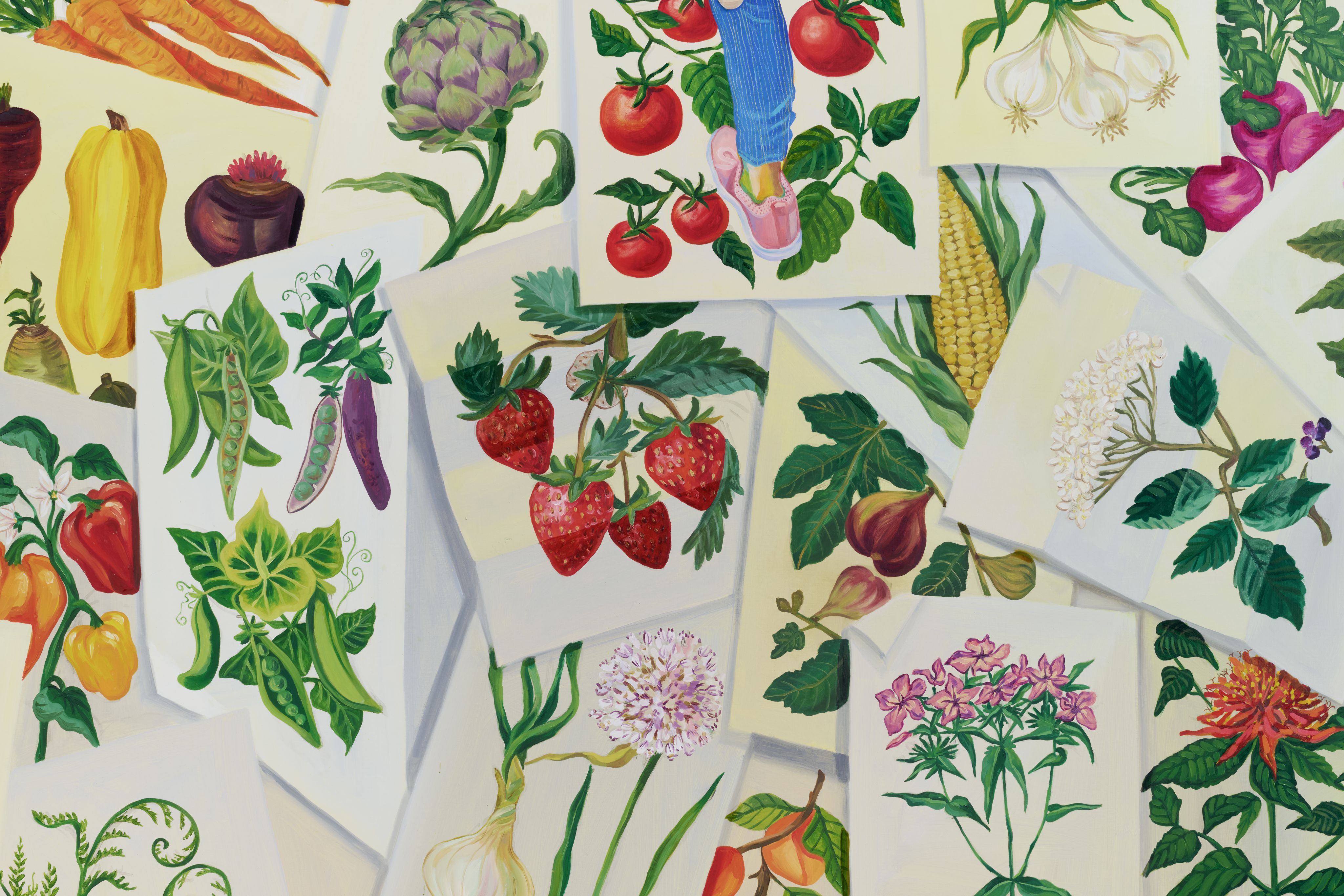
Nisenbaum's mural was partly inspired by an encounter with a seed library through the Chicago Public Library.
Nisenbaum's mural was partly inspired by an encounter with a seed library through the Chicago Public Library.
“A huge part that I learned at the School of the Art Institute of Chicago is the nonverbal visual language that we all share, and that's really a shared language that crosses all peoples,” said Nisenbaum.
In the center’s café, patrons can meet over a cup of coffee or a bite to eat under another alum’s creation: Weary Blues, Adams’s wilting and moody abstract oil painting reimagined as silkscreen panels on fabric.
“We needed to work with the location,” said Adams when describing the decision to change mediums. “There’s also a sound-cancellation component, so silk was a way to keep as much of the integrity of the work in terms of the layering, depth, and washes, while also being functional.”

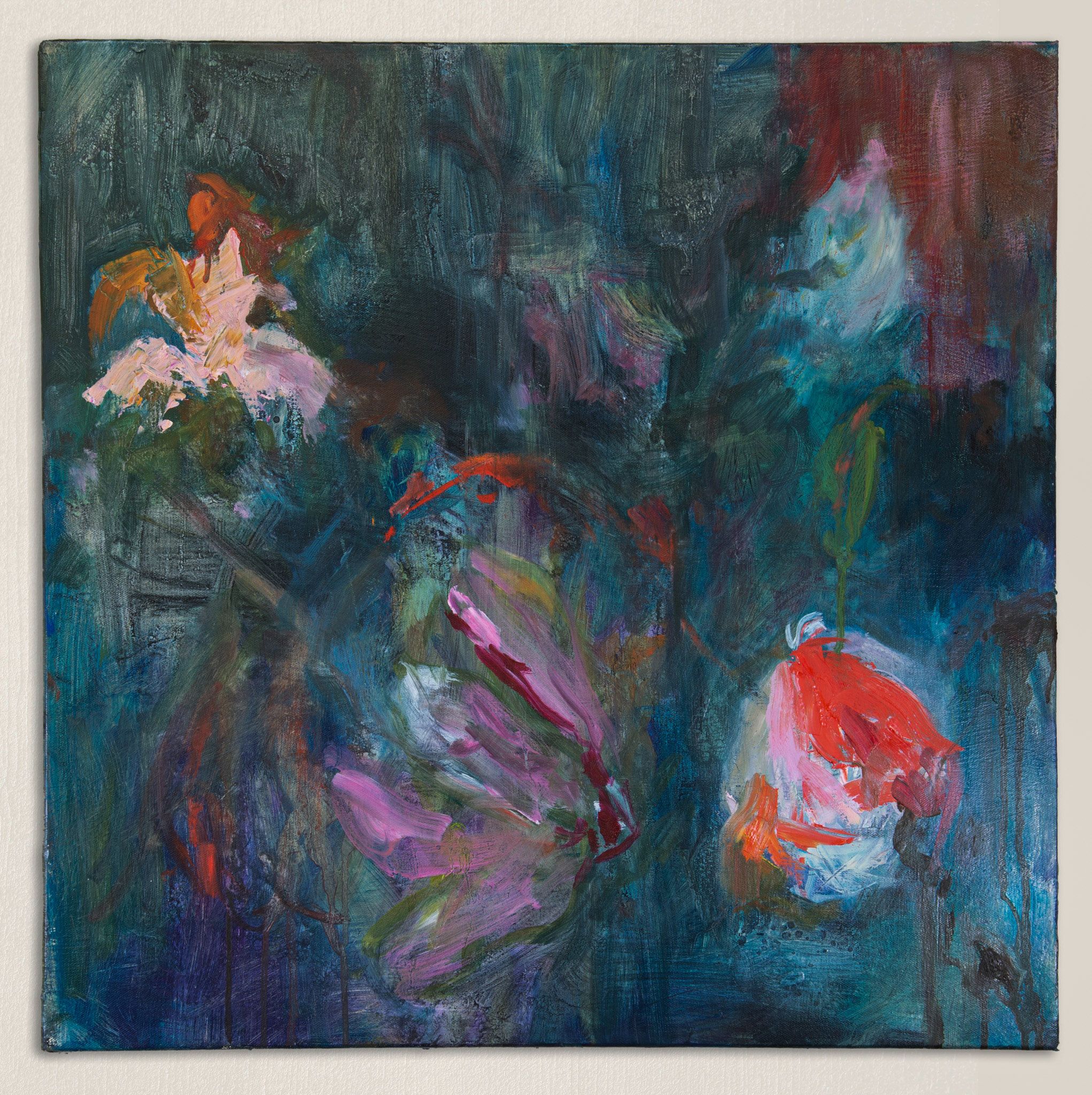
Weary Blues by Lindsay Adams hangs in the Obama Presidential Center café.
Weary Blues by Lindsay Adams hangs in the Obama Presidential Center café.
Thematically, the piece “carries forward a lineage of Black creative expression that holds space for both weariness and transcendence,” according to the Obama Center’s website. Adams, who usually doesn’t name paintings until after they’re finished, explained that the title—an homage to the Langston Hughes work of the same name—came from how her use of the color blue felt duplicative to the themes of the poem, what she was expressing and how she felt when she was making it.
“Painting exists in its own world, but it also doesn’t exist separate from all my interests in the literary expanse,” Adams added, noting that she’s an avid poetry reader. She also has a uniquely global perspective. Raised in Maryland, right outside of Washington, D.C., Adams holds degrees in Spanish and international studies. Even in past lives as a management consultant, marketing strategist, and communication strategist, she thought of herself as a painter.
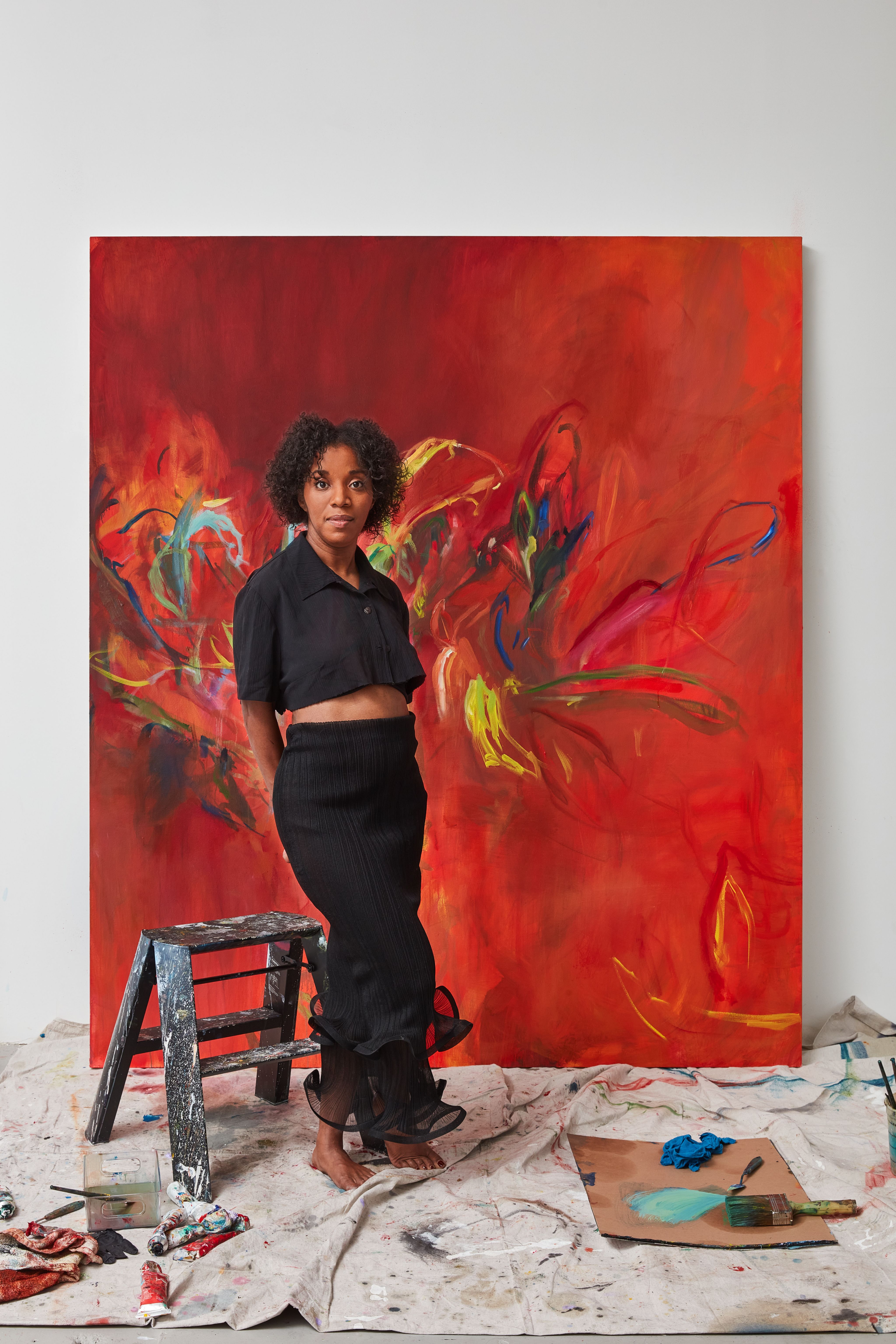
Lindsay Adams in her studio.
Lindsay Adams in her studio.
“I was still doing the things that are integral to my practice,” she said. “I was reading, I was painting, I was considering the world within and the world beyond me.” She credits the School for helping move her painting style away from more representative forms. This encouragement to “take the leap” came in the form of advisors as well as courses that broadened her art historical and theoretical perspectives.
At the Obama Center, where commissions have been extended to makers from around the globe, having art that fosters one’s immediate community while also extending the conversation outward, into the broader world, is doubly important.

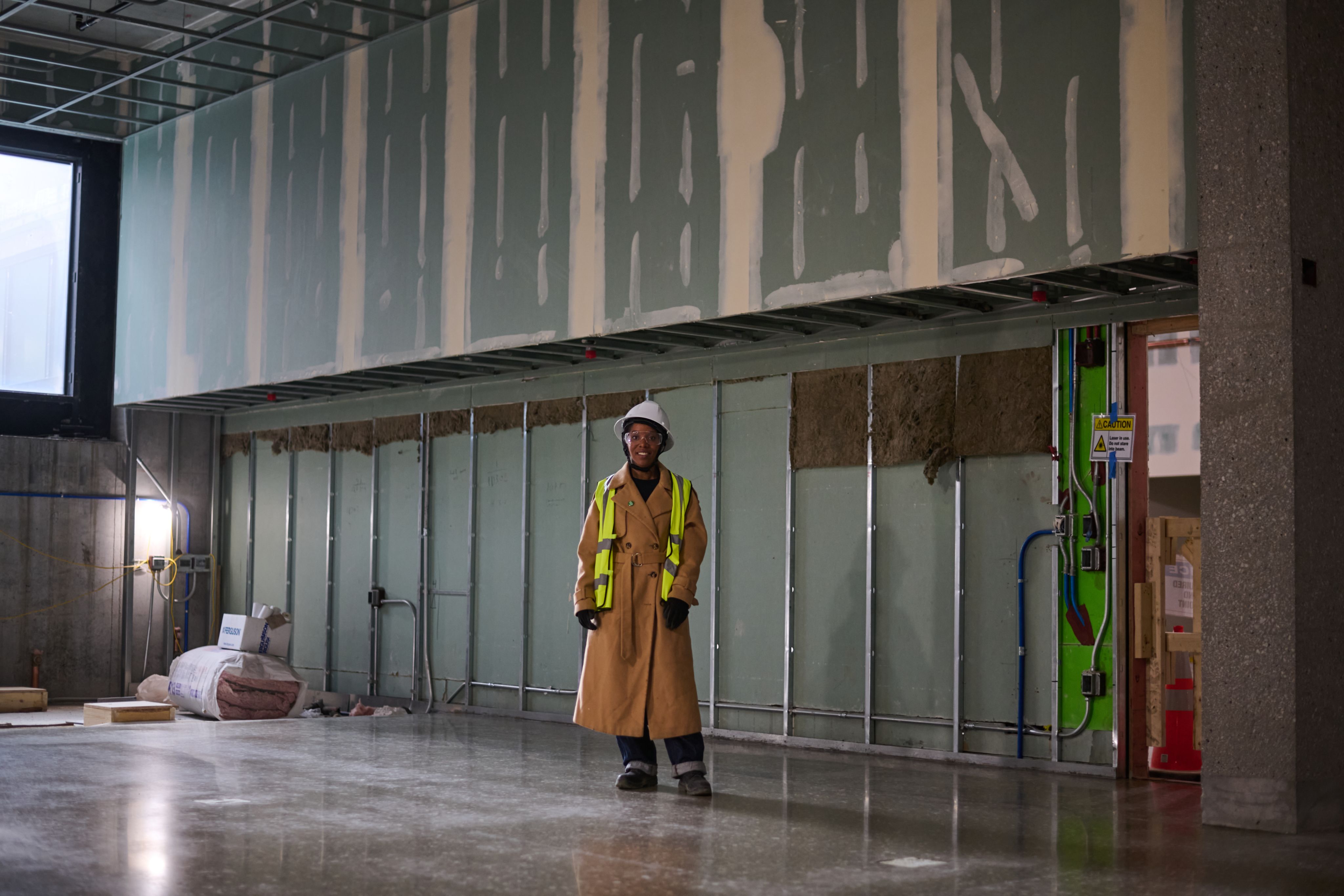
Adams on a site visit to the in-progess Obama Center.
Adams on a site visit to the in-progess Obama Center.
“Not only am I so grateful for being a part of this legacy of artists who are coming together in this cultural space,” Adams said. “My hope and my excitement is that they will continue to do that—not only through the art installations that will exist there permanently, but through programming and all the different, diverse groups of visitors who will come in and experience the center and the art in unique ways.” ■
 Built with Shorthand