Designing the Barbies of the Future with Minh-Tam Nguyen

by Taylor Moore
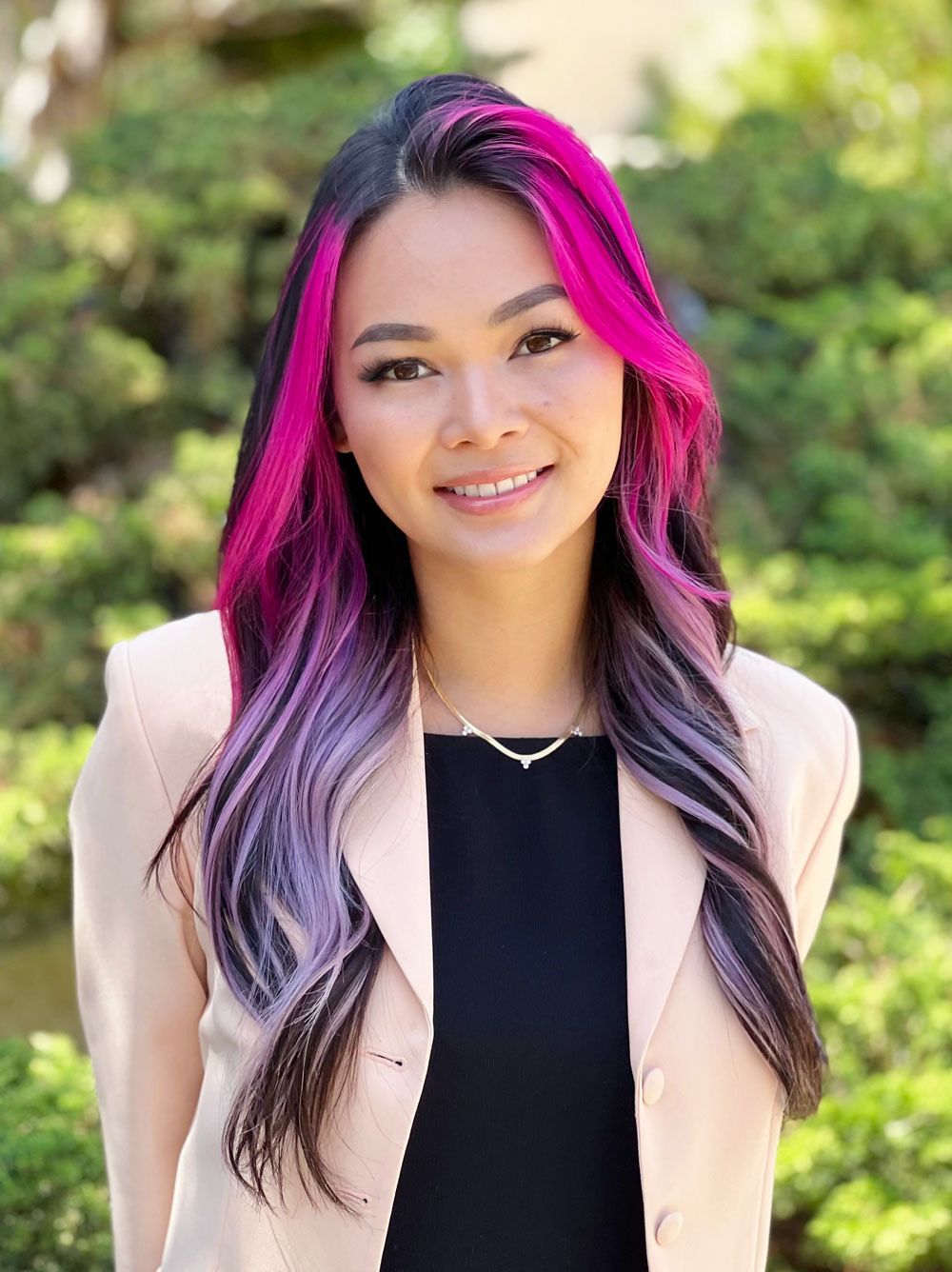
It might seem ironic that a young woman who designs Barbie dolls for a living didn’t grow up playing with them. But for School of the Art Institute of Chicago (SAIC) alum Minh-Tam Nguyen (BFA 2017), a first-generation Vietnamese American, Barbie didn’t feel relevant to her.
Back then, the typical Barbie was tall, thin, and white with blonde hair. “I just feel like as a kid—obviously, it was a very different brand back then—I didn't necessarily feel represented by them.”
Years later, Nguyen works as a senior face designer for Mattel and has become an advocate for diverse representation in toy design. “Now I get to be a part of that change, so that's just a really fulfilling full-circle part of my life,” she said.
She has since designed hundreds of Barbies, including two Lunar New Year Barbies, inspired by her own experiences celebrating the holiday; dolls modeled after celebrities like Dua Lipa and Olympic gymnasts Jordan Chiles and Jade Carey; and even a doll that was launched into space.
She credits her interdisciplinary SAIC education, which trained her in graphic design, painting, and figure drawing, with preparing her for this niche position. “I got to delve into so many different principles, and because of that, I ended up in a job that literally uses all these pieces of my art education.”
We spoke to Nguyen about her design process, why diversity is so important in toys, and advice for young artists.

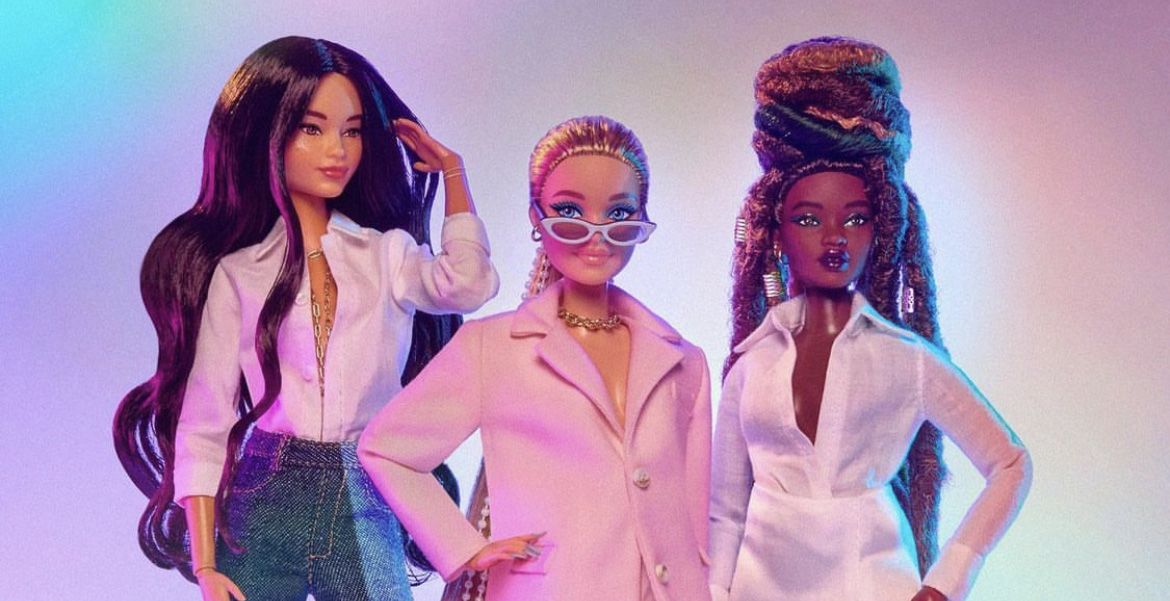
The Barbies Nguyen works on represent an ever-widening focus on diversity.
The Barbies Nguyen works on represent an ever-widening focus on diversity.
What goes into designing a Barbie?
One of my favorite projects that I’ve ever worked on was when I designed a doll in the likeness of the singer Aaliyah. I believe it's really important to capture the essence of the person. Just because you can capture exactly what someone looks like from their photo, it doesn't translate to who they really are.
For Barbies that we make in house, it can be more fluid. For example, I can be working on a doll, and this doll is a Latina zookeeper. It's really important to me to try to represent more niche cultures. So, I would pick a specific Indigenous group from the region, research their people and culture, and if I know someone that is a part of that group, I'll ask, “What facial features specifically would make you feel represented by a doll?”

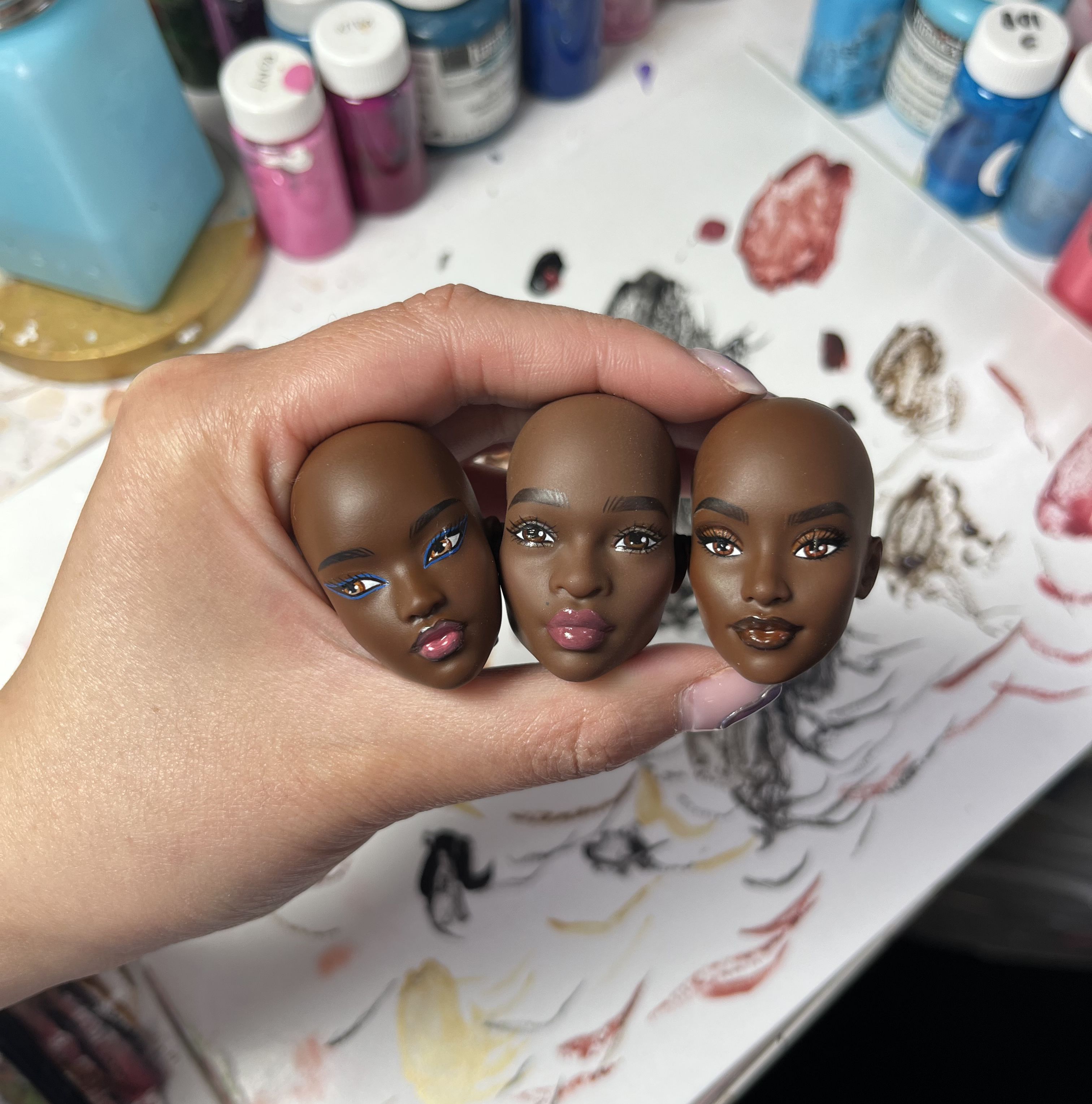
Nguyen has perfected painting minuscule details and subtle expressions.
Nguyen has perfected painting minuscule details and subtle expressions.
I've noticed that type of cultural sensitivity when looking at your work, even just thinking about the Aaliyah doll you designed. She has edges. Baby-hair styling is very popular with Black women, and I don't think the Barbie dolls from 20 years ago would've included that. Why do you think diversity in dolls is important?
Luckily, I joined the Barbie team at a point where they were already making that shift. It's really refreshing because I don't have to fight to be like, “Oh, we have to pay the extra two cents to get those edges printed on the Barbie's head.” They already know we should do that because it is important in the representation of that doll and her background.
I love the feeling when people look at a Barbie and they're like, “Oh my gosh, they finally made a Barbie look like this!” That makes me feel so good about the work I do.

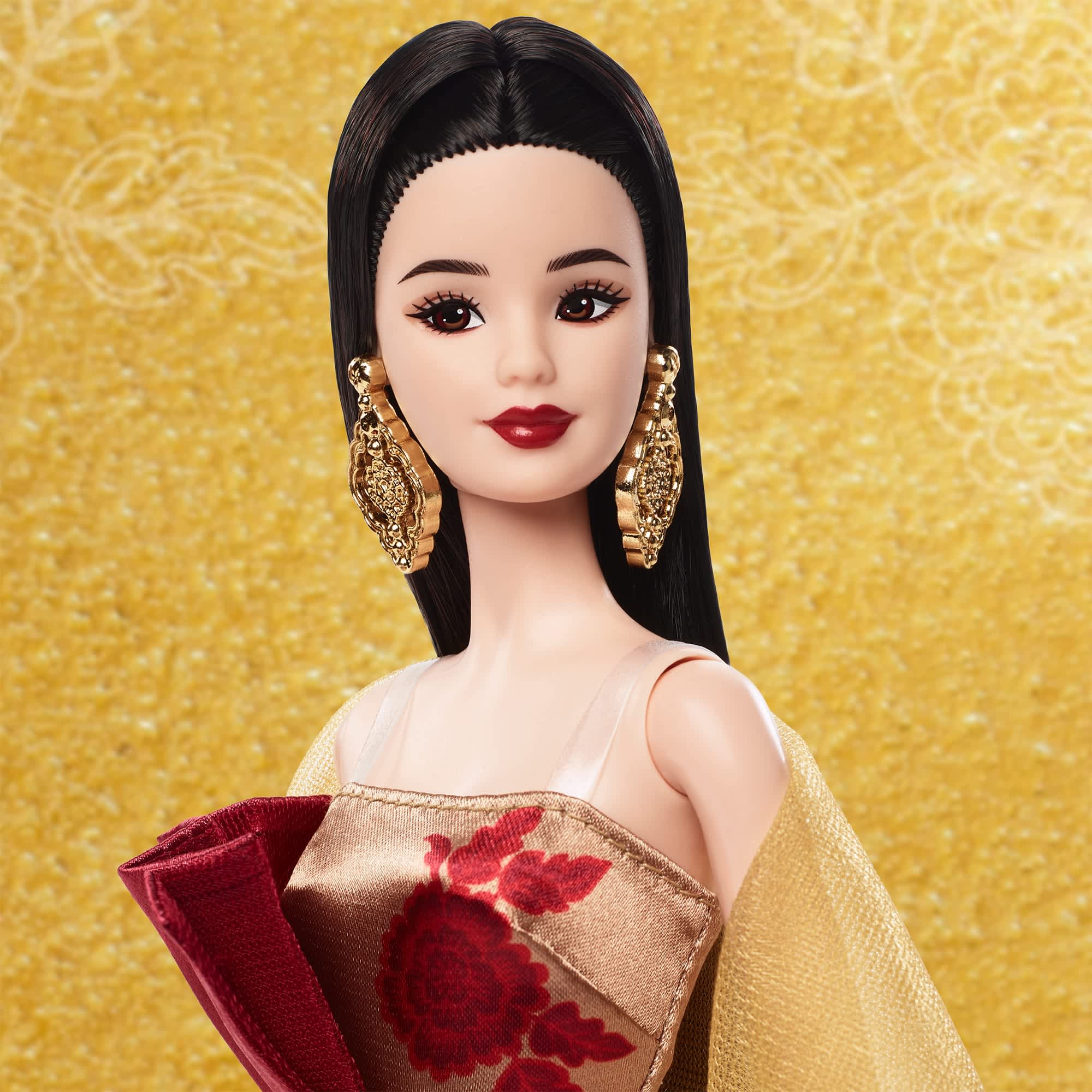
Nguyen designed this Barbie to celebrate the Lunar New Year.
Nguyen designed this Barbie to celebrate the Lunar New Year.
What made you decide to post on Instagram about your work?
The process of face painting is so interesting because nobody really knows it exists. So I make a lot of time-lapsed videos where I’m painting, and people become mindful that someone really sits there with a tiny paintbrush for hours. It's a really refined skill. I had to train for years until I was even slightly good at this. You have to paint so many horrible faces before you start painting good ones.

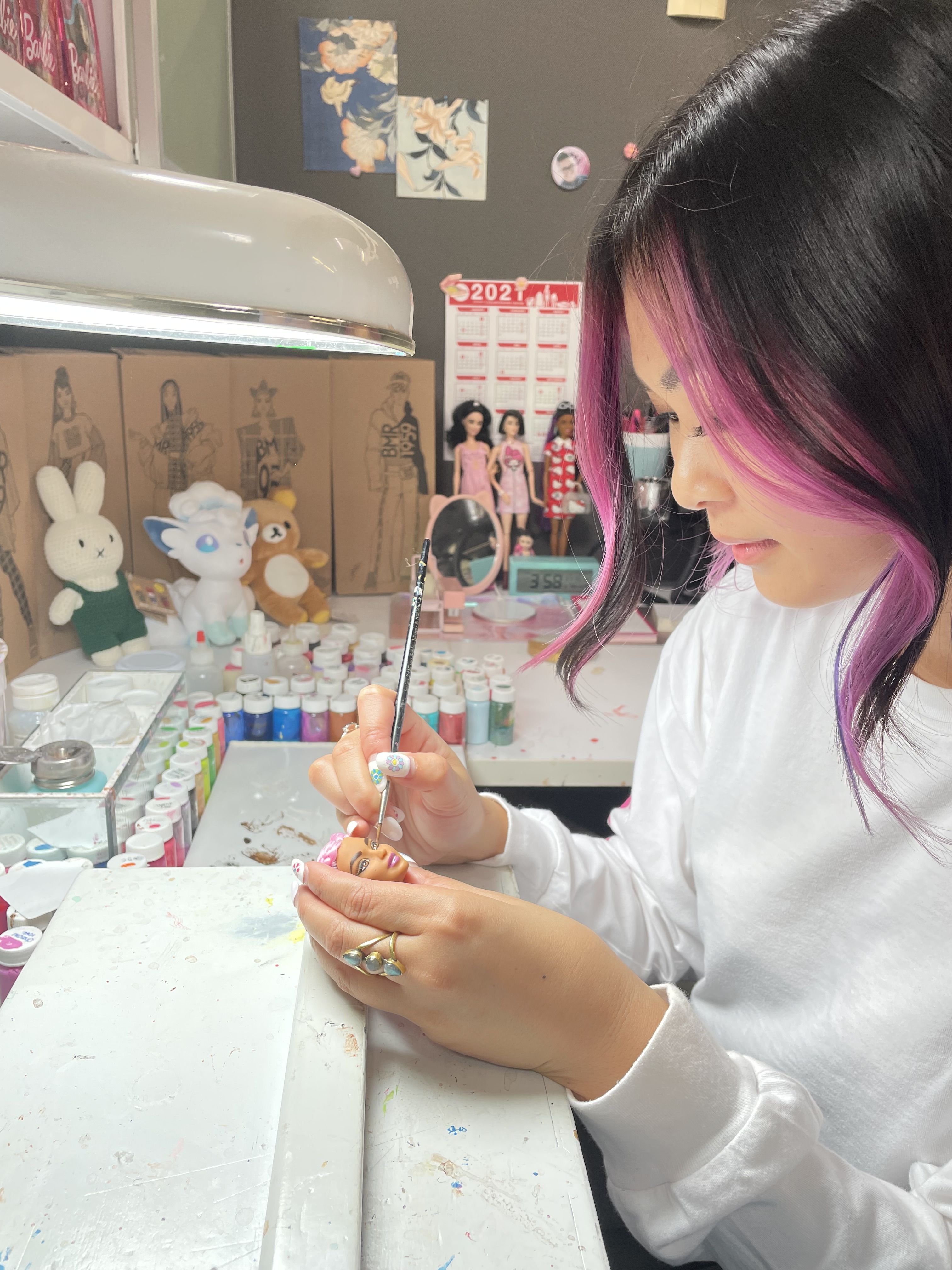
Nguyen paints a doll head at her work space.
Nguyen paints a doll head at her work space.
Do you have any advice for young artists?
Work hard and be nice to people. You can't just pop out of college and expect to get an amazing job right away without trying. It's a really competitive field, so you have to refine your skills and spend hours of doing whatever it is you want to do. People will recognize that and you will be rewarded for that.
People enjoy working with others that are kind and patient, and I feel like that has opened so many doors for me in life. That will take you so many places. ■
 Built with Shorthand