
Photo by Sarah Gerard
Books and Basketball: Author and Alum Patrick Cottrell’s Inspirations
A mysterious envelope. A dead brother. A homecoming. A case to unravel.
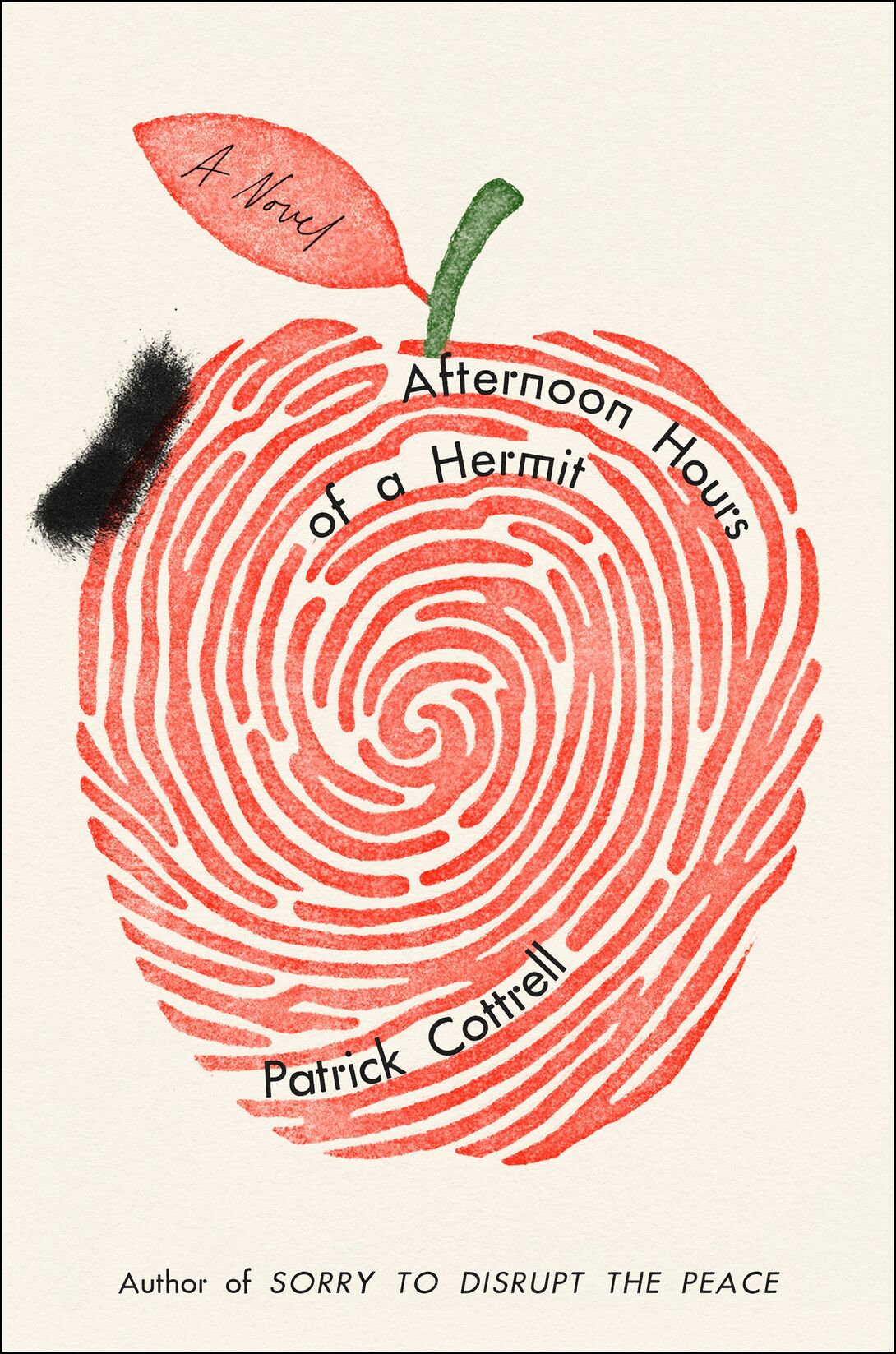
Patrick Cottrell’s (MFA 2012) much-anticipated second novel, Afternoon Hours of a Hermit, takes the form of a mystery. The book follows protagonist Dan Moran, a trans author who receives a mis-addressed envelope containing a childhood picture of his dead brother. Who sent this photo? And why? The eve of his brother’s memorial dinner, Dan returns to his hometown, reclaims his brother’s Honda Accord, and begins his investigation. “I attempted to write a real mystery, a real detective novel about a man driving around in a car, but I don't know if it worked the way I intended it to,” said Cottrell. “Personally, I think it's plot-driven and that it has nothing to do with autofiction, but other people might disagree.”
Cottrell studied writing at the School of the Art Institute of Chicago, where he learned to approach his work with an open mind. “My main takeaway was to be open to the pathways of absurdity, ambiguity, and intuition rather than some kind of set understanding of the world,” he says. Here, Cottrell shares four things that have been shaping his artistic approach.
Ladivine by Marie NDiaye: So many of my writer friends who I adore have recommended NDiaye’s work and it took me a long time to get into her. Once I did, I didn't stop thinking about her or talking about her. I think Ladivine is one of the best books of this century. The way she writes about race and identity is incredibly dark, claustrophobic, and oblique. She doesn't flatten identity into cliches and tropes. Every writer who has read Ladivine likes different things about it.
Basketball: I'll watch men's, women's, college, or professional; it doesn't matter. I think I prefer watching the women because they play harder, especially at the professional level. The men in the NBA can coast throughout the season because of their physical gifts, but the women don't do that. They play hard and hustle each game. Watching basketball is magical and helps me stay mentally well so I can keep writing and working. It actually takes up a huge amount of time in my life—reading about it, talking about it, watching it. Maybe too much … but for me, it's a form of happiness.
Author Claire-Louise Bennett’s Sentences: I just enjoy being immersed in her worlds, her sentences, her atmosphere. She doesn't care too much about plot or narrative, rather her medium is the sentence as a texture, as an organism, as a toxic bloom, etc. I love all three of her books, including the latest one, Big Kiss, Bye-Bye.
This specific paragraph: This anecdote about Brazilian writer Clarice Lispector written by José Castello and translated by Katrina Dodson, posted on The Paris Review—I feel as if this anecdote contains everything there is to know about what it feels like to encounter another human:
“Time passes, and we run into each other on the street. Clarice is standing still in front of a shop window on Avenida Copacabana and seems to be looking at a dress. Embarrassed, I approach her. ‘How are you?’ I say. It takes her a long time to turn around. At first she doesn’t move, as if she hadn’t heard a thing, but then, before I get the nerve to say hello again, she turns slowly, as if searching for the source of something frightening, and says, ‘So it’s you.’ In that moment, horrified, I realize that the shop window contains nothing but undressed mannequins.”
SAIC Historic Preservation Professor Charles Pipal recently received the AIA Illinois Educator Award.
