
Multimedia Artist Aaron Curry Wants to Capture the Chaos
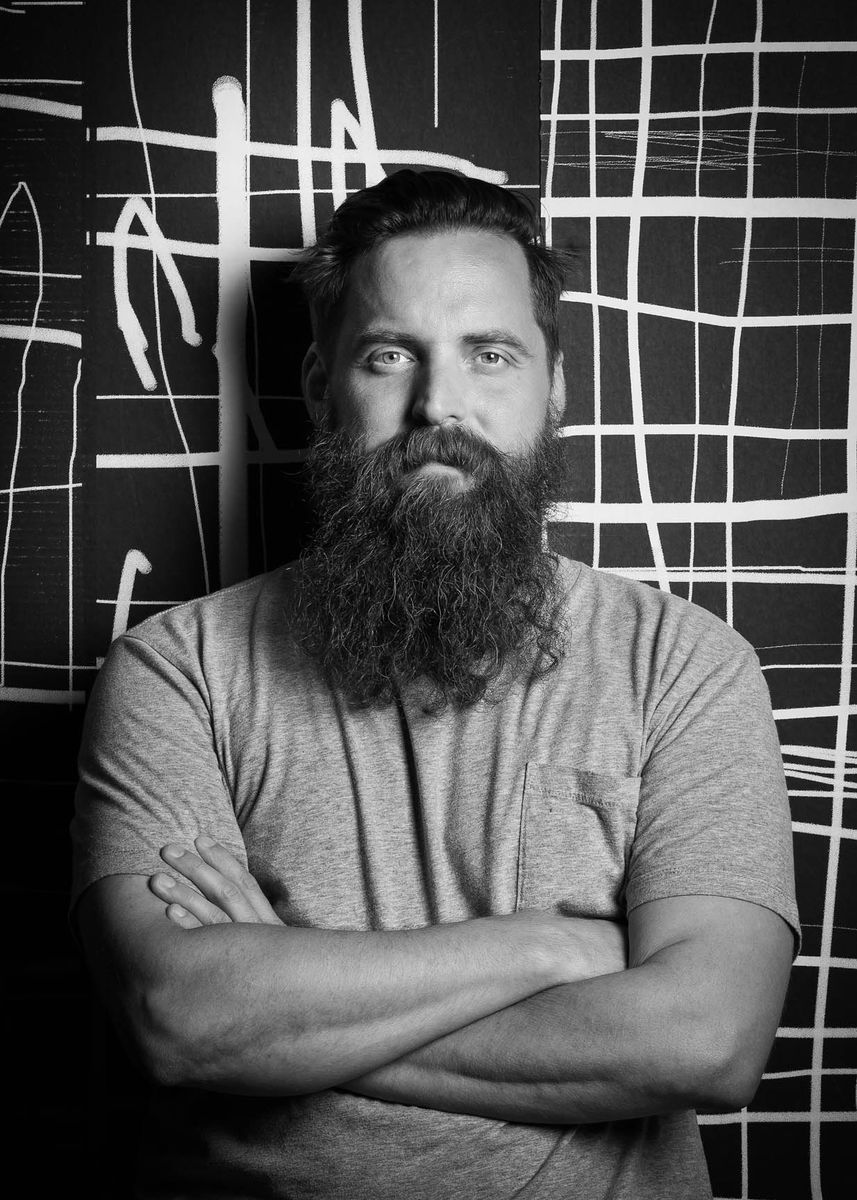

by J. Howard Rosier (MFA 2018)
The shapes of School of the Art Institute of Chicago (SAIC) alum Aaron Curry’s (BFA 2002) works are familiar, calling to mind the sweeping symmetries of Alexander Calder or the muscular dominance of Richard Hunt (BA 1957, HON 1979).
But the colors. Heavily saturated pinks, greens, and oranges reel the eye in to reveal richly ingrained textures, and densely packed primary colors assume the form of splatters and squiggles, complicating where your gaze should focus. The journey—at times brisk, meandering, arduous, scenic—lies in the deciding.

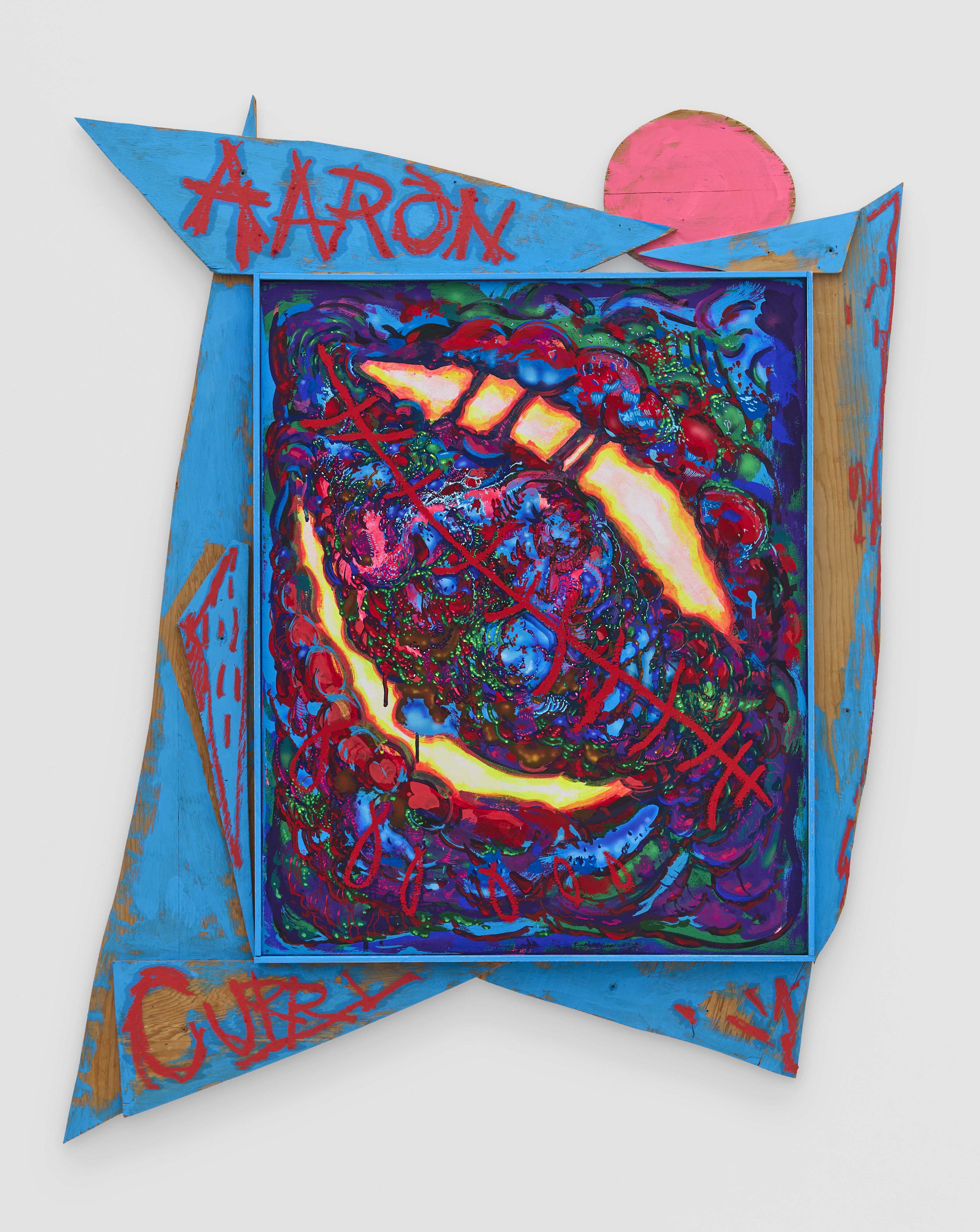
Doomsday Guck Abstraction (Blue), 2021
Doomsday Guck Abstraction (Blue), 2021
“It can be kind of gnarly and off-putting, but I like that it creates a kind of tension.”
Curry is currently preparing a solo exhibition for New York’s David Kordansky Gallery later this year. His work, whether it’s sculpture, painting, or something else entirely, introduces a secure set of parameters to mitigate this chaos. With the kinetic energy of Curry’s art, viewing becomes an activity rather than an imperative.

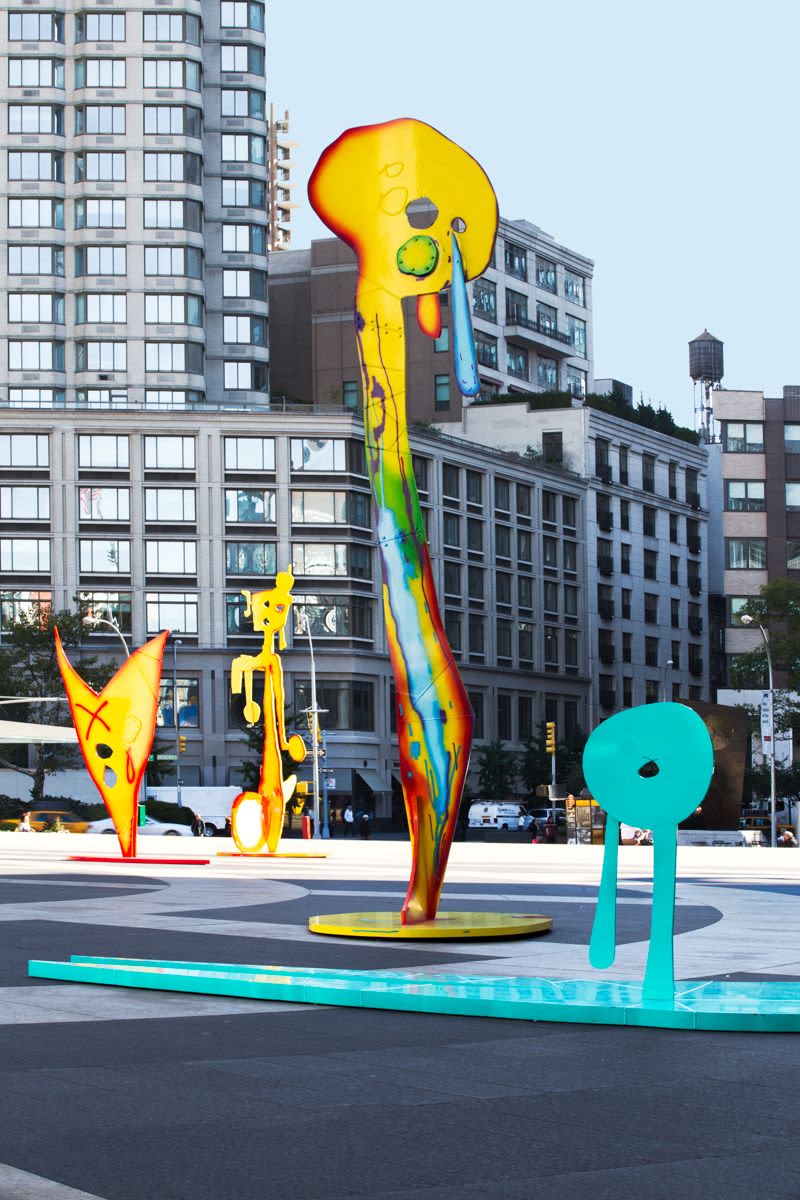
Curry's sculpture installation Melt to Earth at the Lincoln Center.
Curry's sculpture installation Melt to Earth at the Lincoln Center.
Much of this sense of movement comes from Curry’s own mind; he maintains a regular drawing practice, which helps him process striking or inspiring imagery that he’s seen. This literal activity of looking was encouraged by the late Chicago Imagist Barbara Rossi (MFA 1970), a professor of Curry’s when he attended SAIC in the '90s.
“She had this exercise where she would make students go out every week and try to find something that spoke to them visually, and you'd have to come back and tell everyone about it, like a show and tell,” he said. “It made me really try to tune into things that were speaking to me visually out in the world. If there's an image of something that's really interesting to me, I file it away.”
Today, Curry's practice still centers on the simple act of looking. From collecting books and magazines to photos on his own hard drive, Curry has always been a collector of images. At SAIC, he even worked at the Art Institute of Chicago’s Ryerson & Burnham Library, a dream job for an image-obsessed art student. Working from his home art studio, he still likes to take walks and see what inspires him. “It could be anything from a sparkle paint finish on a car, to two tree branches that have grown together to form an interesting shape or negative space. I usually take a photo with my phone if it is something out in the world,” he said.
How this practice manifests in his own work varies; with Curry’s sculptures, for example, he begins building a piece, then, assessing what’s there physically in the space, he might ask himself a series of questions: What is that thing doing? Or what is it about?

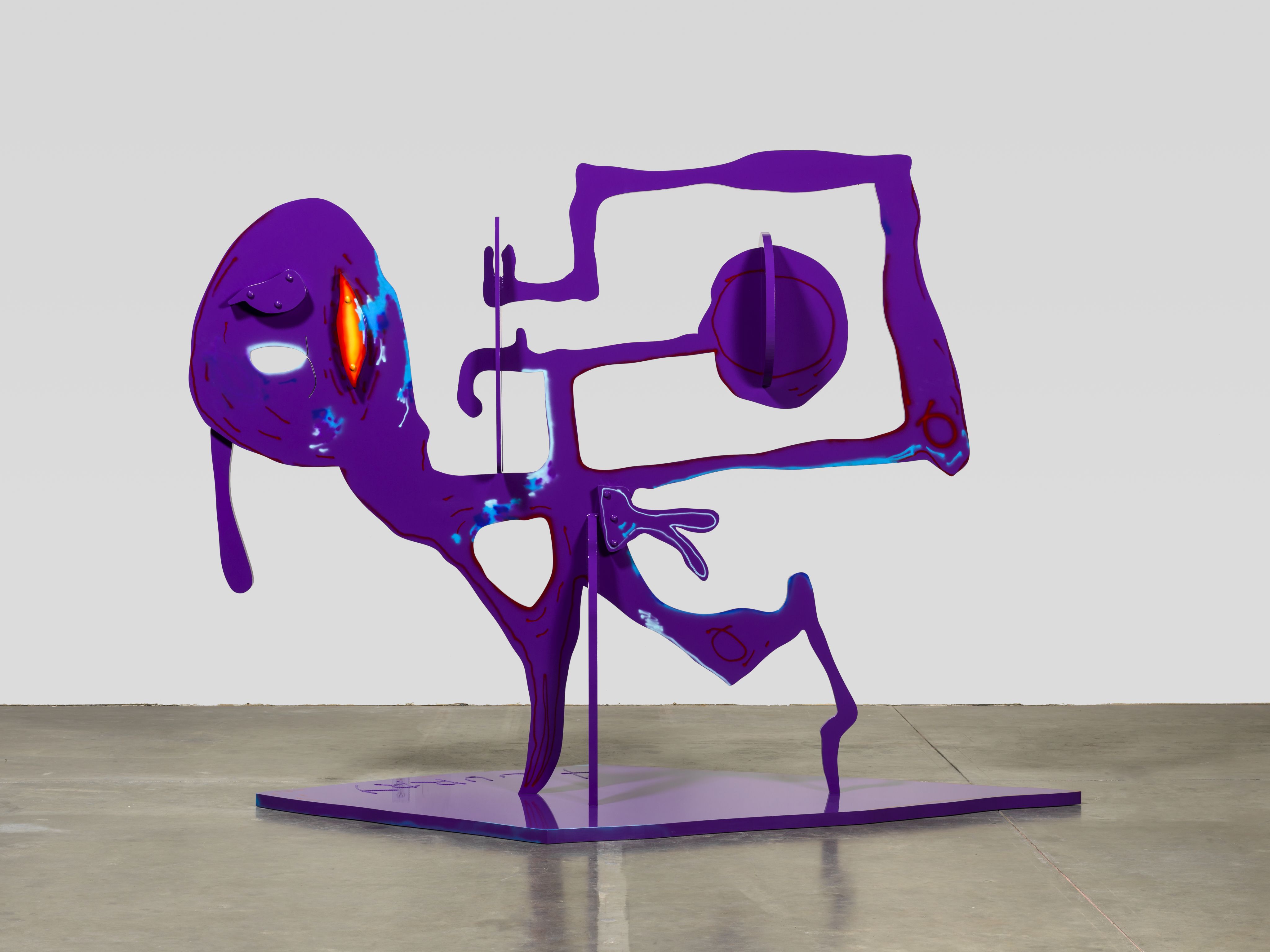
Weird Dude Concept, 2013
Weird Dude Concept, 2013
Ultimately, his works acknowledge his influences while not being tethered to them. “Sometimes you hear a new song, and you're like, ‘Wow, that kind of reminds me of something,’” Curry explained. “But it's not that. It's its own thing.”
Curry has been doing his own thing since he was a child growing up with artistic inclinations in San Antonio. Although he “didn’t know what an artist was, necessarily,” he recalls being the kid who always drew in class, which turned into a predilection for his high school art classes. Mulling college, he began hearing about SAIC’s reputation.

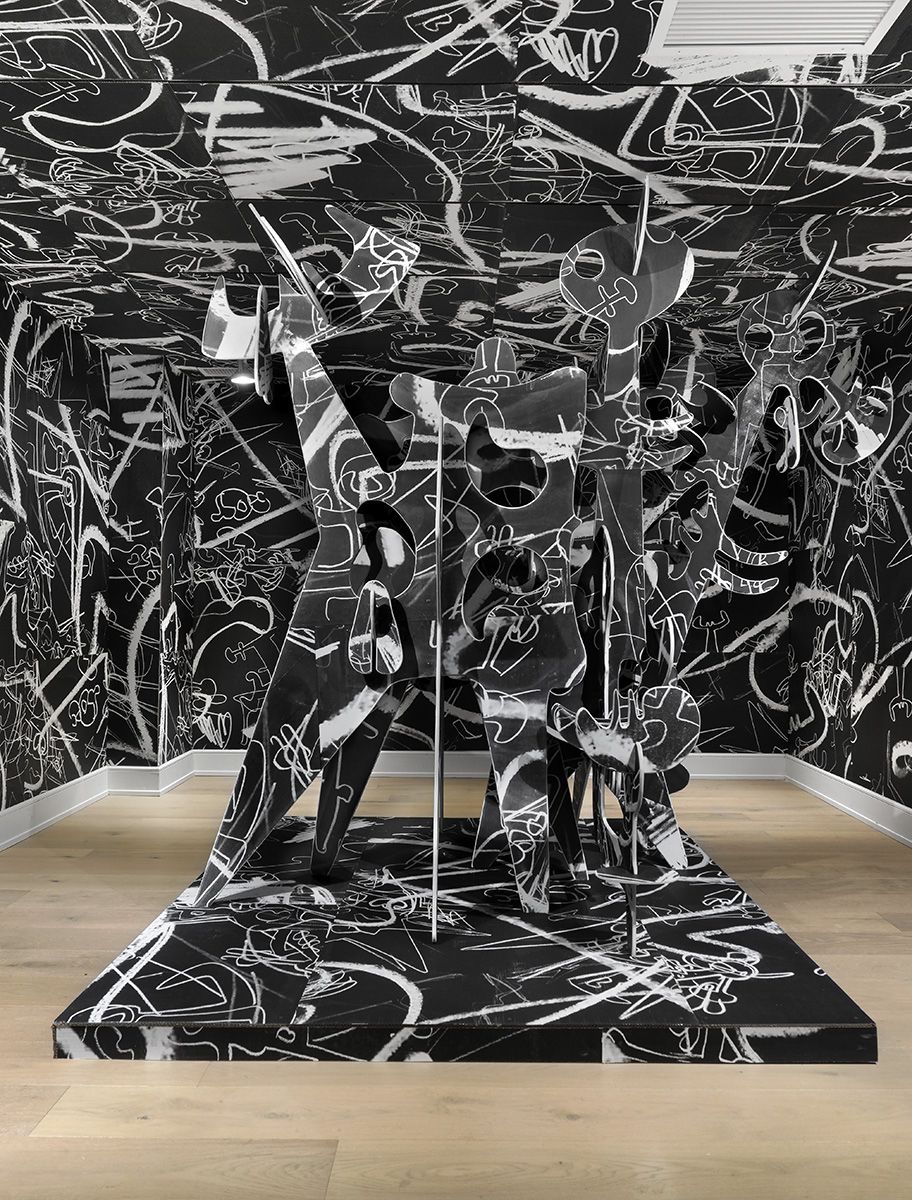
Curry's installation No Idea at the Bass Museum.
Curry's installation No Idea at the Bass Museum.
“People were like, ‘Oh, the School of the Art Institute of Chicago is, like, the best school to go to,’” he said. “I didn't know anything about the city, or the artists teaching there, or the art scene, or anything.”
Curry decided to go to community college for a year, only to get accepted into SAIC during a Portfolio Day visit. He and his wife moved soon after, scouting out the city’s art scene in Newcity and the Chicago Reader. An evening trip to the Thomas Monahan gallery in River North introduced the couple to the work of Peter Saul, a huge influence

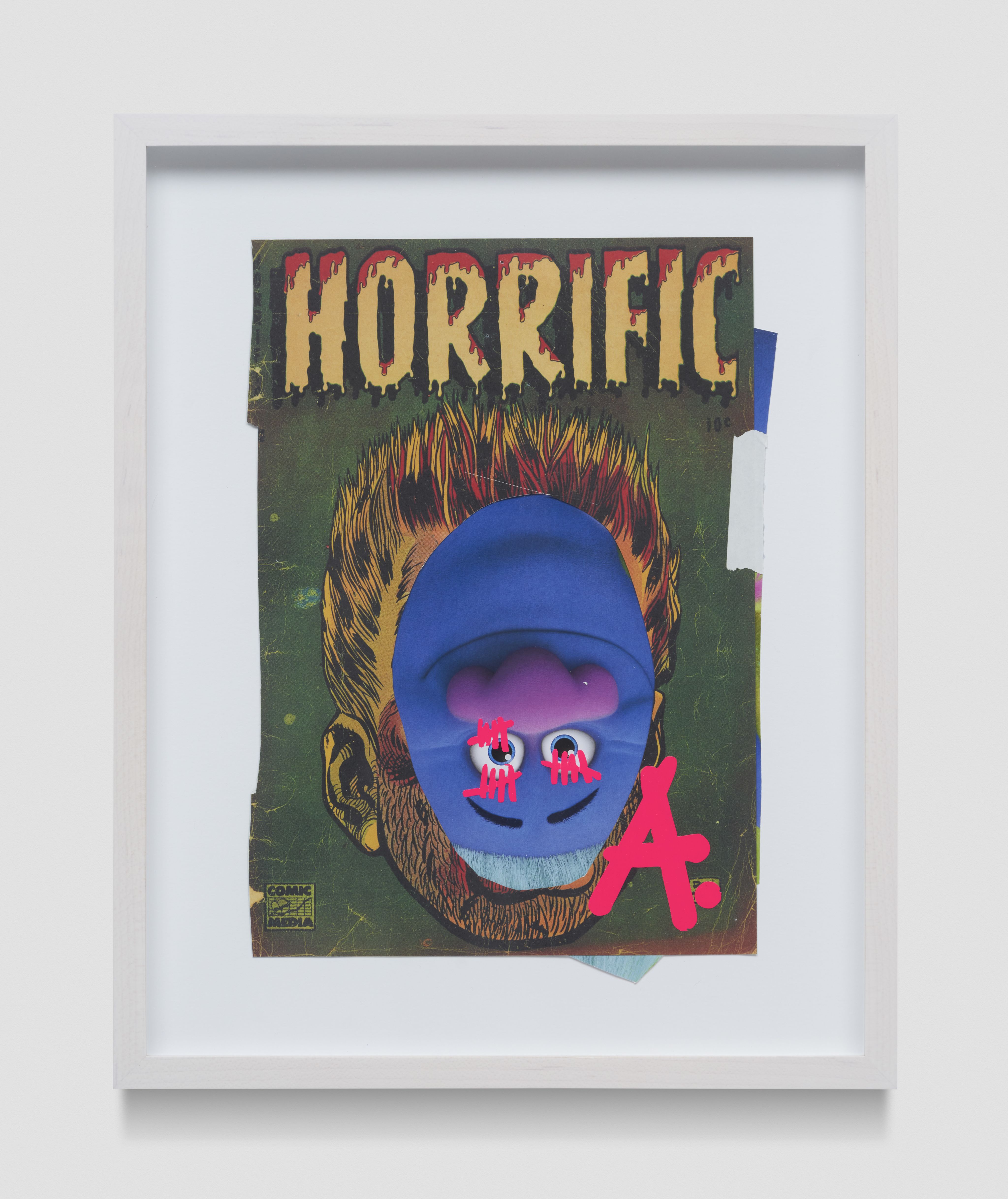
All Good, 2020
All Good, 2020
“I was coming from a skateboard background and this comic language that spoke to me as a young artist at the time.”
A Roger Brown (BFA 1968, MFA 1970) show at Phyllis Kind Gallery introduced him to the Chicago Imagists. Rossi and Karl Wirsum (BFA 1961, HON 2016) remain standouts, though he also cites the influence of Jim Nutt (BFA 1967, HON 2016).
“[The Imagists’] use of color really made sense to me, because I had already been looking at stuff that was kind of garish and that was used in not-so-subtle ways,” he said. “It really spoke to me, and I think it’s something that I’ve just carried forward and continued to use in the same way.”

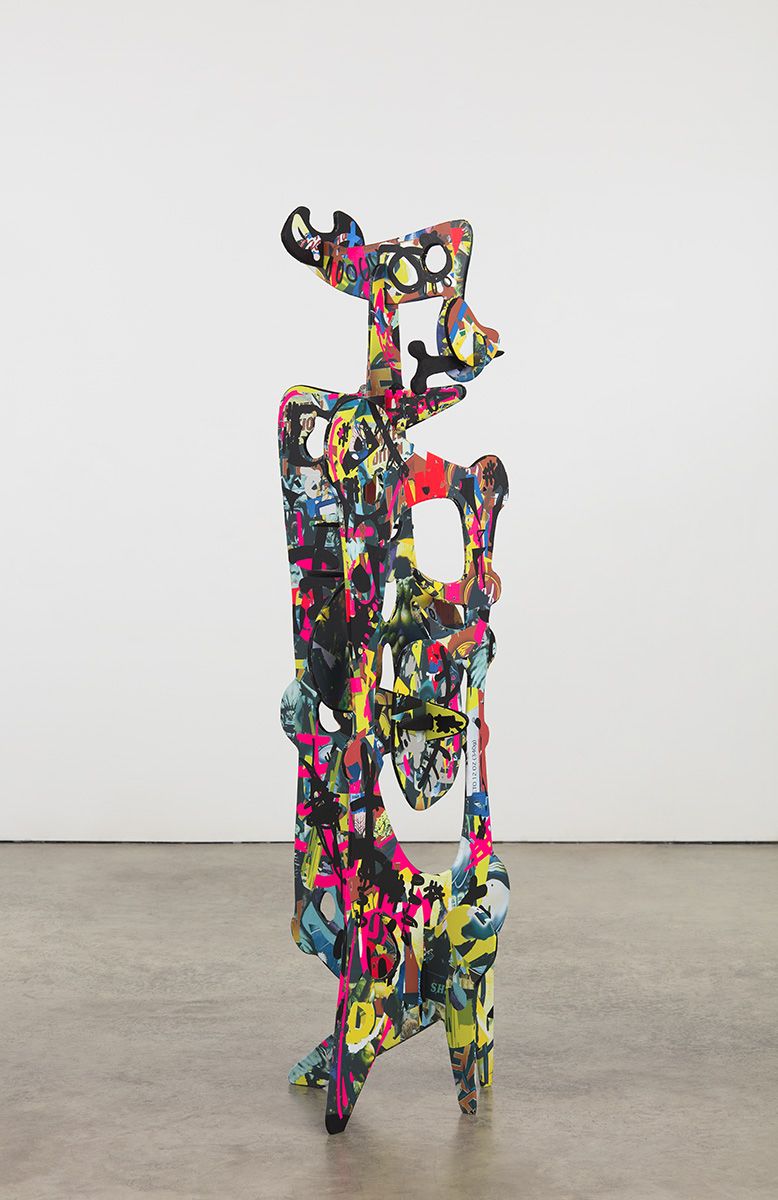
Scramble Man, 2020
Scramble Man, 2020
After a six-year hiatus, Curry finished his bachelor’s at SAIC in 2002, then moved to Pasadena, California, to get his master of fine arts at ArtCenter College of Design. His breakout show came three years later, at the Rubell Family Collection in Miami, in an exhibit showcasing artists from Los Angeles. Gallerists and buyers came calling afterward, though part of the challenge to Curry is maintaining the playful, incendiary energy of his forebearers.

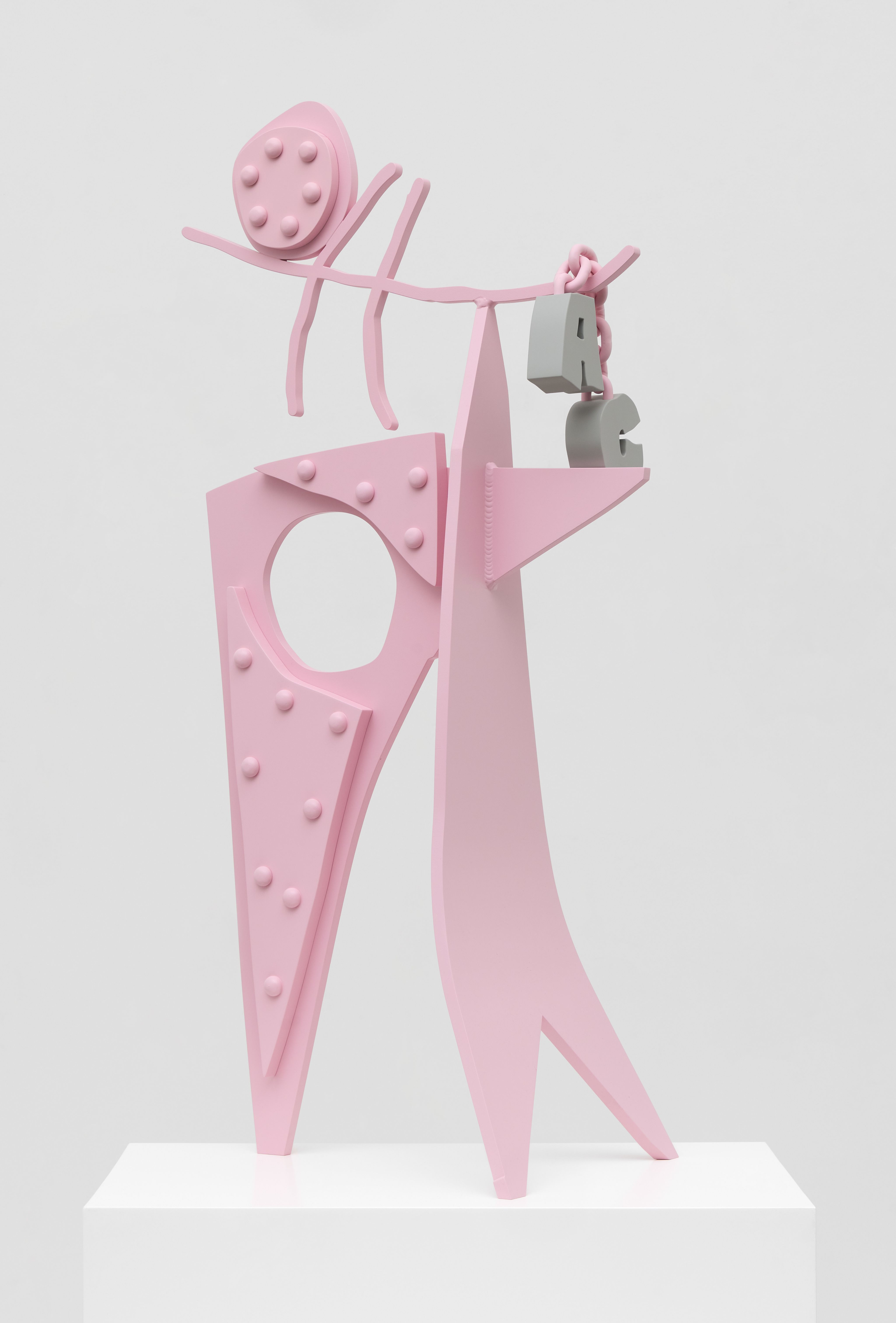
Pink Knight, 2022
Pink Knight, 2022
“Once you do find yourself with a little bit of success, it's the story we've all heard, where the gallery is like, ‘Hey, can you make more of what you made before, because that sells.’ And then at a certain point, people start to associate you with the thing that looks that way,” he said. “It doesn't lend itself to creativity. I just try to make things that excite me.” ■
 Built with Shorthand