
Community in a Spray Can

by Joe Giovannetti
When Anna Chapman (MA 2022) enrolled in the School of the Art Institute of Chicago’s (SAIC) art education master’s program, she didn’t know that a connection with her then-instructor Lavie Raven would blossom into an annual course bridging high school students and Chicago communities.
Together, Chapman and Raven teach Urban Canvas: Street Art & Community in Chicago, a two-week class for high school juniors and seniors exploring the world of public art. The final project? One collaboratively conceived, student-made piece to live in Chicago’s streets.
The pair met in a virtual SAIC classroom—Raven was one of Chapman’s graduate instructors, and they recall forming a near-instant bond. Upon graduation, Raven invited Chapman to co-teach the Early College Program Summer Institute course, and their collaboration has only deepened from there.
“It's been awesome working with Anna. She is such a well-trained visual artist,” Raven said. “And I am a hip-hop artist with seeds here in the ground in Chicago.”
The two artists embrace their complementary skillsets to inform the course’s structure. Raven, a self-proclaimed “organically developed” creator with deep roots in graffiti writing, teaches writing histories, leads public art tours, and introduces spray-painting. Chapman, a triple-degree-earning studio artist with backgrounds in painting and sustainability, imparts her signature wheatpasting and multilayer stenciling techniques.

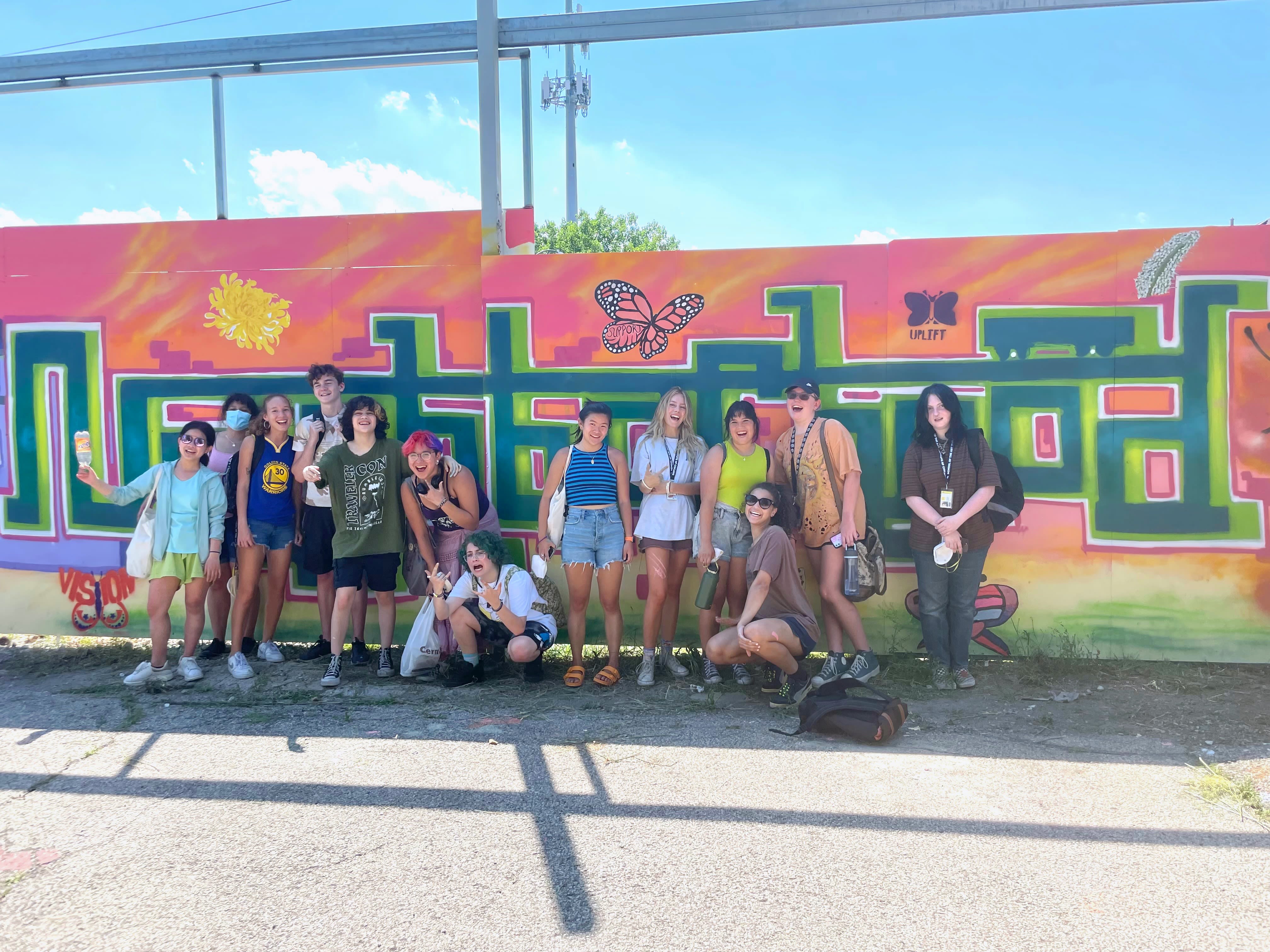
The class poses in front of the mural they created together.
The class poses in front of the mural they created together.

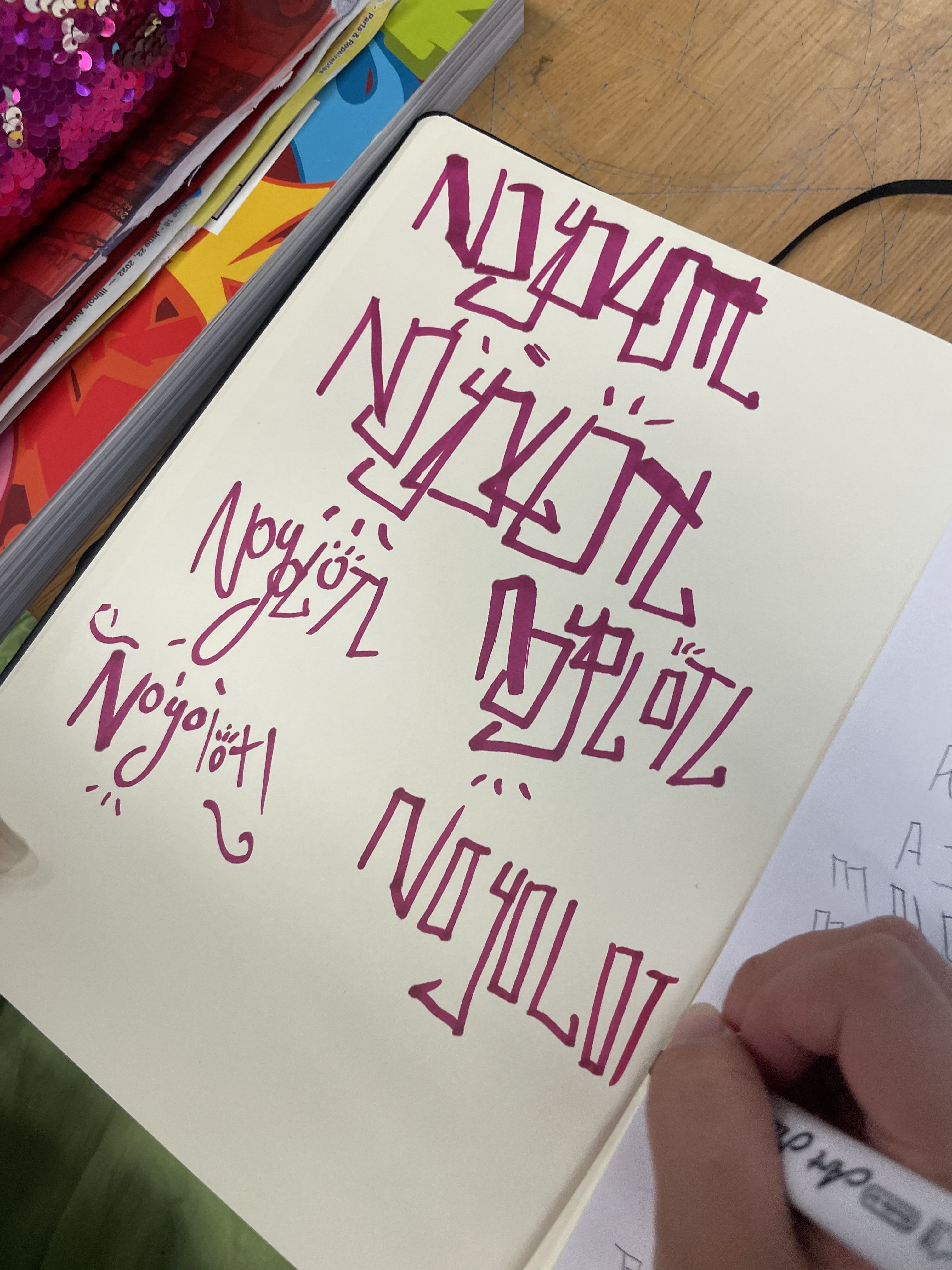
A student practices hand-lettering.
A student practices hand-lettering.

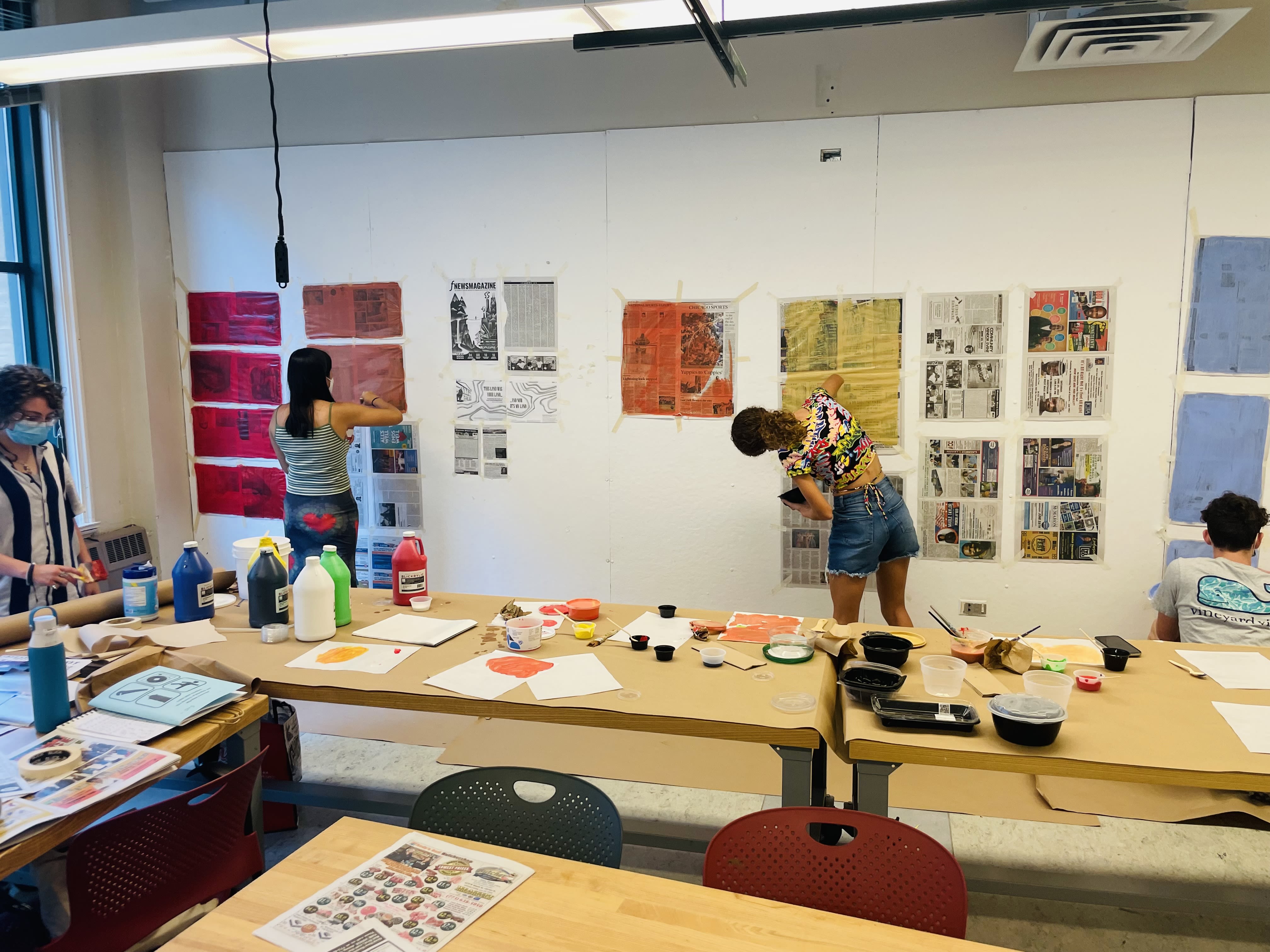
Students gather in the classroom.
Students gather in the classroom.

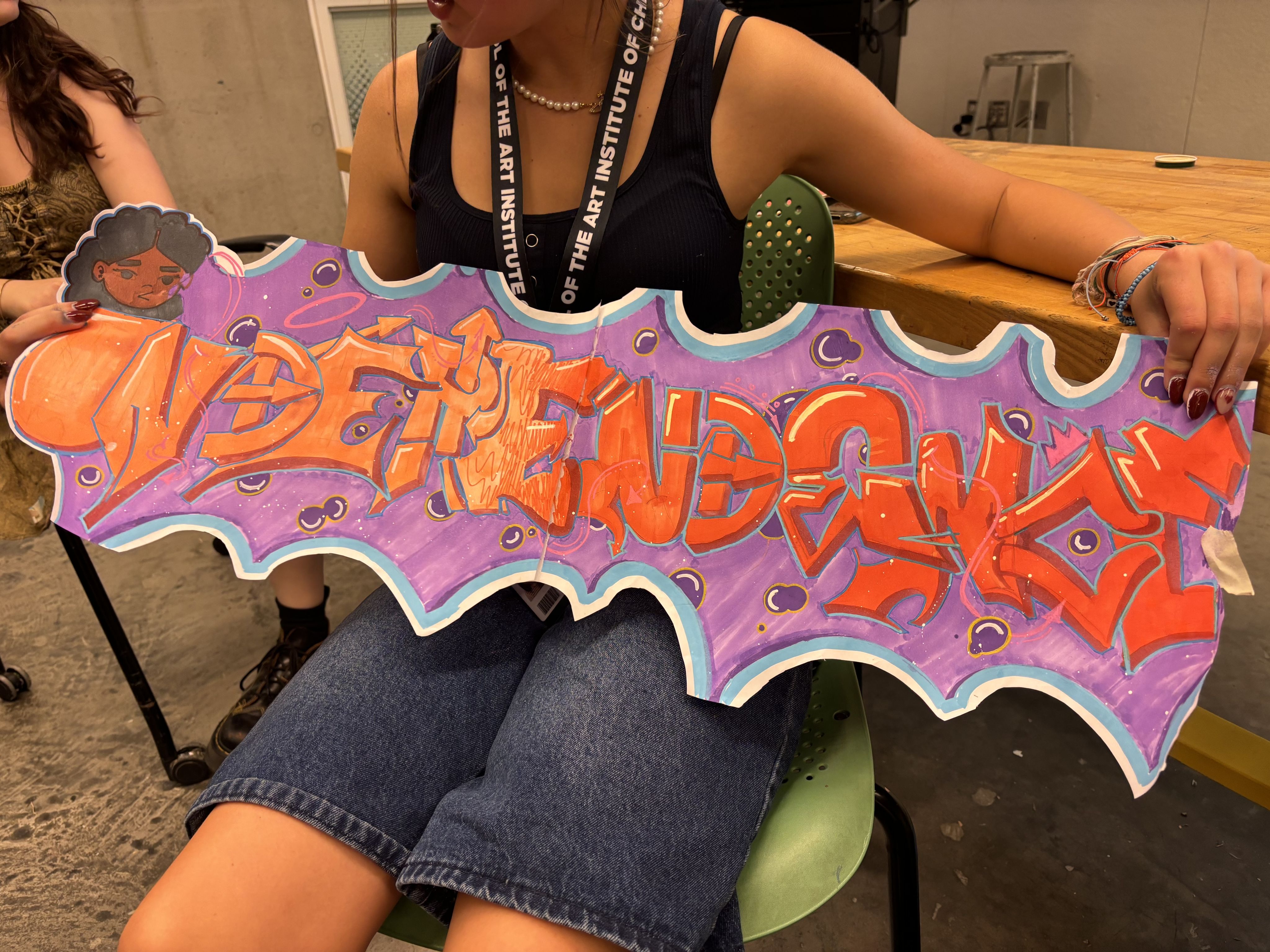
Students explore the colors, shapes, and messages of street art before creating their own.
Students explore the colors, shapes, and messages of street art before creating their own.
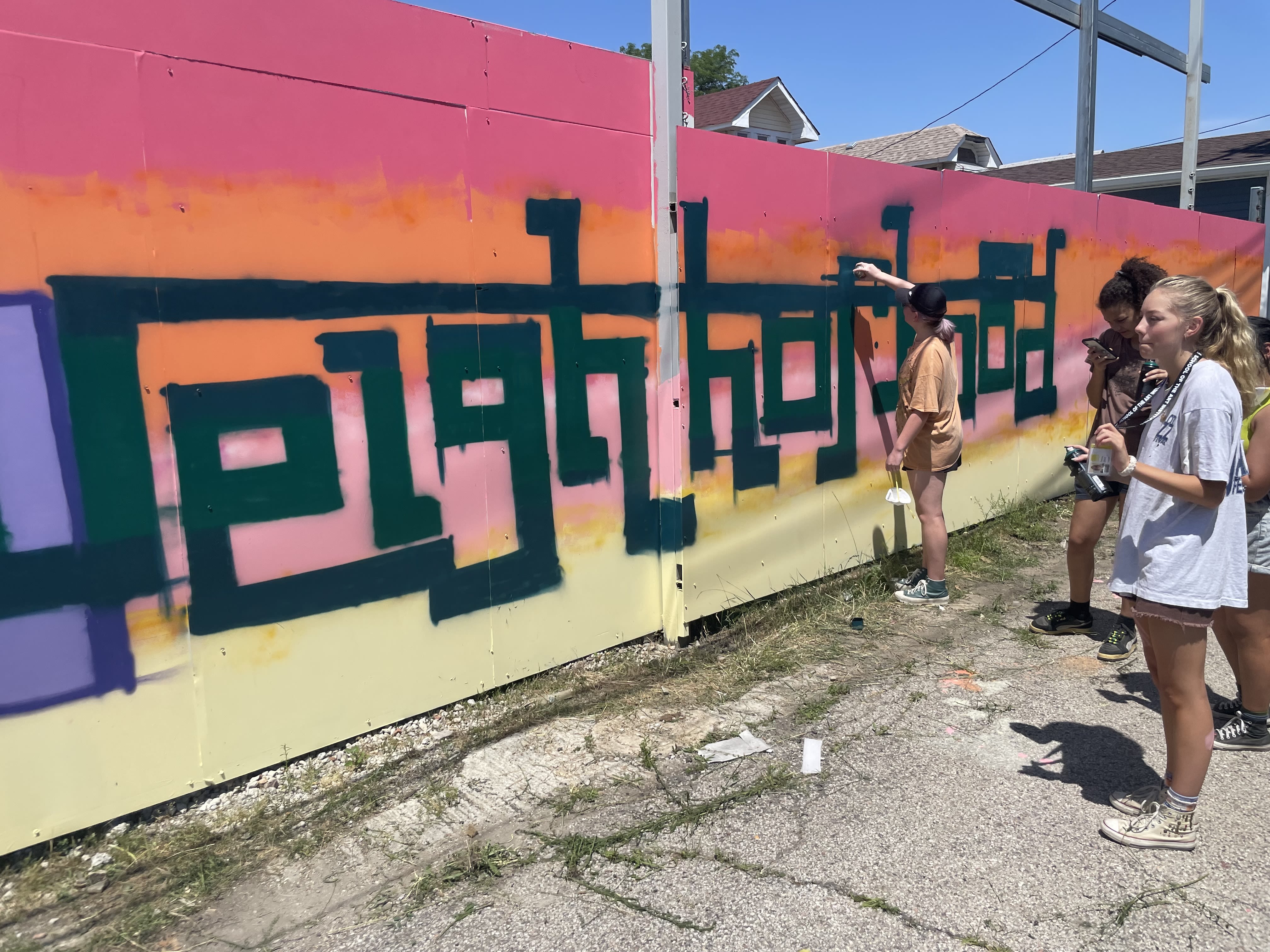
The class takes to the streets to create their mural.
The class takes to the streets to create their mural.
“You have to learn skills to play jazz, right?” said Chapman. “We give them raw skills so they can use those tools to communicate their own passions, intentions, or visions.”
Once the students have studied the art form’s evolution, explored real-world examples on field trips, and practiced their writing techniques in the classroom, they pivot to the culminating project—an immediate opportunity to apply their newfound knowledge.
Each year, Raven identifies a community project, such as partnerships with the Bishop Shepard Little Memorial Center or the Stockyard Institute. The class visits the neighborhood, interviews community stakeholders, and works together on a piece reflective of their collective conversations.
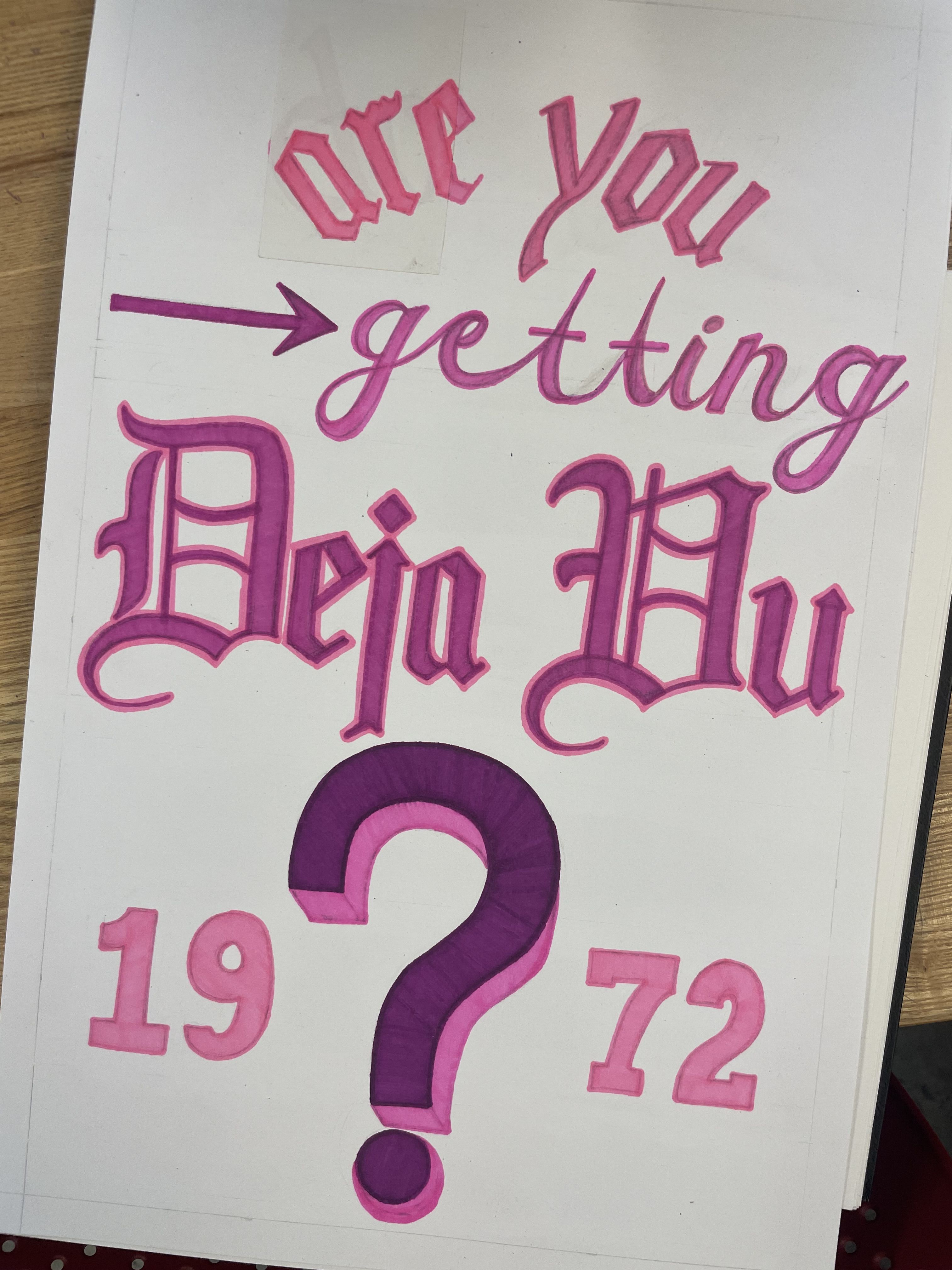
From sketchbooks to critiques to spray paint, students move from ideas to actualization.
From sketchbooks to critiques to spray paint, students move from ideas to actualization.
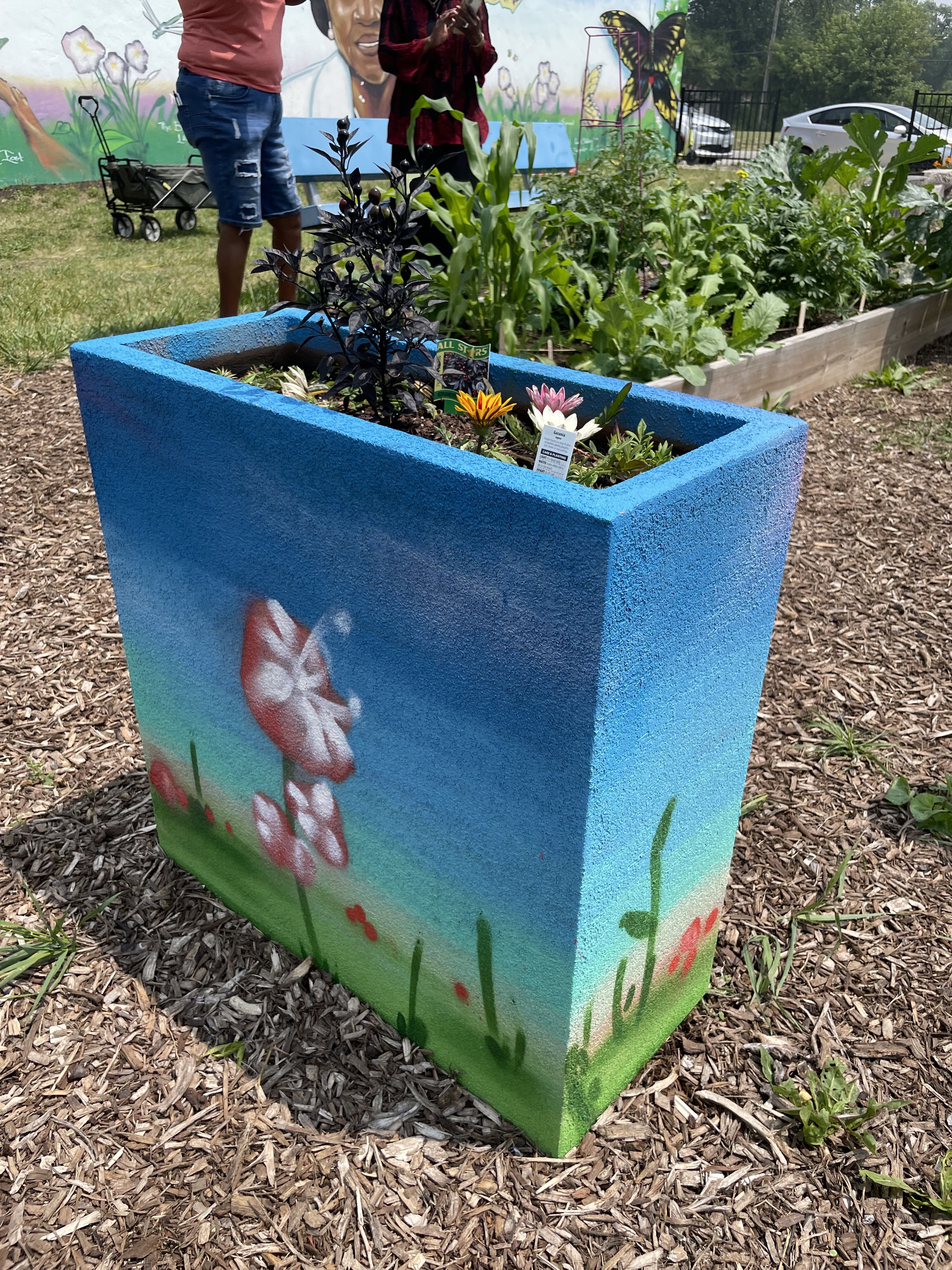
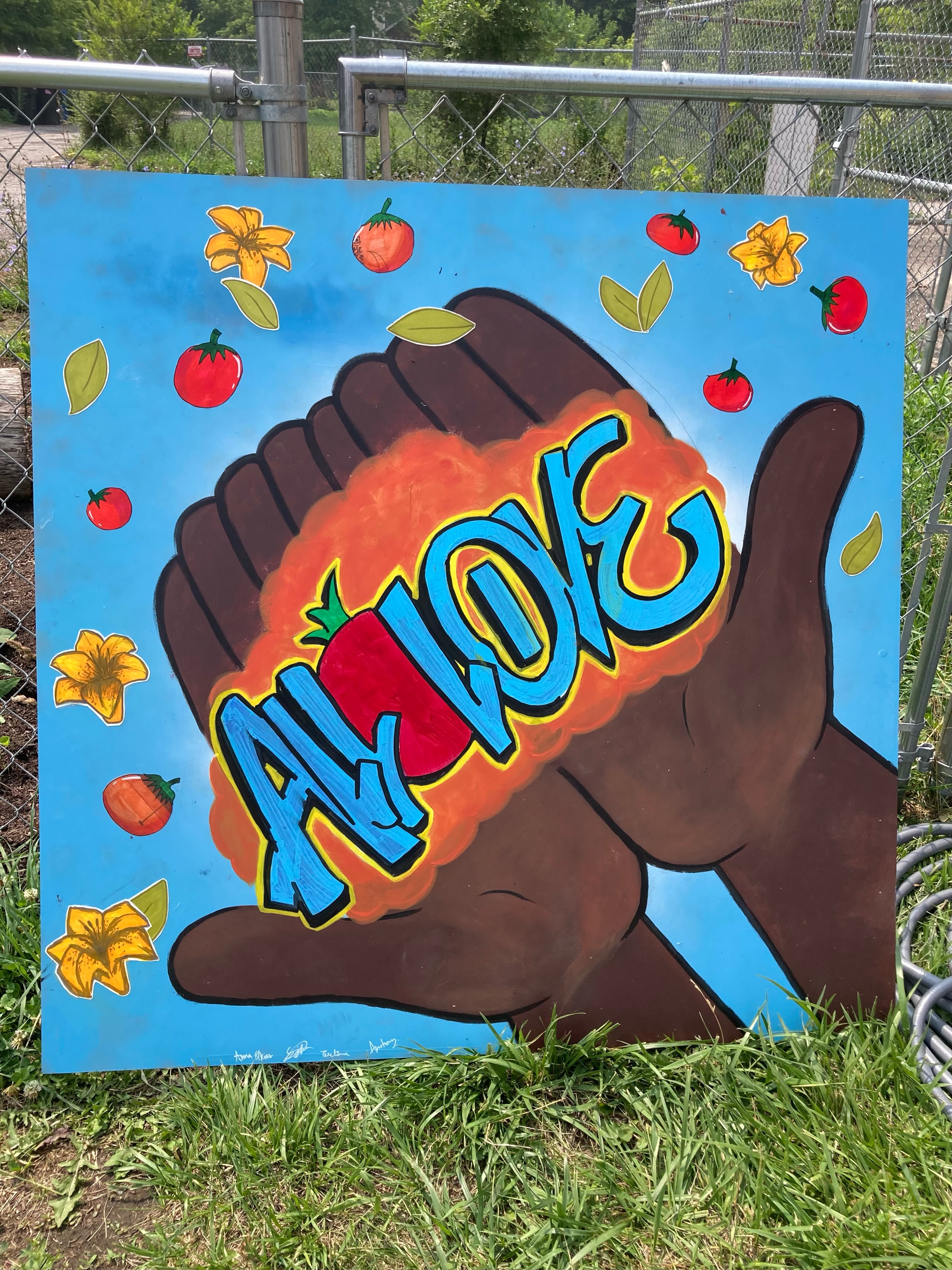
Student paintings in a community garden.
Student paintings in a community garden.
Chapman recounts one of her favorite projects: “We had four-by-four panels that were held on an angle, like a diamond, and installed in a community garden. Students painted and lettered different themes gleaned from their interviews and from plants and flowers they saw in the garden—then had a really powerful celebration with the community.”
Raven recalls another stand-out project reminiscent of his avian namesake: “I had a dream: What if the youth created graffiti birdhouses?” That year, the class created 12 birdhouses for a community garden, each featuring a quote from or poetry inspired by their dialogues.
While Chapman and Raven aim to teach the building blocks of public art techniques, this project introduces a critical component of the course’s larger goal: to demonstrate the art of community. At the culmination of the class, students discover collaborative art’s ability—and their abilities—to build trusting spaces, cultivate togetherness, and shape the world.
“The foundational question in my own practice is, ‘How do we practice being together?’” Chapman explained. “How we inhabit public space creatively is a big part of that. Art in public space is a vehicle for voices to be heard.”
“I don’t think that creativity can exist without collaborative interaction,” Raven agreed. “Art and contribution to your world are one.” ■
 Built with Shorthand