So, you want to know about my...
Also check out The Science Stream at SAIC for more of what we're up to, teaching science at an art and design school.
Projects:
SAIC Conversations on Art and Science: A lecture and event series exploring cross-disciplinary, interdisciplinary, transdisciplinary, and critical perspectives on art, science, design, and technology. Launching 2011-2012 with the generous sponsorship of the SAIC President's office. [Website coming soon!]The Leading Edge: Astrophysics. An experimental undergraduate course at the School of the Art Institute of Chicago for Spring 2011. It will bring together researchers at the forefront of cosmology and astrophysics with art and design students, to explore cutting-edge science and to "workshop" techniques for effective science communication. Developed as part of an ongoing collaboration between SAIC and the Kavli Institute for Cosmological Physics.
Science Zines: informal science communication projects by SAIC students. The zines function as a pedagical tool that givesstudents ownership of the ideas of science. And, they provide a cool format for communicating science ideas, popular at Zine festivals and science events alike. Check out the Small Science Collective (brainchild of SAIC biologist Andy Yang) for more.
Cosmic Images Project: a collection of links and essays digging deeper into the spectacular images produced by NASA telescopes like the Hubble Space Telescope and the Chandra X-ray telescope. Students contributed descriptions and essays on NASA images, exposing the ways that these images differ from ordinary photographs. This project was conducted in conjunction with the "Cosmic Images: Beyond Beauty" event co-hosted by SAIC, Adler Planetarium, and the Kavli Institute for Cosmological Physics earlier this summer.
Teaching
The Unstable Nucleus
Class blog: The Unstable Nucleus.
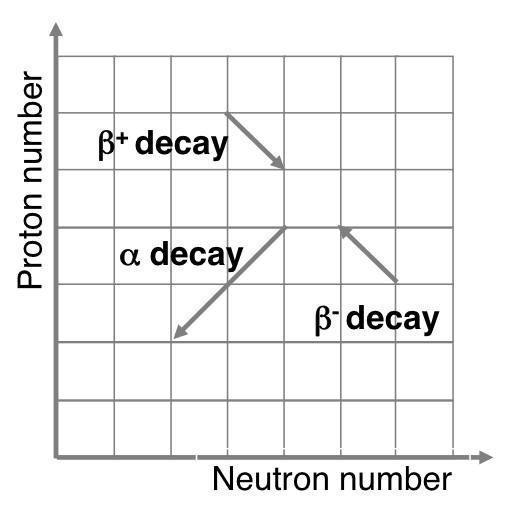
The recent Fukushima nuclear disaster in Japan was a wake-up call to citizens everywhere to become more aware of nuclear technology. Nuclear energy remains an important tool for meeting increasing global electricity demands, and it has the advantage of a very low “carbon footprint.” However, it carries unique risks and leaves us with largely unsolved problems associated with nuclear waste. Meanwhile, nations are struggling to figure out the role of nuclear weapons in a post-cold-war world. Nuclear technology raises challenging ethical, political, and personal questions. Science can’t provide the answers, but it can help you to form educated opinions and to argue those opinions more effectively. In this class, we cover the physics of radiation, nuclear energy, and nuclear weapons, to support educated debates about events that are reported in the weekly news.
Waves
This class has two goals:
- To give students an experience in hands-on, inquiry-driven scientific problem solving, similar to how professional scientists conduct their research.
- To deepen student insight into everyday phenomena and the fundamental structure of matter through the unifying concept of the wave.
What do scientists do when they’re performing research? They pose questions, do experiments, and try to figure stuff out. In this class, students are the scientists, and their questions drive the direction of experimentation and class discussion. Through hands-on experimentation we explore water waves, sound, vibrations, and light. The insights gained will also allow us to consider how wave physics relates to quantum mechanics, the nature of gravity, and the fundamental structure of matter.
The Universe: History, Contents, and Evolution
This class traces the historical and conceptual development of the highly successful Big Bang theory. In the process, we tour the universe through the world’s most powerful telescopes, and discuss the big questions that current-day cosmologists are trying to answer.
Matter, Deconstructed
Take any ordinary object around you. If you could break it apart into smaller and smaller pieces, what would you find? How do we visualize, model, and talk about the structure of matter on scales that are unimaginably small? In this class we discuss the experiments that have led to physicists' sometimes bizarre ideas about the fundamental nature of matter itself. We develop the abstract idea of the "quantum field," and talk about the massive experiments currently being undertaken to search for a deeper understanding of nature.
Representing Randomness
One of the reasons that computer technology has revolutionized science is because it allows for the simulation of complex random processes. Random phenomena are everywhere. Computer simulations of random phenomena are used in fields as diverse as epidemiology, climate modeling, astrophysics, and even election forecasting. This class combines an introduction to basic computer programming (in Python) with an introduction to probability and randomness, sufficient to begin experimenting with our own simulations of real-world phenomena. The aim is to more deeply understand the reaches (and limitations) of computer modeling, as well as to reflect on random processes in our everyday lives.
Research
Since 2005, I have been a member of the South Pole Telescope team. The South Pole Telescope is a microwave telescope that detects relic radiation from the Big Bang. Our research with this telescope contributes to a better understanding of the development and history of the universe as a whole, focusing especially on the interplay between Dark Matter and Dark Energy in the formation of cosmic structure.
My personal role in the South Pole Telescope project has largely been the development of software for organizing, processing, and interpreting the large amounts of data recorded by the telescope. My favorite part of doing experimental research is constructing the detailed arguments that take us from raw data to real knowledge.
Prior to joining the South Pole Telescope project, I was a member of the Sudbury Neutrino Observatory, which made some very exciting progress in our understanding of fundamental particle physics.
Physics Blog:
"Fundamental Weirdness" is a blog used to answer questions from my SAIC students, and to share interesting media and ideas related to fundamental physics. I only find time to work on this sporadically... but if you make a request for a posting I will usually respond!
Ancient history but still on the web:
Blog from trips to the South Pole in 2007 and 2008.
Lecture notes and slides from the Compton Lecture Series that I gave at the University of Chicago in the Spring of 2008.